
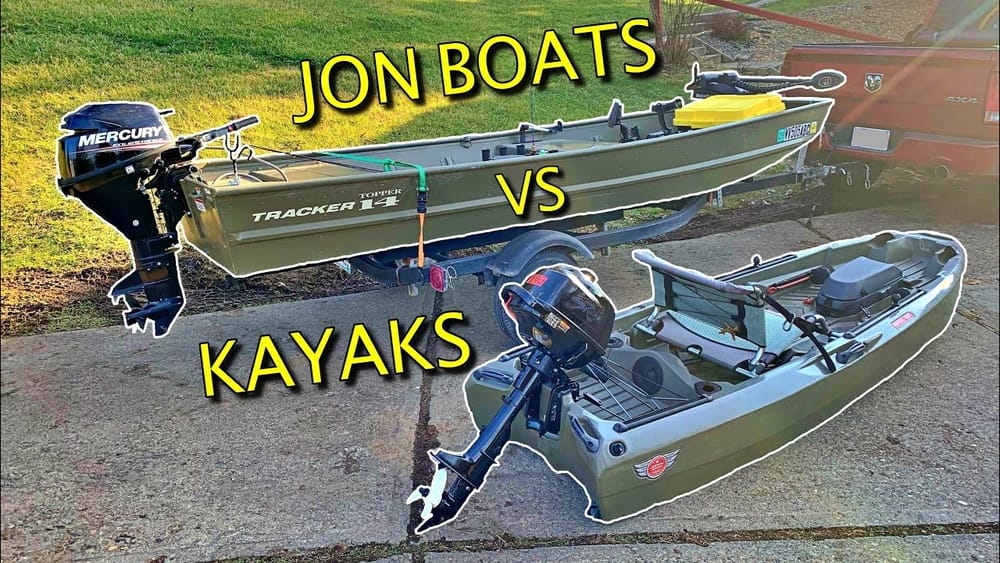
Choosing between a kayak and a jon boat is a big decision for anyone who enjoys spending time on the water. Both options open up exciting possibilities, whether you want to fish, relax, or explore new places. But making the right choice depends on many factors.
It’s not just about size or price—your experience level, local water conditions, and how you like to fish or paddle will all play a role. If you’re considering a kayak vs jon boat, understanding the details can save you time, money, and frustration.
In this guide, you’ll learn how kayaks and jon boats really compare. We’ll look at their strengths, weaknesses, costs, and the practical details that beginners and experienced boaters often miss. You’ll see real-world examples, data, and tips that help you avoid common mistakes.
By the end, you’ll be ready to choose the right watercraft for your needs, without regrets.
Understanding Kayaks
Kayaks are narrow, lightweight boats that you propel with a double-bladed paddle. They have a long history, originally used by indigenous peoples for hunting and travel. Today, kayaks come in many styles and materials, from simple plastic models to advanced fiberglass or composite designs.
Types Of Kayaks
- Sit-on-top kayaks: These are stable and easy to use. You sit on top, not inside. Great for beginners and warm weather.
- Sit-inside kayaks: You sit inside the hull, which keeps you drier and gives better control in rough water.
- Fishing kayaks: Designed for anglers, these have rod holders, extra storage, and are often wider for stability.
- Inflatable kayaks: Made from tough materials, these deflate for easy storage and transport.
- Touring/sea kayaks: Built for speed and distance on open water, with longer, slimmer shapes.
What Makes Kayaks Unique
Kayaks are known for their portability and simplicity. Most weigh between 35 and 70 pounds, so one person can carry them. They’re easy to launch from almost any spot, even steep banks or rocky shorelines. Kayaks are also quiet, which is great for wildlife viewing or fishing.
A key strength is their ability to access shallow water and narrow creeks where larger boats can’t go. This is a major reason many solo anglers and explorers choose a kayak over a jon boat.
Limitations Of Kayaks
However, kayaks have clear limits. They typically hold only one or two people. Storage space is tight, so multi-day trips or carrying lots of gear can be challenging. Standing up is possible in some fishing kayaks, but it’s not as stable as a jon boat’s flat floor.
Also, kayaks are mainly human-powered. Some allow small electric motors, but most movement comes from paddling. This limits speed and range, especially against strong currents or wind.
Exploring Jon Boats
Jon boats are flat-bottomed, wide boats, usually made from aluminum or sometimes fiberglass. They have a simple, open design, making them popular for fishing, hunting, and hauling gear. Jon boats are a staple on calm rivers, lakes, and shallow waters across North America.
Types Of Jon Boats
- Utility jon boats: Basic, open boats for general use. Rugged and affordable.
- Fishing jon boats: Have built-in features like livewells, rod storage, and raised decks.
- Modified-v jon boats: The bow has a slight V-shape for better handling in choppy water.
- Flat-bottom jon boats: The classic design, best for still or slow-moving water.
Jon Boat Strengths
One of the main attractions of jon boats is their capacity. Even small models can hold 2-4 people, coolers, tackle boxes, camping gear, and more. The wide, flat deck lets you stand, move around, or even set up a small seat or platform.
Jon boats are built to be used with motors—from small electric trolling motors to larger outboards. This means you can cover a lot more water, fish bigger lakes, or travel upstream with less effort.
Durability is another plus. Aluminum jon boats can take a beating from rocks, stumps, or rough landings and need little maintenance.
Common Jon Boat Weaknesses
Jon boats have their downsides. They’re heavier and bulkier than kayaks, often weighing 100-300 pounds or more. You’ll usually need a trailer or truck to move them. Launching requires a boat ramp, and solo operation is tougher.
They’re also noisier on the water, which can spook fish or wildlife. The flat bottom is stable on calm water, but jon boats can be less safe in rough waves or fast currents.
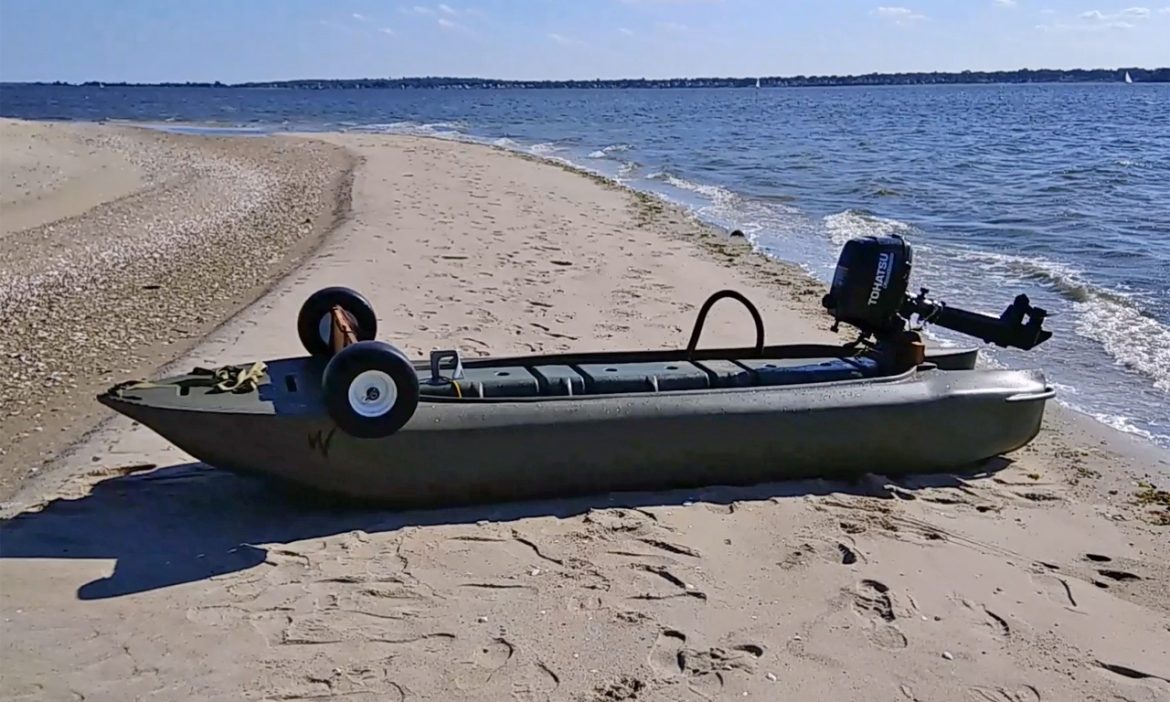
Credit: wavewalk.com
Kayak Vs Jon Boat: Head-to-head Comparison
The real choice between a kayak and a jon boat depends on your priorities. Here’s how they compare on the key factors that matter most.
| Feature | Kayak | Jon Boat |
|---|---|---|
| Average Weight | 35–70 lbs | 100–300 lbs |
| Capacity | 1–2 people | 2–6 people |
| Power | Paddle (some allow small motors) | Motor-powered (gas or electric) |
| Portability | Easy (fits on car roof) | Needs trailer or truck |
| Stability | Good (varies by design) | Very good on calm water |
| Cost (new) | $250–$2,500 | $800–$5,000+ |
| Storage Space | Limited | Large, open deck |
| Best For | Solo, tight spaces, light gear | Groups, heavy gear, larger waters |
Cost Breakdown: What You Really Pay
The price tag is just the beginning. Both kayaks and jon boats have hidden or ongoing costs that first-time buyers often miss.
Kayak Costs
- Purchase price: Basic recreational kayaks start around $250, but fishing or touring models run $800–$2,500.
- Paddle: $30–$150.
- Life jacket (PFD): $30–$100.
- Roof rack or cart: $60–$300.
- Optional motor kit: $200–$800.
- Maintenance: Minimal (mainly cleaning and storage).
Jon Boat Costs
- Boat price: $800 for a small utility jon boat, up to $5,000+ for larger, feature-rich models.
- Outboard motor: $600–$2,500.
- Trailer: $400–$1,500.
- Fuel and oil: Ongoing.
- Registration/insurance: Required in most states.
- Maintenance: Engine service, hull repairs, etc.
It’s easy to see that a jon boat’s total cost can be much higher, especially after adding a motor, trailer, and registration. Kayaks have fewer ongoing expenses and often don’t require licensing.
Performance In Different Water Conditions
Where you plan to use your boat matters as much as the boat itself. Kayaks and jon boats perform very differently depending on the water.
Shallow Water
Kayaks excel in very shallow water. Their light weight and low draft (how deep the boat sits in the water) let them glide over areas only a few inches deep.
Jon boats also do well in shallow water, especially with a small outboard or trolling motor. But they need a bit more depth, and a heavy load can limit where you go.
Rivers And Moving Water
Kayaks (especially sit-inside or touring models) handle swift rivers and mild rapids. Their shape lets them turn quickly and avoid obstacles. Inflatable kayaks are also popular for whitewater.
Jon boats are best on slow rivers. Strong currents, rocks, or logs can be dangerous for a flat-bottom jon boat. Modified-v models can handle more, but not rough whitewater.
Lakes And Open Water
Kayaks are fine for small to medium lakes, especially on calm days. Larger touring kayaks can handle wind and waves, but small recreational models may feel unstable.
Jon boats are in their element on calm lakes, ponds, and reservoirs. With a motor, you can cover more ground, carry more gear, or bring friends and family.
Rough Water
Neither option is truly designed for big waves or open seas. Touring kayaks with sealed bulkheads are safest for rough conditions, but even they have limits. Jon boats can become unstable in choppy water due to their flat hull.
Non-obvious insight: Many beginners are surprised to find that a kayak is actually safer than a jon boat in sudden storms or waves, because it is less likely to swamp or flip if you know how to handle it.
Comfort And User Experience
How you feel after a few hours on the water matters as much as any technical feature.
Seating
Kayak seats are usually padded but low to the ground. Some fishing kayaks have raised, chair-like seats for better comfort. Sitting for long periods can be tiring, especially in basic models.
Jon boat seats are benches or swivel chairs, often with cushions. You can stand, stretch, or even walk around, which is great for comfort and fishing.
Space And Movement
Kayaks are tight. There’s usually just enough room for your legs and a small bag. Moving around is difficult, and standing is often risky.
Jon boats have open decks. You can bring a cooler, tackle, a dog, or extra gear. Movement is easy, and standing is safe for most adults.
Weather Protection
Kayaks leave you exposed to sun, rain, and wind. Sit-inside models offer some protection, but you’re still in the open.
Jon boats can be fitted with bimini tops or simple shelters. You can bring umbrellas, extra clothes, or even install a small cabin on larger models.
Maintenance And Durability
Both kayaks and jon boats are built to last, but they need different care.
Kayak Maintenance
- Rinse after saltwater use to prevent corrosion.
- Store out of direct sunlight to avoid UV damage.
- Check for cracks, especially in plastic models.
- Lubricate moving parts (rudders, pedals) if equipped.
Jon Boat Maintenance
- Rinse and dry after use, especially after saltwater.
- Regularly inspect the hull for dents or leaks.
- Service the motor (oil changes, spark plugs, etc. ).
- Check trailer lights, tires, and winch.
- Store covered to prevent rust or sun damage.
Non-obvious insight: Aluminum jon boats can develop tiny leaks over time at the rivets or seams. It’s important to check for slow leaks by filling the hull with water on land and watching for drips.
Transport And Storage
Getting your boat to the water and storing it at home are practical challenges that affect your enjoyment and costs.
Kayak Transport
- Most kayaks fit on a car roof with a rack or foam blocks.
- One person can often lift and load a kayak.
- Inflatable kayaks fit in a trunk or closet.
- Storage is easy—hang from a wall or ceiling in a garage.
Jon Boat Transport
- Requires a trailer or truck bed.
- Loading and unloading often needs two people.
- Storing a jon boat means space for both boat and trailer.
- Some neighborhoods have rules against parking boats outside.
Practical tip: If you live in an apartment or have limited storage space, a kayak is much easier to manage than a jon boat.
Versatility And Customization
Both kayaks and jon boats offer ways to personalize your setup.
Kayak Custom Options
- Add rod holders, fish finders, or anchor systems.
- Install small trolling motors.
- Use storage crates or dry bags for gear.
- Some models accept pedal drives for hands-free movement.
Jon Boat Custom Options
- Install livewells, coolers, or bait tanks.
- Mount trolling motors, sonar, or even small cabins.
- Add extra seats, deck lighting, or casting platforms.
- Paint or camo wrap for hunting.
Non-obvious insight: Kayak accessories are often cheaper and easier to install, but jon boats can handle larger, more complex upgrades.
Safety Considerations
Safety is crucial on the water. Each boat has unique risks.
Kayak Safety
- Always wear a life jacket.
- Learn self-rescue techniques (wet exit, re-entry).
- Stay aware of weather and water conditions.
- Avoid overloading with gear.
Jon Boat Safety
- Wear life jackets, especially with a motor.
- Balance the load to prevent tipping.
- Use navigation lights at dawn, dusk, or night.
- Secure all gear to prevent shifting in waves.
Real-world example: A study by the U.S. Coast Guard found that 70% of boating deaths in small craft happened when the victim wasn’t wearing a life jacket. This risk applies to both kayaks and jon boats.

Credit: sev7nbait.com
Environmental Impact
Your choice of boat can affect the environment.
- Kayaks have a low footprint. No fuel, oil, or noise. Great for quiet fishing or wildlife watching.
- Jon boats with motors may leak fuel or create wake that disturbs shorelines and animals. Electric motors are quieter and cleaner but still have batteries to dispose of.
Non-obvious insight: Some lakes and rivers ban gas engines or restrict wake boats. A kayak may be your only legal option in these areas.
Who Should Choose A Kayak?
A kayak is best if you:
- Prefer solo trips or small groups
- Have limited storage or transport options
- Want to fish, explore, or relax in very shallow or narrow water
- Value quiet, simplicity, and exercise
- Have a limited budget
Kayaks are ideal for urban dwellers, beginners, or anyone who wants to be on the water within minutes of arriving at a lake or river. They’re also perfect for stealthy fishing or wildlife photography.

Credit: www.youtube.com
Who Should Choose A Jon Boat?
A jon boat is best if you:
- Want to carry more people or heavier gear
- Plan group outings, camping trips, or family adventures
- Need to travel long distances or upstream
- Prefer motor power over paddling
- Have storage space and a tow vehicle
Jon boats fit anglers who fish big lakes, families who want to picnic on the water, or hunters who need to transport dogs and equipment. They’re a workhorse for any task that needs more room and power.
Key Mistakes To Avoid
- Underestimating Transport Needs: Many buyers get a jon boat, then realize they have no trailer or tow vehicle.
- Ignoring Local Laws: Check licensing, registration, and motor rules before you buy.
- Overloading: Both kayaks and jon boats have weight limits—don’t exceed them.
- Forgetting Safety Gear: Life jackets are not optional. Neither are lights or sound signals if you go out early or late.
- Choosing on Price Alone: A cheap kayak that’s uncomfortable or a jon boat you can’t store will not get used.
Real-world Examples
- Sarah, an urban angler, chose a fishing kayak. She can store it in her apartment, carry it to the water alone, and fish shallow creeks where boats can’t go.
- The Martinez family uses a 14-foot jon boat for weekend trips. They bring coolers, rods, and their dog. They enjoy the space and motor power, but need a trailer and pay for registration each year.
- Mike tried both and discovered his back pain was worse in a kayak. He switched to a jon boat for the upright seating and space to stand.
Data Snapshot: Popularity And Sales
According to the National Marine Manufacturers Association, kayak sales in the U. S. grew 15% between 2018 and 2023, while jon boat sales grew 8%. This shows a strong interest in both, with kayaks becoming especially popular with younger buyers.
At A Glance: Kayak Vs Jon Boat
Here’s a quick reference for the main differences:
| Aspect | Kayak | Jon Boat |
|---|---|---|
| Best Use | Solo/duo, small waters | Groups, big waters |
| Transport | Car roof, easy | Trailer needed |
| Cost to Start | Lower | Higher |
| Comfort | Lower (except fishing kayaks) | Higher (seats, space) |
| Speed | Slow (paddle) | Fast (motor) |
| Learning Curve | Easy | Easy/medium |
Frequently Asked Questions
What Is Safer: A Kayak Or A Jon Boat?
Both can be safe if used correctly and with proper safety gear. Kayaks are less likely to swamp in waves but require good paddling skills. Jon boats are stable on calm water but can be risky in rough conditions. Always wear a life jacket.
Can You Use A Trolling Motor On A Kayak?
Yes, many fishing kayaks allow small electric trolling motors. Make sure your kayak is rated for a motor and check local laws about registration. Jon boats can use larger motors for more speed and range.
Which Is Better For Fishing: Kayak Or Jon Boat?
It depends. Kayaks are great for solo fishing in shallow or tight spots. Jon boats offer more space and comfort for group fishing or carrying lots of gear. Both can be outfitted with fish finders and rod holders.
Do You Need A License For A Kayak Or Jon Boat?
In most U. S. states, non-motorized kayaks do not need to be registered. Jon boats with motors almost always require registration and sometimes insurance. Always check your local rules.
How Long Do Kayaks And Jon Boats Last?
A well-cared-for kayak can last 10–20 years. Aluminum jon boats can last even longer—20+ years—if you prevent corrosion and maintain the motor. Always store your boat properly and inspect for damage.
Choosing between a kayak and a jon boat comes down to how you want to use the water, your budget, and your lifestyle. Both have their place, and for some people, owning one of each is the answer! If you want more details or up-to-date safety info, check the U.S. Coast Guard Boating Safety Resource. Whatever you decide, making an informed choice will lead to more fun and fewer headaches on the water.