

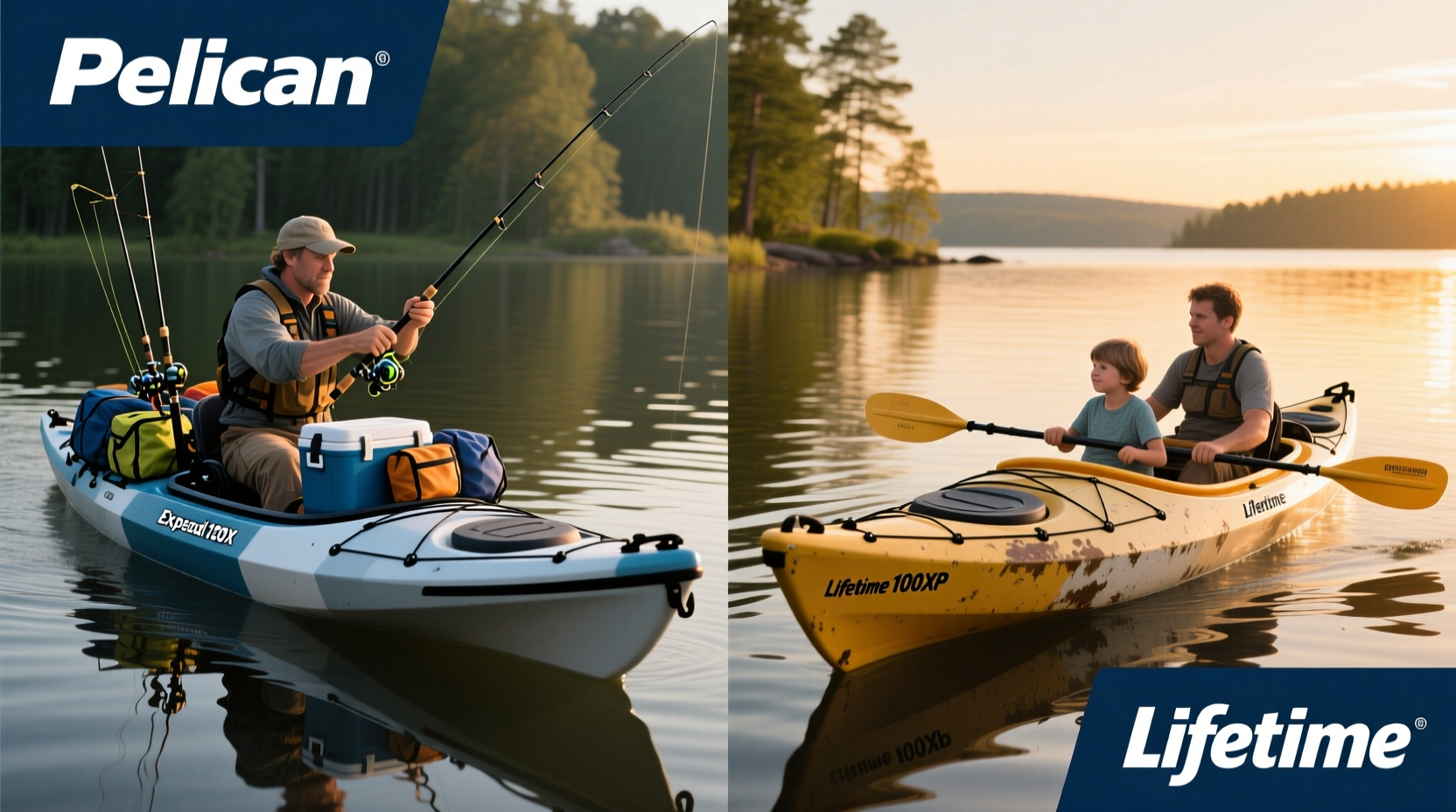
Kayaking has become a favorite outdoor activity for people who love water, adventure, and nature. When you look for an affordable, reliable kayak, two names often come up: Pelican and Lifetime. Both brands have strong reputations for making beginner-friendly, budget-friendly kayaks. But which one is right for you? The answer depends on your needs, experience, and where you plan to paddle.
This article dives deep into the Pelican vs Lifetime kayak debate. We’ll compare features, build quality, comfort, stability, designs, and pricing. You’ll find the strengths and weaknesses of each brand, plus real-world examples and non-obvious tips that most first-time buyers miss. By the end, you’ll have a clear understanding of which kayak fits your style, so you can make your next trip on the water safe and fun.
Brand Backgrounds: Pelican And Lifetime
Before comparing kayaks, it helps to know a bit about the companies behind them.
Pelican International is a Canadian brand that started in 1968. They are known for using advanced plastic molding techniques to make lightweight, durable boats. Pelican focuses on recreational kayaks, fishing kayaks, canoes, and paddleboards. Their boats are especially popular among beginners and families because they are affordable and easy to handle.
Lifetime Products began in the United States in 1986. The company originally made basketball hoops and picnic tables but soon moved into outdoor gear, including kayaks. Lifetime is famous for making strong, stable, sit-on-top kayaks. Their boats are widely used for lakes, slow rivers, and casual fishing trips.
Both companies sell in big stores like Walmart and online platforms. They target similar buyers but have different design styles and philosophies.
Key Features Compared
When comparing Pelican vs Lifetime kayak, it’s smart to look at several key features. Each one affects your comfort, safety, and paddling experience.
1. Materials And Construction
Pelican kayaks use a special material called RAM-X™ polyethylene. This is a multi-layer plastic that resists impact and UV rays. RAM-X makes Pelican kayaks lighter than many other brands. The material bends if hit but quickly returns to its shape. This is helpful if you paddle in shallow or rocky water.
Lifetime kayaks use high-density polyethylene (HDPE). This plastic is known for being very tough and hard to crack. Lifetime boats are a bit heavier, but they can handle rough use. HDPE is also UV-protected, so it doesn’t fade fast in the sun.
Non-obvious Insight
Many beginners believe “lightweight” always means “better. ” But a very light kayak can blow around in the wind, making it harder to control. On the other hand, a heavier kayak may be more stable but harder to carry. Consider your main paddling location before deciding.
2. Design Types: Sit-in Vs. Sit-on-top
Both brands offer sit-on-top and sit-inside designs, but their focus is different.
- Pelican makes more sit-inside kayaks, ideal for cooler climates or longer trips where you want to stay dry. Their cockpits are narrower, which gives you a better connection with the boat.
- Lifetime focuses on sit-on-top models. These are easier to enter and exit, self-drain if water splashes in, and are very stable. Sit-on-tops are great for kids, beginners, and warm weather.
Non-obvious Insight
If you plan to paddle with your dog or small child, a wide, open sit-on-top is much more comfortable and safer.
3. Stability And Tracking
Stability means how hard it is to flip a kayak. Tracking is how straight the kayak moves.
- Lifetime kayaks are famous for their stability. Their hulls are flat and wide, which makes them almost impossible to tip in calm water. This is perfect for fishing or taking photos.
- Pelican kayaks often have a “multi-chine” hull. This means the bottom has several edges, which helps with both stability and speed. Pelican’s sit-inside models track better in windy conditions.
Example
If you want to stand up and cast a fishing line, Lifetime’s Tamarack is a good choice. If you want to paddle straight across a lake, Pelican’s Mustang or Argo models are strong options.
4. Weight Capacity
Weight capacity tells you how much the kayak can safely carry, including your body, gear, and any extras.
- Pelican kayaks usually support between 275–325 lbs (125–147 kg) for single models.
- Lifetime kayaks often hold 275–350 lbs (125–159 kg) for singles, and their tandem models go even higher.
If you’re planning to carry a lot of fishing gear, a pet, or are a bigger paddler, check the label carefully.
5. Comfort And Seating
Both brands have adjustable, padded seats. Here’s how they differ:
- Pelican offers “ErgoForm” and “ErgoLounge” seats. These are soft, have back support, and work well for short trips.
- Lifetime uses “Quick-Release” or “Adjustable Frame” seats. These are a bit firmer but have higher backs. Some models add extra padding and footrests.
Tip
If you have back pain, test the seat before buying. Some kayaks allow you to upgrade the seat later.
6. Storage And Accessories
Storage is important if you plan to fish, camp, or bring a camera.
- Pelican kayaks have sealed hatches, bungee cords, and sometimes a “tank well” for extra storage.
- Lifetime kayaks often come with built-in rod holders, paddle keepers, and rear cargo areas. Their sit-on-tops are easy to customize.
Both brands offer models with cup holders and smartphone trays, but Lifetime kayaks are usually better for fishing gear.
Popular Models Side By Side
To make things clearer, let’s compare some top models from each brand.
| Model | Type | Length | Weight | Capacity | Main Use |
|---|---|---|---|---|---|
| Pelican Argo 100X | Sit-In | 10 ft | 36 lbs | 275 lbs | Recreation/Day Trips |
| Pelican Sentinel 100X | Sit-On-Top | 9.5 ft | 42 lbs | 275 lbs | Fishing/Recreation |
| Lifetime Tamarack Angler 100 | Sit-On-Top | 10 ft | 52 lbs | 275 lbs | Fishing |
| Lifetime Lotus | Sit-On-Top | 8 ft | 38 lbs | 250 lbs | Beginner/Recreation |
As you can see, Pelican kayaks are generally a bit lighter, while Lifetime models often have more fishing features.
Durability In Real-world Use
Durability is a key factor, especially if you plan to drag your kayak over sand, rocks, or load it in and out of a car often.
- Pelican RAM-X™ material is flexible. It can take small hits without breaking. However, if you drag the hull over sharp rocks many times, it can scratch or dent faster than harder plastics.
- Lifetime HDPE is hard and rigid. It resists deep scratches and cracks, but if it does break, repairs are harder.
Example
If you paddle mostly on clean lakes or sandy shores, both brands hold up well. If you’re launching from rocky rivers, Lifetime’s thicker hull may last longer.
Uv Resistance
Both brands protect their kayaks from the sun, but storing your kayak inside or with a cover will make any boat last longer.

Credit: www.gamperling-vt.de
Handling And Performance
When you’re on the water, handling and performance matter. This means how easy it is to paddle, turn, and keep your kayak moving straight.
- Pelican kayaks are nimble and easy to turn. They glide well, so you use less energy. Because they are lighter, you can accelerate quickly.
- Lifetime kayaks are a bit slower but feel steady, especially when you get in or out. Their wide shape means you won’t tip easily, but you may have to paddle harder to keep up with friends in slimmer boats.
Practical Example
If you plan to paddle in slow rivers with turns, Pelican’s agility is helpful. If you want to fish or relax in a gentle lake, Lifetime’s stability is more important.
Transport And Storage
Getting your kayak from home to the water is sometimes more work than paddling! Here’s how Pelican and Lifetime compare:
- Pelican kayaks are lighter and often have molded handles. You can lift many models alone or with a friend.
- Lifetime kayaks are heavier, so it’s best to use a cart or have two people. They are stackable, which saves space if you have more than one.
Common Mistake
Many first-time buyers don’t check if the kayak will fit in their car or on their roof racks. Always measure before buying.
Credit: www.alibaba.com
Price And Value
For budget shoppers, price is a key factor.
- Pelican recreational kayaks usually start at $300–$500 USD.
- Lifetime models are similar, with basic models starting around $250–$450 USD.
Fishing and tandem models go higher, up to $700 or more. Both brands give good value for the price, especially for entry-level paddlers.
Warranty
- Pelican offers a limited lifetime warranty on the hull and 1 year on parts.
- Lifetime offers a 5-year limited warranty on most kayaks.
Always read the details. Warranties don’t cover damage from dragging, sun exposure, or improper storage.
Kayak Fishing: Which Brand Wins?
Fishing from a kayak is popular because you can reach quiet spots that big boats can’t. Both brands offer fishing models with rod holders, gear tracks, and roomy decks.
- Lifetime’s Tamarack Angler is a favorite for beginners. It has three rod holders, lots of flat deck space, and tie-downs for tackle boxes.
- Pelican’s Catch series is designed for fishing, with extra-stable hulls and adjustable seats. These models are more expensive but offer better comfort for long hours.
If you want to add electronics or custom mounts, Lifetime kayaks are easier to drill and modify, thanks to their thick hulls.
Tandem And Family Kayaks
Want to kayak with a friend or child? Both brands make tandem models.
- Pelican Argo 136XP Tandem is a sit-in model with two padded seats and a roomy cockpit.
- Lifetime Kokanee is a sit-on-top that can be paddled solo or with two people. It’s wider and more stable, but heavier.
Tandem kayaks from both brands are very stable but harder to transport due to their size.
Customization And Upgrades
Some paddlers want to add accessories, like cup holders, cameras, or extra rod holders.
- Pelican kayaks often have pre-drilled holes and mounting points for accessories.
- Lifetime kayaks are thicker and can handle more DIY modifications, such as adding a fish finder or anchor system.
If you plan to upgrade your kayak over time, check what’s possible before buying.
Safety And Beginner Friendliness
For most new paddlers, safety is the top concern.
- Lifetime kayaks are almost impossible to flip in calm water. Their open decks mean you can climb back in if you fall out.
- Pelican sit-inside kayaks are more protected from cold water but can fill up if you capsize, making rescue harder. Pelican sit-on-tops are just as beginner-friendly as Lifetime.
Pro Tip
Always wear a life jacket (PFD), even if your kayak feels stable. Practice getting in and out of your kayak in shallow water before your first big trip.
Community Feedback And Reviews
Looking at buyer reviews gives real-world feedback.
- Pelican kayaks get high marks for being lightweight and easy to paddle. Some users say the footrests are too small for tall people.
- Lifetime kayaks are praised for their durability and stability. A common complaint is that they are heavy and slow compared to slimmer kayaks.
Both brands have active online communities, so you can find tips, repair guides, and trip ideas from other owners.
Environmental Impact
Both brands use plastics, which have environmental downsides. Pelican often uses recycled materials in their RAM-X™ kayaks. Lifetime’s HDPE is recyclable, but you must take it to a proper center. No kayak is “eco-friendly,” but these brands are better than fiberglass or metal boats.
For more on plastic recycling and kayak materials, visit this Wikipedia page on polyethylene.
Pelican Vs Lifetime: At A Glance
Here’s a quick summary of how the brands compare.
| Feature | Pelican | Lifetime |
|---|---|---|
| Material | RAM-X™ Polyethylene (Recycled, Multi-Layer) | HDPE (Thick, Durable) |
| Weight | Lighter (30–45 lbs) | Heavier (38–55 lbs) |
| Stability | Good (multi-chine hull) | Excellent (flat, wide hull) |
| Best For | Recreation, Speed, Sit-Inside | Fishing, Beginners, Sit-On-Top |
| Price Range | $300–$700 | $250–$700 |
| Warranty | Limited Lifetime (Hull) | 5-Year Limited |

Credit: www.gamperling-vt.de
Common Buyer Mistakes
Many first-time kayak buyers make the same errors. Here’s what to watch out for:
- Choosing the wrong type: Sit-inside kayaks can be hard to exit if you flip. Sit-on-top kayaks are safer for kids and beginners.
- Ignoring weight: If you can’t lift your kayak, you won’t use it.
- Not checking capacity: Overloading your kayak makes it unsafe and harder to paddle.
- Focusing only on price: Cheap kayaks may not last. Spend a little more for better comfort and durability.
- Skipping the test paddle: If possible, try before you buy. Comfort is personal.
Who Should Choose Pelican?
Choose a Pelican kayak if you want:
- A lightweight boat that’s easy to carry and load
- A sit-inside design for cooler weather or longer trips
- Better tracking and speed for exploring lakes and rivers
- More eco-friendly materials
Pelican is a good pick if you have some paddling experience or want a kayak that feels sporty.
Who Should Choose Lifetime?
Pick a Lifetime kayak if you want:
- Maximum stability and a kayak that’s hard to tip
- Easy entry and exit (great for kids, pets, or swimming)
- Lots of fishing accessories included
- A kayak for family use or sharing
Lifetime is perfect for total beginners or anyone who wants to relax, fish, or paddle in calm water.
Frequently Asked Questions
What Is The Main Difference Between Pelican And Lifetime Kayaks?
The biggest difference is design focus. Pelican is known for lighter, sit-inside kayaks that are easy to paddle and transport. Lifetime specializes in sit-on-top kayaks that are wider and more stable, making them better for fishing and families.
Which Kayak Brand Is Better For Fishing?
Lifetime kayaks are often better for fishing because they have more built-in rod holders, wider decks, and space for tackle. However, Pelican’s Catch series is also designed for anglers, with extra features for serious fishing.
Are Pelican Kayaks More Durable Than Lifetime Kayaks?
Both are durable, but in different ways. Pelican’s RAM-X™ material is flexible and resists dents. Lifetime’s HDPE is thicker and better at resisting deep scratches and cracks. For rocky rivers, Lifetime may last longer; for easy carrying, Pelican is best.
Can I Upgrade Seats And Add Accessories To These Kayaks?
Yes! Both brands allow upgrades. Pelican kayaks often have mounting spots for extra gear. Lifetime kayaks are easy to drill for custom accessories. Always check your model’s manual before making changes.
Which Kayak Is Better For Beginners?
Most beginners will feel comfortable in a Lifetime sit-on-top kayak. They are stable, easy to climb onto, and forgiving if you tip over. Pelican’s lighter kayaks are also good, especially if you want to learn faster paddling skills.
Kayaking is about fun, freedom, and exploring the outdoors. Whether you choose Pelican or Lifetime, you’ll get a reliable, affordable boat. The best kayak is the one that fits your needs and makes you want to get out on the water again and again.