
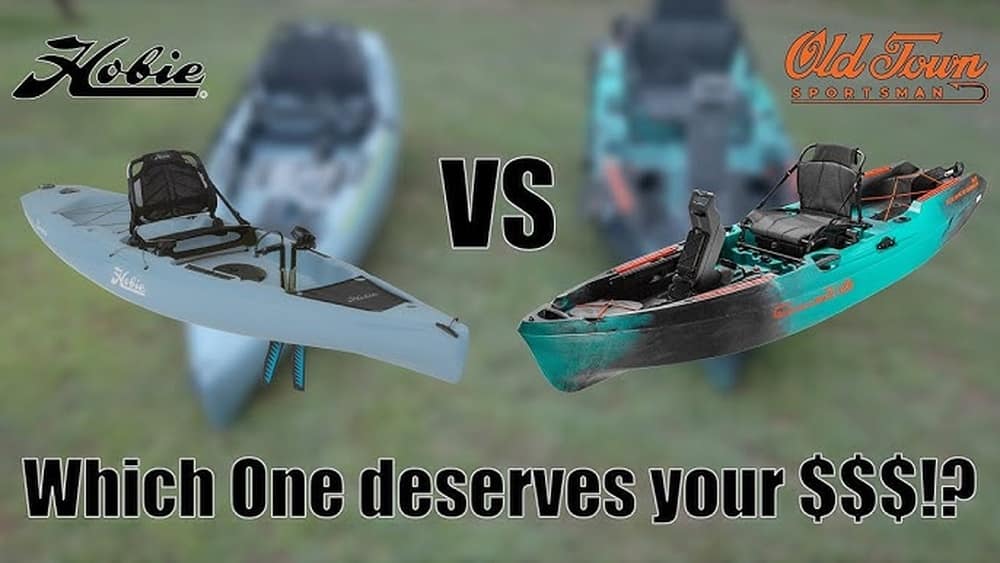
When you start searching for a new kayak, the names Hobie and Old Town stand out quickly. Both brands have a long history and strong reputations, but they take very different approaches to kayak design. For anyone trying to decide between them, the process can feel overwhelming. Should you choose the innovative pedal power of Hobie, or the classic comfort and reliability of Old Town? The answer depends on your needs, preferences, and budget.
In this article, you’ll get a clear, side-by-side look at Hobie vs Old Town kayaks. We’ll explore their strengths, weaknesses, unique technologies, and the real differences that matter. By the end, you’ll know exactly which brand is the best fit for your kayaking adventures—whether you’re into fishing, exploring lakes, or heading out for a day on the ocean.
Brand Backgrounds: Hobie And Old Town
Let’s start with a quick look at the roots of each company. Understanding their history helps explain why they make the choices they do.
Hobie began in the 1950s in California. At first, they made surfboards and catamarans. By the late 1990s, they entered the kayak market. Hobie quickly became famous for their MirageDrive pedal system, which lets you move the kayak using your legs instead of a paddle. This innovation changed kayak fishing and touring forever.
Old Town is much older. Founded in Maine in 1898, Old Town started with wood canoes. Over time, they moved to fiberglass, plastic, and new materials. Old Town is known for its traditional paddle kayaks, but in the last decade, they added pedal and motorized models. Their focus is comfort, stability, and reliability.
Both companies are now global leaders, but their philosophy and design choices are shaped by their origins.
Key Differences At A Glance
To give you a quick overview, here’s a side-by-side comparison of the main differences between Hobie and Old Town kayaks:
| Feature | Hobie | Old Town |
|---|---|---|
| Origin | California, USA | Maine, USA |
| Pedal System | MirageDrive (fin-based) | PDL Drive (propeller-based) |
| Traditional Paddle Kayaks | Limited selection | Wide selection |
| Motor Options | Some models (MirageDrive 360 + Evolve motor) | Integrated (Minn Kota motors) |
| Primary Focus | Fishing, touring, pedal kayaks | Fishing, recreation, paddle & pedal kayaks |
| Price Range | Mid to high | Mid to high |
This table gives a fast summary, but the real differences are more than just features. Let’s dive deeper.
Pedal Systems: Miragedrive Vs Pdl Drive
The biggest difference between Hobie and Old Town is in their pedal drive systems.
Hobie Miragedrive
Hobie’s MirageDrive is their signature. Instead of a propeller, it uses two flexible fins under the kayak. When you pedal, the fins move side to side, pushing you forward. The latest version, MirageDrive 360, lets you turn the fins in any direction, so you can move sideways, backward, or spin in place.
Miragedrive Pros
- Hands-free movement: You can fish or take photos while moving.
- Shallow water performance: The fins can be “feathered” flat against the hull in very shallow water.
- Quiet and efficient: The fin system is smooth and silent, great for fishing.
- Full 360 control: On high-end models, you can turn on the spot, which is unique.
Miragedrive Cons
- Learning curve: Some beginners need time to get used to the fin movement.
- Maintenance: The fin system has moving parts that need cleaning and occasional repairs.
- Price: MirageDrive kayaks tend to be expensive.
Old Town Pdl Drive
Old Town’s PDL Drive is a propeller-based pedal system. When you pedal, a propeller spins, moving the kayak forward or backward. You can pedal in reverse by simply pedaling backward, which is very intuitive.
Pdl Drive Pros
- Instant reverse: Pedal backward to go in reverse—no levers or switches needed.
- Simple mechanism: The propeller system is easy to understand and maintain.
- Durability: The drive is tough and can handle bumps and scrapes.
- Great for fishing: Quick reverse is a big help when fighting fish.
Pdl Drive Cons
- Deeper draft: The propeller needs more water depth than fins.
- Louder than fins: The propeller can make more noise, which might scare fish in clear, shallow water.
- No sideways movement: You can’t move directly sideways like with MirageDrive 360.
Paddle Kayaks: Classic Vs Modern
Not everyone wants pedals. If you prefer to paddle, the brands offer very different choices.
Hobie mostly focuses on pedal kayaks. They do have some paddle models, but these are fewer and often more expensive than similar Old Town kayaks.
Old Town is famous for their paddle kayaks. From the classic Old Town Vapor and Dirigo to the fishing-focused Sportsman line, they offer many shapes and sizes. Their paddle kayaks are known for comfort, roomy cockpits, and stability.
When To Choose Paddle Over Pedal
- Lower price: Paddle kayaks are usually cheaper.
- Simplicity: Fewer moving parts means less maintenance.
- Lightweight: Easier to carry and transport.
- Shallow or rocky waters: No pedal drive to snag on rocks or plants.
If paddle kayaking is your main focus, Old Town is the clear winner.

Credit: www.reddit.com
Motorized Kayaks: Power And Convenience
Both brands now offer motorized options for those who want extra speed or who fish in large lakes.
Old Town Motorized Kayaks
Old Town’s Sportsman AutoPilot series uses integrated Minn Kota trolling motors. These kayaks have Spot-Lock GPS anchoring, so the kayak can hold its position automatically—even in wind or current. You control the motor with a wireless remote.
Hobie Motorized Kayaks
Hobie offers the Evolve motor system, which can be added to some MirageDrive models. It’s a compact electric motor that fits in the drive well or mounts on the rudder. It’s not as integrated as Old Town’s system, but gives extra power when needed.
Motor Kayaks: Pros And Cons
- Faster travel: Great for long distances or windy days.
- Less physical effort: Helpful for people with injuries or limited strength.
- Added weight and cost: Motors, batteries, and wiring make the kayak heavier and more expensive.
- Legal rules: Some lakes or parks have rules about using motors.
If integrated motors are your priority, Old Town’s AutoPilot series is ahead.
Kayak Hull Design And Stability
A kayak’s hull shape affects its speed, stability, and comfort. Both brands use different designs for different uses.
Hobie Hulls
Hobie kayaks use wide, flat-bottomed hulls for stability, especially on their fishing models. Some touring models, like the Hobie Mirage Revolution, have a sleeker hull for better speed and tracking.
- Primary stability: Very stable when sitting still—ideal for standing to fish.
- Secondary stability: Good, but not as high as some Old Town models.
Old Town Hulls
Old Town uses deeper V-shaped hulls on some models for better tracking (staying straight) and speed. Their fishing kayaks, like the Sportsman PDL 120, have ultra-stable pontoon-style hulls for standing.
- Primary stability: Excellent—many anglers stand up to cast.
- Secondary stability: Better on touring and recreational models.
Weight Capacity And Sizing
Both brands offer a range of sizes and weight capacities. Most pedal models hold between 350–500 pounds (160–225 kg). Old Town’s AutoPilot kayaks can handle even more, up to 558 pounds (253 kg).
Comfort And Seating
Long hours on the water demand good seating. Both brands invest in this area, but there are differences.
Hobie Seats
Hobie’s Vantage seats are adjustable for height, recline, and lumbar support. They use breathable mesh to stay cool. On some models, the seat can be removed and used as a camp chair.
Old Town Seats
Old Town’s Element seating is also adjustable and uses mesh for airflow. The seats are wide, padded, and designed for all-day comfort. Many users say Old Town seats are among the most comfortable in the industry.
Practical Seating Tips
- Always test the seat if possible. What feels good for 10 minutes in a store might not after 4 hours on the water.
- Check for adjustability—height, recline, and lumbar support make a big difference.
- Consider seat height if you want to stand easily for fishing.
Storage And Customization
Kayak anglers need space for gear—rods, tackle, coolers, and electronics. Both brands offer many storage features, but their layouts differ.
Hobie Storage
- Large bow hatches for dry storage
- Horizontal rod holders (keep rods flat and protected)
- Gear tracks for mounting accessories
- Tackle management systems under the seat
Old Town Storage
- Open tank wells in the back for crates or coolers
- Multiple flush-mount rod holders
- Removable storage trays
- Generous footwell space for tackle boxes
Old Town kayaks often have more open storage areas, while Hobie focuses on built-in, protected storage.
Price And Value
Kayaks are a big investment. Here’s how the brands compare on cost:
| Model Type | Hobie Price Range (USD) | Old Town Price Range (USD) |
|---|---|---|
| Paddle Kayaks | $1,200 – $1,800 | $700 – $1,200 |
| Pedal Kayaks | $2,300 – $5,500 | $2,200 – $4,500 |
| Motorized Kayaks | $3,500 – $6,000 | $3,000 – $4,800 |
Old Town tends to offer more affordable paddle kayaks and slightly cheaper motorized models. Hobie is often more expensive, but their MirageDrive 360 and unique features justify the higher cost for some buyers.
Durability And Maintenance
A kayak should last for years. Both brands use rotomolded polyethylene for strength and impact resistance.
Hobie Durability
- Hulls are tough, but the MirageDrive system needs regular cleaning (especially after saltwater use).
- Fins and chains can wear out over time, but replacement parts are available.
- Rudder systems need occasional adjustment.
Old Town Durability
- Hulls are known for taking hard knocks.
- PDL drive is sealed and can be rinsed easily.
- Motors on AutoPilot models need battery care and electrical checks.
Maintenance Tips
- Always rinse moving parts after saltwater trips.
- Store kayaks out of direct sunlight to prevent plastic fading.
- Keep pedal drives lubricated and check for loose bolts.
Many beginners forget regular maintenance. This can lead to drive failures or leaks years earlier than expected.
Portability And Transport
Kayaks can be heavy—especially pedal and motor models. Think about how you’ll move them from your home to the water.
- Hobie pedal kayaks: 75–125 pounds (34–57 kg) without gear
- Old Town pedal kayaks: 85–135 pounds (39–61 kg) without gear
- Motor models: Can be over 150 pounds (68 kg)
Both brands offer cart systems to help move kayaks on land. However, lifting them on top of a car is a challenge for many people. Most owners use trailers or truck beds for transport. Consider storage space, transport, and your physical strength before buying a large pedal or motor kayak.
Popular Models Head-to-head
Let’s look at some of the most popular models from each brand for a direct comparison.
| Hobie Model | Old Town Model | Main Use | Key Features |
|---|---|---|---|
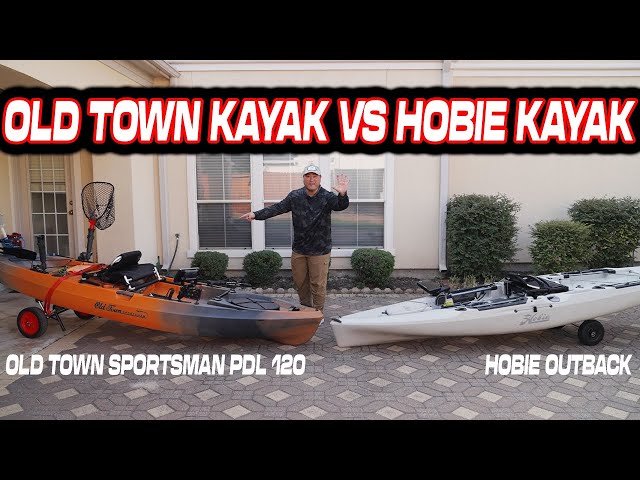
| Mirage Outback | Sportsman PDL 120 | Fishing | Stable, pedal drive, lots of storage |
| Mirage Pro Angler 14 | Sportsman AutoPilot 136 | Serious Fishing | Pedal/motor drive, high capacity, electronics ready |
| Mirage Passport 12.0 | Sportsman 106 PDL | Entry-level pedal | Affordable, easy to use, lightweight |
| Mirage Compass | Sportsman 120 | All-around | Simple, stable, good tracking |
Credit: www.youtube.com
Which Brand Is Right For You?
Choosing between Hobie and Old Town depends on your unique needs. Here are some key points to help you decide:
Choose Hobie If:
- You want the MirageDrive fin system, especially for shallow or weedy waters.
- Sideways movement (MirageDrive 360) is important for your fishing style.
- You value premium build quality and are willing to pay more.
- You want advanced features for serious kayak anglers.
Choose Old Town If:
- You prefer simple, reliable pedal or paddle systems.
- Integrated motor options (AutoPilot) are a must.
- Budget is important, especially for paddle kayaks.
- You want a wide choice of traditional recreational kayaks.
Two Non-obvious Insights Beginners Often Miss
- Resale value matters. Hobie kayaks tend to keep their value better than most brands, thanks to strong demand for used MirageDrive models. This can make the higher upfront cost less painful if you later decide to upgrade.
- Pedal drive comfort changes with leg length. Some shorter or taller paddlers find one brand’s pedal system more comfortable than the other. Always sit in and test the pedal drive before buying—especially if you have knee or hip issues.

Credit: www.reddit.com
Common Mistakes To Avoid
- Ignoring weight: Many buyers are surprised by how heavy pedal and motor kayaks are. Test lifting and moving the kayak before buying.
- Not considering future upgrades: Some kayaks can be fitted with electronics, motors, or extra rod holders. Others are harder to modify.
- Buying based only on features: Comfort and fit are just as important as features. An uncomfortable kayak, no matter how advanced, will stay in your garage.
Where To Buy And Try Before You Buy
Both brands are sold worldwide through specialty dealers. It’s smart to test paddle or pedal both brands if possible. Many dealers offer demo days or rentals. Also, online reviews and YouTube channels can give real-life insights from owners.
For more details about pedal-driven kayak technology and comparisons, you can check Wikipedia’s kayak page.
Frequently Asked Questions
What Is The Main Difference Between Hobie And Old Town Pedal Systems?
Hobie uses the MirageDrive fin system, which moves side to side under the kayak. Old Town uses the PDL Drive, a propeller system you pedal like a bike. MirageDrive is quieter and lets you move sideways with some models, while PDL Drive is simple and has instant reverse.
Which Brand Is Better For Fishing?
Both are excellent for fishing. Hobie offers unique sideways movement and quiet fin drives, which some anglers love. Old Town’s PDL and AutoPilot models are stable, easy to use, and often come at a lower price.
Are Hobie Kayaks Really Worth The Higher Price?
For some people, yes. Hobie’s build quality, MirageDrive system, and resale value justify the price. But if you don’t need these features, Old Town offers great value with strong performance.
Can I Use These Kayaks In The Ocean?
Yes, both brands make kayaks suitable for ocean use. Choose longer, stable models with good hatches and consider pedal systems that work well in saltwater. Always rinse the drive after saltwater trips.
How Do I Transport A Heavy Pedal Or Motor Kayak?
Most people use a trailer or truck bed. Both brands offer kayak carts for moving from the car to the water. Lifting a 100+ pound kayak onto a car roof is hard for one person, so plan your transport before buying.
Making the right choice between Hobie vs Old Town kayaks will depend on your budget, needs, and the kind of water adventures you love most. Both brands deliver quality, but their differences give you real options for the perfect fit. Take your time, try before you buy, and you’ll find a kayak that brings years of enjoyment.