
Choosing the right trolling motor for your kayak can turn a simple day on the water into an effortless adventure. Many kayak anglers and paddlers want to cover more water, fight less against wind or current, and keep their hands free for fishing.
But picking the wrong size trolling motor can quickly lead to disappointment—either your kayak moves too slow, or you burn through batteries before reaching your favorite spot. In this guide, you’ll learn exactly how to select the perfect trolling motor size for your kayak, with practical advice, real-world examples, and tips that even experienced paddlers sometimes miss.
Why Trolling Motor Size Matters For Kayaks
A trolling motor is more than just a convenience. The right motor size affects speed, battery life, and safety. If the motor is too weak, your kayak might struggle in wind or current. Too strong, and you risk damaging your kayak or draining your battery quickly.
Unlike boats, kayaks are small and lightweight. This means the motor must match the kayak’s size, weight, and your typical load. Choosing the right size also means you’ll get better maneuverability and use less energy during your trips.
Understanding Trolling Motor Basics
Before picking a size, it helps to know some basic terms:
- Thrust: Measured in pounds (lbs), this tells you how much power the motor uses to push your kayak through water.
- Voltage: Trolling motors often use 12V, 24V, or 36V batteries. Kayaks almost always use 12V motors.
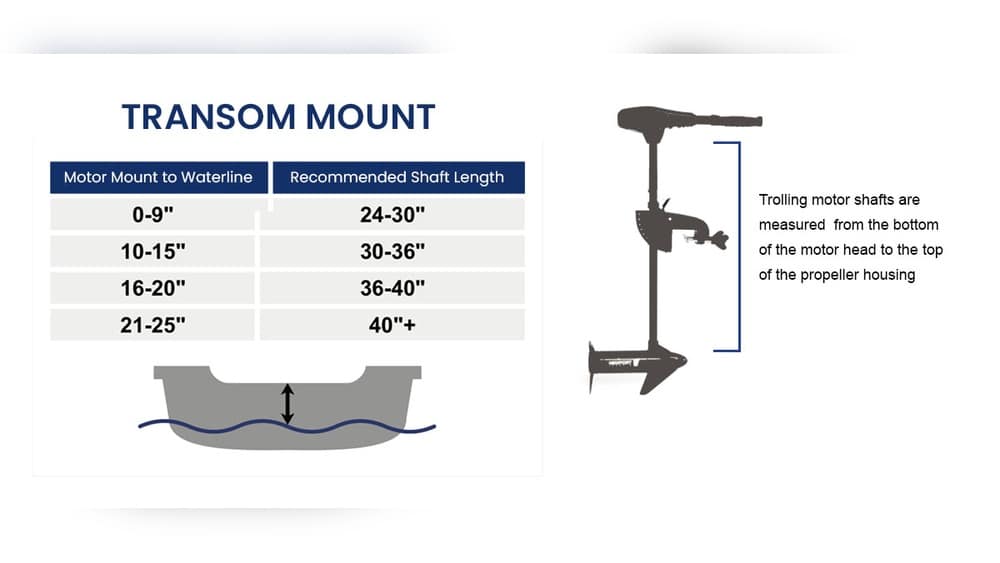
- Shaft length: The distance from the mount to the propeller. This must be long enough to keep the propeller underwater, but not so long that it’s hard to control.
Matching Thrust To Kayak Size
How Much Thrust Do You Need?
Most kayaks need 30 to 55 pounds of thrust. The ideal thrust depends on the total weight the motor needs to move—including the kayak, you, your gear, and the battery.
A simple rule: For every 100 pounds of weight, you need about 2 pounds of thrust.
Example: If your loaded kayak weighs 400 pounds, you need at least 8 pounds of thrust (400 ÷ 100 × 2 = 8). But because wind, current, and extra gear can add resistance, most experts recommend starting at 30 pounds for a solo kayak and up to 55 pounds for larger tandem or fishing kayaks.
Kayak Type And Thrust
- Recreational kayaks (lightweight, under 300 pounds loaded): 30 lbs thrust is usually enough.
- Fishing kayaks (heavier, 350–500 pounds loaded): 40–55 lbs thrust gives better control.
- Tandem kayaks (two people, heavy gear): Aim for 50–55 lbs thrust.
A common mistake is thinking “bigger is better. ” For kayaks, too much thrust can cause handling problems, especially in shallow or narrow waters.
Battery Considerations: Matching Motor Size And Power
Battery Size Matters
Larger motors need more power. Most kayak trolling motors run on a 12V deep-cycle marine battery. A battery’s amp-hour (Ah) rating tells you how long it will last. For example, a 100Ah battery can run a 30-lb thrust motor at low speed for several hours.
Runtime Example
Here’s how battery size, thrust, and runtime relate:
| Motor Thrust | Battery Size (Ah) | Approximate Runtime (Low Speed) |
|---|---|---|
| 30 lbs | 50 Ah | 2-3 hours |
| 40 lbs | 75 Ah | 3-4 hours |
| 55 lbs | 100 Ah | 4-5 hours |
If you pick a bigger motor, you’ll need a bigger battery—and batteries add weight to your kayak.
Battery Weight And Kayak Balance
Heavy batteries can make a kayak unstable. Always place the battery low and centered to keep balance. If your kayak is small, consider a lithium battery—they’re lighter, but more expensive.

Credit: norrik.com
Shaft Length: Getting The Right Depth
The shaft length needs to be long enough to keep the propeller about 6–12 inches below the water surface, even in choppy conditions.
For most kayaks, a 24–36 inch shaft works well. If your kayak sits high in the water, pick a longer shaft. If it’s low or you’re paddling in shallow areas, a shorter shaft is better.
Here’s a quick comparison:
| Kayak Type | Recommended Shaft Length |
|---|---|
| Low-profile recreational | 24–30 inches |
| Fishing kayak (high seat) | 30–36 inches |
| Tandem/large kayak | 32–36 inches |
An often-overlooked tip: Always measure from the mounting point to the waterline, not the bottom of the kayak.
Hand Vs. Foot Control
Kayak trolling motors come in two main control types:
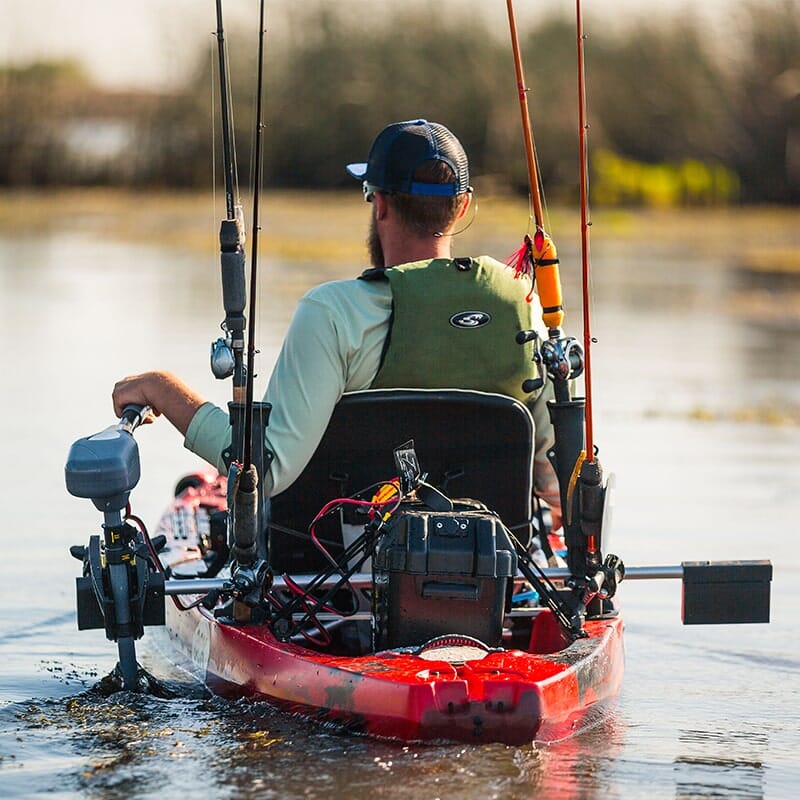
- Hand-controlled: Simple tiller handle, easy to install, best for solo paddlers.
- Foot-controlled: Pedal operated, keeps your hands free for fishing, but usually more expensive and may require kayak modifications.
Most kayakers prefer hand-controlled motors for easy installation and use. But if you spend a lot of time fishing, foot control can be a game-changer.
Credit: newportvessels.com
Common Mistakes When Choosing A Trolling Motor
- Ignoring total weight. Many people only consider the kayak’s weight, forgetting their own weight, gear, and battery.
- Choosing too much thrust. Excess power makes kayaks hard to handle and drains batteries faster.
- Buying the wrong shaft length. If it’s too short, the propeller can come out of the water; too long, and it’s harder to steer.
- Overlooking battery size. A small battery with a big motor means very short trips.
- Skipping compatibility checks. Not all kayaks can easily mount a trolling motor—check the transom or bow for mounting options.
Real-world Example: Matching Motor To Kayak
Let’s say you have a sit-on-top fishing kayak. It weighs 80 pounds by itself. With you (180 pounds), gear (50 pounds), and a battery (30 pounds), the total is 340 pounds.
Following the 2 lbs thrust per 100 pounds rule, you need at least 7 lbs of thrust. But for wind and current, a 40 lbs thrust motor is a practical choice. Pair with a 70Ah deep-cycle battery, and you’ll get about 3–4 hours of run time at moderate speeds.

Credit: newportvessels.com
Comparing Popular Trolling Motor Models
Kayak anglers often choose between a few well-known models. Here’s a look at three popular sizes:
| Model | Thrust | Shaft Length | Weight | Control |
|---|---|---|---|---|
| Newport Vessels Kayak Series 36lb | 36 lbs | 24 inches | 18 lbs | Hand |
| Minn Kota Endura C2 30 | 30 lbs | 30 inches | 17 lbs | Hand |
| Watersnake ASP T24 | 24 lbs | 24 inches | 6.7 lbs | Hand |
For most solo kayaks, the Newport Vessels 36lb or Minn Kota Endura C2 30 are excellent choices. The Watersnake is very lightweight—ideal for small kayaks or those on a tight weight budget.
Unique Factors That Affect Your Choice
Where You Paddle
- Calm lakes: Less thrust is needed.
- Rivers or coastal areas: More thrust helps against current and wind.
- Shallow water: Shorter shaft and lighter motor prevent ground strikes.
Kayak Modifications
Some kayaks need custom mounts or brackets for a trolling motor. Check your kayak’s hull design and make sure you can safely and securely attach a motor before buying.
Local Laws And Registration
In many places, adding a trolling motor means your kayak must be registered as a motorized vessel. Always check local rules before installing a motor.
Two Insights Most Beginners Miss
- Motor weight isn’t always the same as thrust. A 55-lb thrust motor doesn’t weigh 55 pounds—it’s often only 20–25 pounds. This surprises many first-time buyers who worry about overloading their kayak.
- Propeller design affects battery life. Some motors come with smaller, more efficient props that use less power at low speeds—a hidden factor that can add an hour or more to your fishing time.
Making The Final Choice: A Step-by-step Guide
- Calculate your total loaded weight.
- Apply the 2 lbs thrust per 100 pounds rule.
- Consider your paddling conditions (add 10–15 lbs thrust for windy or fast-moving water).
- Choose a 12V battery with enough amp-hours for your trip length.
- Measure for shaft length from the mounting point to the waterline.
- Decide on hand or foot control based on your fishing style.
- Double-check your kayak can handle the motor and battery safely.
Frequently Asked Questions
What Happens If I Use Too Much Thrust On My Kayak?
If you use a trolling motor with too much thrust, your kayak can become hard to steer, especially at full power. It can also cause the kayak to turn sharply or tip in rough conditions. High thrust motors use more battery, so you may run out of power sooner.
Can I Use A 24v Trolling Motor On My Kayak?
Most kayaks are too small for 24V trolling motors. These motors are heavier and require two 12V batteries, which adds too much weight. Stick to 12V trolling motors for better balance and safety on a kayak.
How Do I Know If My Kayak Can Support A Trolling Motor?
Check your kayak’s specifications for a motor mount or reinforced area. If your kayak doesn’t have a flat spot at the stern or bow, you may need a custom bracket. Always check weight limits and ensure your total load (kayak, gear, battery, motor, and you) does not exceed the kayak’s max capacity.
Will A Trolling Motor Scare Away Fish?
Most modern trolling motors are quiet, but some noise and vibration still occur. Lower speeds and weedless propellers reduce noise. Using a lithium battery can also help, as it often runs motors more smoothly. Fish usually get used to the sound quickly, especially in deeper water.
Where Can I Find Reliable Information On Trolling Motors For Kayaks?
For detailed specifications, reviews, and installation guides, visit official manufacturer sites or trusted resources like Wired2Fish.
Whether you’re chasing trophy fish or just want to enjoy a relaxing day on the water, picking the right size trolling motor for your kayak makes every trip better. Consider your kayak’s size, your usual gear, and local water conditions, and you’ll enjoy smooth, trouble-free adventures every time.