
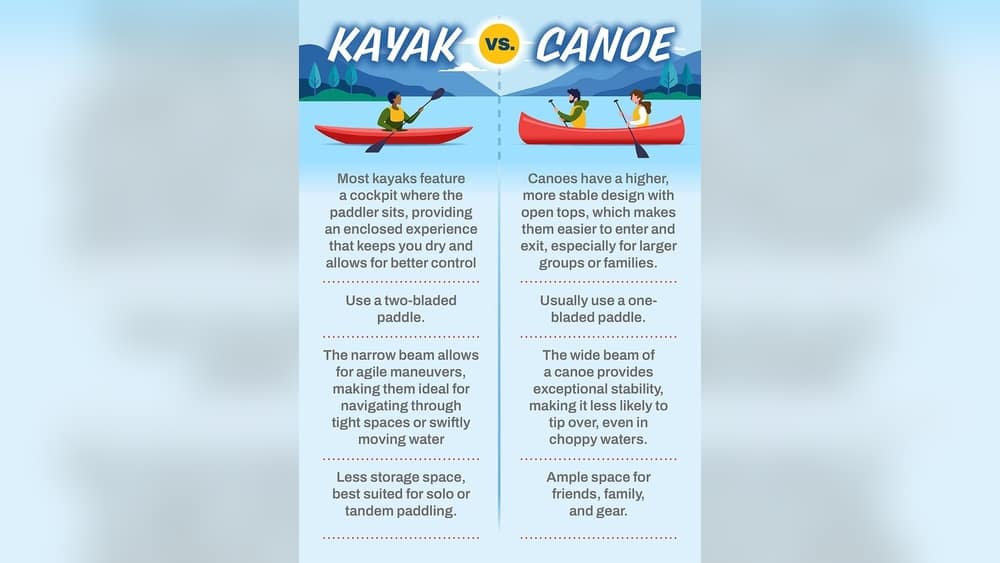
Canoeing and kayaking are two of the most popular ways to enjoy water, nature, and adventure. While both activities might look similar at first, there are big differences between a solo canoe and a kayak. Choosing the right one can make your time on the water much more enjoyable, comfortable, and safe. Many beginners wonder: Which is better for me—a solo canoe or a kayak? The answer is not always simple. It depends on your needs, style, and the type of water you want to explore.
This article explains everything you need to know about solo canoes and kayaks. You’ll learn the main differences, the pros and cons of each, and how to decide which is the right choice for your adventures. Whether you’re planning a peaceful paddle on a lake, a trip down a winding river, or even a fishing excursion, this guide will give you the knowledge you need to make a smart decision.
Let’s compare solo canoe vs kayak in detail.
What Is A Solo Canoe?
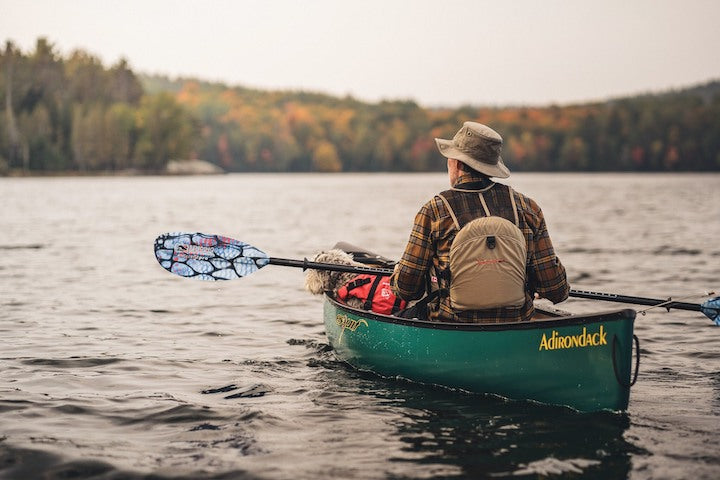
A solo canoe is a canoe designed for just one person. Unlike traditional canoes built for two or more paddlers, a solo canoe is smaller, lighter, and easier to handle alone. You sit in the middle, either on a seat or kneeling, and use a single-bladed paddle. The open design gives you plenty of space for gear and allows you to move around easily.
Solo canoes come in different materials like aluminum, fiberglass, plastic, and lightweight composites. Most are between 12 and 16 feet long. Some are designed for speed and tracking in flat water, while others are built for maneuverability in rivers or whitewater.
Many paddlers choose solo canoes for their versatility. You can use them for day trips, long camping journeys, or even fishing. The open deck makes it simple to load and unload gear, and you have a better view of your surroundings compared to closed boats.
What Is A Kayak?
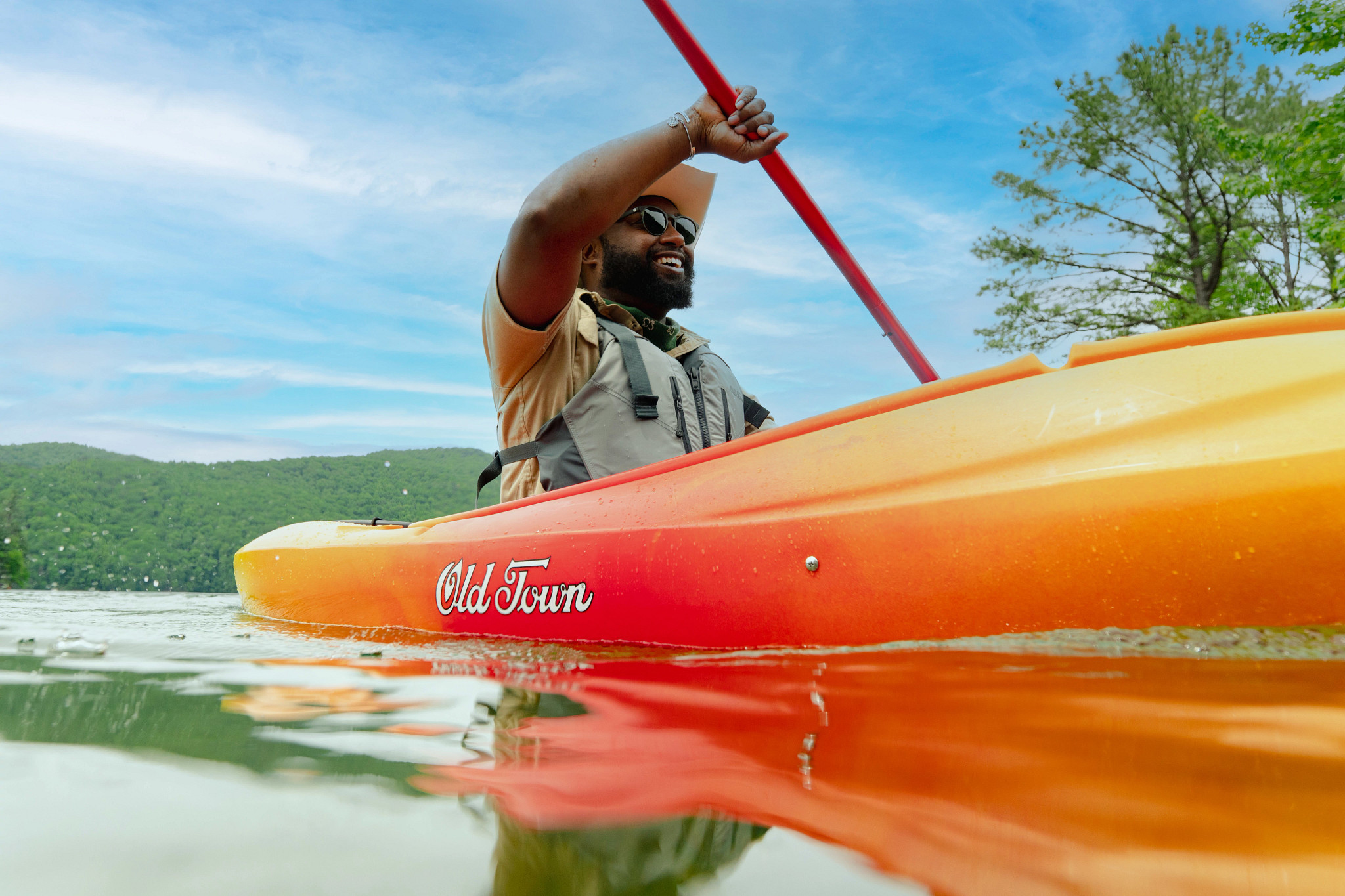
A kayak is a narrow, closed-deck boat where you sit inside with your legs extended. You use a double-bladed paddle to move and steer. There are many types of kayaks: recreational, touring, sea, whitewater, and fishing models. Kayaks are usually between 8 and 18 feet long, depending on their purpose.
Kayaks often feel more enclosed and “connected” to the water. You wear a spray skirt to keep water out, especially in rough conditions. Storage space is usually inside the hull, accessed through hatches. Some kayaks have sit-on-top designs, which are open and easier to get in and out of, but most touring and whitewater kayaks are sit-in models.
Kayaks are known for their speed, efficiency, and ability to handle rough water. The double-bladed paddle lets you move quickly and make fast turns. Many people find kayaks more stable in waves and wind, especially on open water.
Key Differences: Solo Canoe Vs Kayak
Understanding the main differences between a solo canoe and a kayak will help you decide which fits you best. Here are some of the most important factors:
| Feature | Solo Canoe | Kayak |
|---|---|---|
| Paddling Position | Sitting/kneeling, higher above water | Sitting, legs extended inside boat |
| Paddle Type | Single-bladed | Double-bladed |
| Deck Style | Open | Closed (sit-in) or open (sit-on-top) |
| Storage Access | Open, easy to reach gear | Enclosed, hatches for gear |
| Stability | Very stable initially | More stable in rough water |
| Weight | Lighter (especially composites) | Heavier (but more streamlined) |
| Transport | Easier to carry solo | Some models can be heavy/awkward |
These details matter when you’re planning a trip, packing gear, or trying to paddle in a straight line. For example, solo canoes are easier to load with camping equipment, while kayaks are better for long distances in windy conditions.
Advantages Of Solo Canoes
Solo canoes have special strengths that make them the best choice for many paddlers. Here’s what makes them stand out:
- Easy Gear Access: The open design means you can reach your backpack, camera, or fishing rod without opening hatches or moving much. This is a big help for photographers and anglers.
- Comfortable Seating: You can change your position—sit, kneel, or even stretch your legs. This reduces fatigue on long trips.
- High Visibility: Sitting higher above the water gives you a better view of your surroundings. This is helpful for wildlife watching and scouting your route.
- Lightweight Options: Some solo canoes, especially those made from Kevlar or carbon fiber, weigh as little as 15-25 pounds. This makes portaging (carrying your boat over land) much easier.
- Flexible Storage: You can pack large or odd-shaped items that wouldn’t fit in a kayak hatch. This is great for camping, fishing, or carrying pets.
- Silent Movement: Canoes glide quietly, which is useful for sneaking up on wildlife or enjoying peaceful mornings.
- Easy Entry and Exit: It’s simple to get in and out, even from a rocky or muddy shore. This is a big advantage for older paddlers or those with limited mobility.
Non-obvious Insight: Customization
Many people do not realize that solo canoes are easy to customize. You can add seats, tie-downs, or even a small sail. This flexibility is less common in kayaks, which are more “fixed” in their design.
Credit: www.bendingbranches.com
Advantages Of Kayaks
Kayaks are famous for their speed and handling, but they offer other benefits too:
- Speed and Efficiency: Kayaks are usually faster, especially over long distances. The double-bladed paddle means you can keep a steady rhythm and waste less energy.
- Better in Wind and Waves: The low, closed design and cockpit spray skirt keep water out. Kayaks handle rough water better and are less likely to be blown off course.
- Safety in Capsize: If a kayak flips, you can often do an “Eskimo roll” to right yourself without leaving the boat. This is important for whitewater and sea kayaking.
- Foot Control: Many kayaks have foot braces or rudders for steering and power, giving you precise control.
- Compact Size: Most kayaks are shorter and easier to store in small spaces like garages or apartments.
- Transport on Car: Kayaks fit easily on roof racks, and sit-on-top models are simple to load and unload.
- Warmth: Being inside a cockpit protects your legs from wind and cold water, which can make a big difference in early spring or late fall.
Non-obvious Insight: Touring Capacity
Some touring kayaks can carry more gear than you think—up to 100 liters or more in dry storage. If you pack smart, you can do week-long trips, even in a kayak.
Disadvantages Of Solo Canoes
No boat is perfect for every situation. Here are the main downsides of solo canoes:
- Wind Sensitivity: The open design and higher profile catch more wind, making it harder to paddle straight in breezy conditions.
- Less Efficient Over Long Distances: The single-bladed paddle is slower, and you must switch sides or use special strokes to keep on course.
- More Splash in Rough Water: Open canoes let in more water from waves and rain. You need to bail out water or use a spray cover.
- Less “Locked In” Control: Because you’re sitting higher, it’s harder to brace or roll if you tip. Recovering from a capsize usually means swimming to shore.
- Limited for Whitewater: While some solo canoes are made for rapids, most are not as nimble or safe as a kayak in strong currents.
Non-obvious Insight: Fatigue From Crosswinds
Many beginners forget that in crosswinds, solo canoe paddling can tire you out quickly. You may have to paddle harder on one side, which can lead to muscle fatigue and frustration.
Disadvantages Of Kayaks
Kayaks are not perfect either. Here’s what you should consider:
- Difficult Entry and Exit: Getting in and out of a sit-in kayak can be tricky, especially from uneven or muddy banks.
- Limited Gear Access: Most gear is stored in sealed hatches, so you can’t reach your lunch or camera easily while paddling.
- Sitting Position: Sitting with legs straight for hours can cause discomfort or numbness, especially for taller people.
- Enclosed Feeling: Some paddlers feel trapped inside a small cockpit, which can cause anxiety.
- Wet Exits: In a capsize, you must know how to perform a “wet exit” to avoid panic. This is especially important if you paddle alone.
- Difficult to Portage: Carrying a kayak over land can be awkward, especially in thick forest or steep banks.
Non-obvious Insight: Temperature Management
Most new kayakers do not realize how hot a closed cockpit can get on sunny days, especially if you’re wearing a spray skirt. Proper clothing and hydration are important.
Solo Canoe Vs Kayak For Different Activities
Your choice depends a lot on what you want to do. Here’s how solo canoes and kayaks compare in popular paddling activities.
Lake Paddling
For calm lakes, both solo canoes and kayaks work well. Canoes offer comfort and easy gear access for picnics and photography. Kayaks are better if you want speed or plan to paddle across large, windy lakes.
River Trips
If the river is gentle and winding, a solo canoe is a great choice. You can see more, move around, and carry camping gear easily. For fast-moving rivers or whitewater, kayaks are safer and easier to control.
Fishing
Solo canoes have more room for fishing gear, a tackle box, and even a cooler. You can stand or shift position to cast. Sit-on-top kayaks are also popular for fishing, especially in saltwater or larger lakes. Kayaks are more stable for standing but have less space.
Camping And Expeditions
For long trips, solo canoes let you carry bulky gear, pack and unpack quickly, and even bring a dog. Kayaks require more careful packing but protect your gear from rain and splashes. If you need to portage often, a light solo canoe is easier to carry.
Wildlife Watching And Photography
The high, open seating in a solo canoe gives you a better viewpoint and lets you move quietly. Kayaks are closer to the water but can be more stable for taking photos in rough conditions.
Whitewater
Kayaks are the clear choice for whitewater. They are more maneuverable, safer in a capsize, and designed for rough conditions. Only specialized solo canoes are suitable for class II or above rapids.
Which Is Safer? Solo Canoe Or Kayak
Safety depends on where you paddle, your skills, and the water conditions. Here’s a quick comparison:
- Kayaks are generally safer in rough water, wind, and waves. The closed cockpit and ability to roll make them better for challenging conditions.
- Solo canoes are safer for calm water, short trips, and people who need to enter and exit often. They are easier to rescue and less likely to trap you inside.
Never paddle alone without the right skills and safety equipment. Always wear a life jacket and learn self-rescue techniques.
Costs: Solo Canoe Vs Kayak
The price of a solo canoe or kayak depends on the material, brand, and features. Here’s a basic comparison:
| Type | Entry Level ($) | Mid-Range ($) | High-End ($) |
|---|---|---|---|
| Solo Canoe | 600 – 1,000 | 1,200 – 2,000 | 2,500 – 4,000+ |
| Kayak | 300 – 900 | 1,000 – 2,500 | 3,000 – 5,000+ |
Accessories like paddles, life jackets, and dry bags add to the cost. Used boats can be good value, but check for damage before buying.
Credit: oldtownwatercraft.johnsonoutdoors.com
Portability And Storage
If you need to carry your boat often or have limited storage space, this matters:
- Solo canoes: Lightweight models are easy to carry and load onto a car. Longer canoes need more room to store.
- Kayaks: Shorter and easier to fit in small spaces, but heavier. Inflatable or folding kayaks are available for easy storage but may not perform as well.
Always check the weight and size before you buy, especially if you paddle solo.
Solo Canoe Vs Kayak: Who Should Choose Which?
Choosing between a solo canoe and a kayak is personal. Here are some guidelines:
Choose a solo canoe if:
- You want comfort and space for gear.
- You plan to do a lot of fishing or photography.
- You need to enter/exit easily.
- You like calm lakes or slow rivers.
- You want to paddle with a pet or child.
Choose a kayak if:
- You want speed and efficiency.
- You plan to paddle in windy or rough water.
- You like long-distance trips.
- You want to learn advanced paddling skills (like rolling).
- You want to try whitewater or sea kayaking.
Common Beginner Mistakes
Many people make the same mistakes when choosing or using a solo canoe or kayak. Here are some to avoid:
- Ignoring Fit: Always try sitting in the boat before buying. Legroom, seat comfort, and paddle reach are important.
- Overpacking: Beginners often bring too much gear, making the boat unstable.
- Skipping Safety Training: Learn how to capsize and recover before your first big trip.
- Choosing Based on Looks: A beautiful boat isn’t always the best for your needs.
- Not Checking Weight Limits: Every boat has a weight capacity. Overloading can make it unsafe.
- Forgetting Local Conditions: Choose a boat suited to your local lakes or rivers, not just what you see in ads.
Maintenance And Durability
Both solo canoes and kayaks need care to last for years. Here’s how to keep them in good shape:
- Rinse after use: Especially if you paddle in saltwater.
- Store out of sun: UV rays can damage plastic and fabric.
- Check for damage: Look for cracks, dents, or worn parts.
- Oil wood parts: If your canoe has wooden gunwales or seats, treat them yearly.
- Lubricate moving parts: Kayak rudders and foot braces need attention.
A well-maintained boat can last 10-20 years or more.
Environmental Impact
Canoes and kayaks are both eco-friendly ways to explore nature. They don’t need fuel and make little noise. However, there are a few things to consider:
- Plastic boats are less eco-friendly to produce but last a long time.
- Composite boats (fiberglass, Kevlar, carbon) are lighter but use more resources to make.
- Always clean your boat to avoid spreading invasive species between lakes and rivers.
Real-world Examples
Sarah, a wildlife photographer from Minnesota, prefers her solo canoe for quiet lake mornings. She says, “I can move around to get the perfect shot, and my camera bag is always within reach. ”
Mike, a sea kayaker from Oregon, uses his 16-foot kayak for coastal trips. He explains, “The kayak handles waves and wind so well. I can cover 20 miles in a day and never worry about my gear getting wet. ”
Their experiences show that your choice depends on your style and local waters.
Trying Before You Buy
If you’re not sure, try renting or borrowing both a solo canoe and a kayak. Many outdoor stores and clubs offer demo days. Pay attention to comfort, handling, and how easy it is to load gear. One boat will probably “feel right” for you.
Where To Learn More
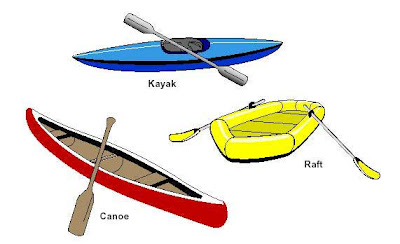
For more details about paddling techniques, safety, and gear, visit the Canoeing Wikipedia page. It offers a wide range of information from basic skills to advanced tips.
Credit: www.outyourbackdoor.com
Frequently Asked Questions
What Is Easier For Beginners: Solo Canoe Or Kayak?
Most beginners find kayaks easier to learn at first, especially for going straight and handling wind. However, solo canoes offer more comfort and space, so some people prefer them after a few tries.
Can You Use A Solo Canoe In Rough Water?
Some solo canoes are built for whitewater, but most are best in calm water or gentle rivers. For strong currents or big waves, a kayak is usually safer and easier to control.
Which Is Better For Fishing: Solo Canoe Or Kayak?
Both work well. Solo canoes have more space for gear and let you move easily. Sit-on-top kayaks are very stable and popular for fishing, especially in saltwater.
What Is The Main Safety Concern With Solo Canoes?
Capsizing in rough water or wind is the biggest risk. You can’t roll a canoe like a kayak, so it’s important to stay near shore and wear a life jacket.
How Do I Transport A Solo Canoe Or Kayak?
Both can be carried on a car roof rack. Solo canoes are usually lighter, but kayaks are shorter. Use foam pads and straps, and always tie down both the bow and stern for safety.
No matter which you choose, both solo canoes and kayaks offer adventure, peace, and a way to connect with nature. The best boat is the one you’ll use often and enjoy. Take your time, try them out, and you’ll find the perfect match for your paddling journey.