
The best kayak battery balances strong power, low weight, safe use, long runtime, and easy charging.
Picture an early morning on a U.S. lake. You load your kayak, mount your small trolling motor, and head out before the water gets busy. Then your battery starts to fade much sooner than expected. That can turn a great fishing trip into a slow paddle back to shore. I look for a kayak battery that gives steady power without adding too much weight. I also want simple charging, good water protection, and enough capacity for the trip. In this guide, I compare five popular 12V options so you can find the best kayak battery for your boat, motor, and style of fishing.
🏆 Top 3 Products

Newport 12V50Ah Deep Cycle Heavy-Duty Marine Battery
Its 50Ah capacity and sealed AGM design make it a strong choice for users who want steady marine power.

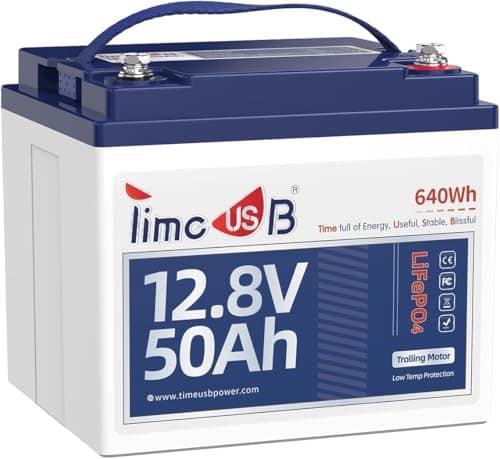
Timeusb 12V 50Ah LiFePO4 Lithium Battery
This 50Ah LiFePO4 battery offers a useful mix of high capacity, lower weight, and broad outdoor use.

GOLDENMATE 12V 20Ah LiFePO4 Lithium Battery
Its smaller 20Ah size can suit compact kayaks where low weight and easy handling matter most.
Newport 12V 50Ah AGM Marine Battery
The Newport 12V 50Ah Deep Cycle Heavy-Duty Marine Battery is built around a simple idea: give a small boat or kayak a steady source of 12V power. Its 50Ah capacity gives you more energy than many small battery packs. The sealed AGM design also makes it a practical fit for marine use. I like this style when I want a battery that feels familiar and does not need the care of a liquid-filled lead-acid battery.
This battery makes sense for a kayak with a trolling motor or other 12V gear. The main trade-off is weight, since AGM batteries are usually much heavier than lithium models with similar capacity. That matters on a kayak because every extra pound can affect transport and balance. Still, if your main goal is dependable capacity at a sensible size, this Newport battery deserves a close look when shopping for the best kayak battery.
✅ Pros
- ✔ 50Ah capacity gives useful energy for longer outings.
- ✔ Sealed AGM construction fits many marine applications.
- ✔ 12V output works with many trolling motor setups.
- ✔ Deep-cycle design suits repeated discharge and recharge use.
- ✔ The sealed format reduces the mess linked with liquid battery designs.
- ✔ Useful choice for anglers who want a traditional marine battery.
- ✔ Can power more than one suitable 12V device when the total load allows it.
⚠️ Cons
- ✖ AGM construction is heavier than many LiFePO4 options.
- ✖ A 50Ah battery may be more capacity than needed for short trips.
- ✖ Lead-acid chemistry can be less weight-efficient than lithium chemistry.
My Recommendation
I would look at this Newport battery if I had a kayak with a compatible trolling motor and wanted 50Ah of deep-cycle power in a sealed AGM package. It fits anglers who care more about capacity and a familiar marine battery format than having the lightest possible setup. Before buying, I would check my motor manual, battery compartment size, cable setup, and charger requirements. I would also compare the battery weight with my kayak’s total load limit. For short trips, a smaller battery may be easier to carry.
| Best For | Why |
|---|---|
| Longer fishing trips | The 50Ah capacity gives a larger energy reserve for compatible 12V loads. |
| Trolling motor users | Its 12V marine format fits many compatible trolling motor systems. |
| AGM buyers | The sealed AGM design offers a familiar option for people who prefer this battery type. |
GOLDENMATE 12V 20Ah LiFePO4 Battery
The GOLDENMATE 12V 20Ah LiFePO4 battery takes a different path from the large AGM option above. It uses lithium iron phosphate chemistry and offers a 20Ah capacity. Its listed IP67 waterproof rating is useful for outdoor gear because kayaks often face spray, splashes, and wet storage areas. I see this type of battery as a good match for smaller setups where carrying less weight can make the whole trip easier.
A 20Ah battery also makes you think more carefully about power use. It may work well for a compact motor or electronics setup when the load stays within the battery’s limits. It can be less suitable for anglers who run a large motor for many hours. If you want the best kayak battery for a light kayak and modest power needs, this smaller LiFePO4 option is worth considering.
✅ Pros
- ✔ LiFePO4 chemistry provides a modern lithium battery format.
- ✔ 20Ah capacity works well for lighter power needs.
- ✔ IP67 waterproof rating adds useful protection for wet outdoor use.
- ✔ Smaller capacity can help keep a kayak load under control.
- ✔ Lithium chemistry can offer good energy efficiency for its size.
- ✔ Useful for compact kayak electronics and suitable small 12V systems.
- ✔ A practical option when portability matters more than maximum capacity.
⚠️ Cons
- ✖ 20Ah provides less energy than the 50Ah models in this guide.
- ✖ May not be enough for long trolling motor sessions.
- ✖ Buyers must confirm charger and device compatibility with LiFePO4 chemistry.
My Recommendation
I would choose the GOLDENMATE when my kayak setup needs a compact 12V lithium battery and my power demand is modest. It makes particular sense for anglers who want less battery bulk and do not need a large energy reserve. The IP67 rating is another useful feature for a kayak environment. I would still check the motor’s recommended battery size and the expected current draw before ordering. A small battery is only a good choice when it can meet the actual load.
| Best For | Why |
|---|---|
| Compact kayaks | The 20Ah format can suit setups where space and weight need close control. |
| Light power loads | It offers a practical energy reserve for compatible lower-demand equipment. |
| Wet outdoor use | The listed IP67 rating adds a useful layer of water protection. |
Timeusb 12V 50Ah LiFePO4 Kayak Battery
The Timeusb 12V 50Ah LiFePO4 battery is aimed at users who want a larger lithium power source for outdoor gear. It lists uses that include kayaks, RVs, and trolling motors, so it has a broad range of potential applications. The 50Ah capacity gives it a much larger energy reserve than a 10Ah or 20Ah pack. For me, that makes it interesting when a kayak setup needs more runtime but still benefits from lithium chemistry.
LiFePO4 batteries can be attractive for kayak owners because they can reduce the weight penalty that comes with large lead-acid batteries. The key is to match the battery to the motor, charger, and wiring. A 50Ah battery can also take up more room than a small electronics battery, so I would measure the storage area before buying. For many anglers, this type of battery sits in the middle of the decision between high capacity and manageable weight.
✅ Pros
- ✔ 50Ah capacity provides a substantial energy reserve.
- ✔ LiFePO4 chemistry can reduce weight compared with many AGM setups.
- ✔ Designed for uses that include trolling motors and outdoor equipment.
- ✔ 12V format works with many common marine and recreational systems.
- ✔ Useful capacity for longer fishing sessions when the load is compatible.
- ✔ Lithium design can be appealing for kayaks where weight matters.
- ✔ Broad use potential can make the battery useful beyond kayaking.
⚠️ Cons
- ✖ 50Ah capacity may be excessive for a simple fish finder setup.
- ✖ A larger battery still needs a secure mounting and storage plan in a kayak.
- ✖ Compatibility with the exact charger and motor should be checked before use.
My Recommendation
The Timeusb 50Ah LiFePO4 battery is a strong fit for anglers who need a larger energy reserve and want lithium chemistry. I would consider it for a powered fishing kayak that uses a compatible trolling motor for longer sessions. The 50Ah capacity gives you more room for energy use than a small 10Ah or 20Ah pack. Before buying, I would confirm the motor’s recommended battery type, check the battery compartment, and make sure my charger is designed for the battery chemistry. Good fit matters more than simply choosing the biggest battery.
| Best For | Why |
|---|---|
| Long kayak trips | The 50Ah capacity provides a larger energy reserve for compatible loads. |
| Trolling motors | The battery is marketed for trolling motor use and provides a common 12V format. |
| Weight-conscious anglers | LiFePO4 chemistry can offer a lighter path to higher capacity than many AGM batteries. |
Nocqua Pro Power 12V 10Ah Lithium Kit

The Nocqua Pro Power Kit takes a compact approach to kayak power. It includes a 12V 10Ah lithium battery and charger, which can make the basic setup easier for a paddler who wants a small power pack. A 10Ah capacity is far below the 50Ah choices in this guide, so this battery targets a different use case. I would look at it when portability and simple storage matter more than long motor runtime.
Small lithium batteries can be useful for kayak electronics and other compatible low-power devices. They also make it easier to keep the deck and storage area clear. The charger included in the kit can be a useful part of the package because you do not have to shop for a separate charger at the same time. Still, I would not expect a 10Ah pack to deliver the same endurance as a 50Ah battery under a high load.
✅ Pros
- ✔ Compact 10Ah capacity suits smaller power needs.
- ✔ 12V output works with compatible 12V equipment.
- ✔ Lithium design keeps the package focused on portability.
- ✔ Charger is included in the kit.
- ✔ Easy size for storage on many smaller kayaks.
- ✔ Useful for suitable electronics and low-power applications.
- ✔ Good option for users who want a complete small power kit.
⚠️ Cons
- ✖ 10Ah capacity limits runtime compared with 20Ah and 50Ah options.
- ✖ Not the natural choice for long, high-load trolling motor use.
- ✖ The exact charger and device compatibility still need to be confirmed.
My Recommendation
I would choose the Nocqua Pro Power Kit when I need a small, simple 12V lithium power source. It can make sense for a kayak angler who wants to run compatible electronics without carrying a large marine battery. The included charger also helps keep the setup simple. I would not pick a 10Ah battery just because it is light if my motor needs much more energy. For a fish finder or another modest load, though, a compact battery can be much easier to manage.
| Best For | Why |
|---|---|
| Fish finder users | Its compact 12V design can suit compatible low-power electronics. |
| Small kayaks | The 10Ah format is easier to store than a large deep-cycle battery. |
| Simple battery setups | The kit includes a charger, which can simplify the initial setup. |
LiTime 12V 50Ah LiFePO4 Trolling Battery

The LiTime 12V 50Ah LiFePO4 battery is another high-capacity lithium choice for powered kayak setups. It is marketed for trolling motors and fish finders, which makes it relevant to anglers who use more than one piece of gear. The 50Ah rating gives it a large energy reserve compared with compact 10Ah and 20Ah packs. I like this capacity range for longer outings where I want more flexibility in how I use my 12V equipment.
The big appeal here is the combination of 50Ah capacity and LiFePO4 chemistry. That can be useful on a kayak because a heavy battery can quickly become a transport problem. I would still plan the installation before buying, since a battery needs to sit securely and remain within the kayak’s load limits. If your setup uses a trolling motor and fish finder, this battery is worth comparing with the other 50Ah options in this guide.
✅ Pros
- ✔ 50Ah capacity offers a large energy reserve.
- ✔ LiFePO4 chemistry suits users who want a lithium battery.
- ✔ Marketed for trolling motors and fish finder use.
- ✔ 12V format fits many common recreational power systems.
- ✔ Useful for longer outings with compatible equipment.
- ✔ Can help reduce the weight burden versus many AGM batteries of similar capacity.
- ✔ Broad 12V use makes it useful for more than one type of kayak gear.
⚠️ Cons
- ✖ 50Ah capacity may be more than needed for simple electronics.
- ✖ A high-capacity battery still needs secure storage and proper wiring.
- ✖ Buyers should confirm charger, motor, and temperature requirements before use.
My Recommendation
I would consider the LiTime 50Ah battery for a powered fishing kayak that needs a larger lithium energy source. It is especially relevant if I plan to use a compatible trolling motor and fish finder during the same outing. The 50Ah capacity gives more room for power use than compact packs. At the same time, LiFePO4 chemistry can make a high-capacity setup easier to carry than many traditional lead-acid choices. I would compare its physical size and weight with my kayak’s storage space before making the final choice.
| Best For | Why |
|---|---|
| Powered fishing kayaks | The 50Ah capacity can support a broader range of compatible 12V equipment. |
| Trolling motor setups | The battery is designed with trolling motor use in mind. |
| Fish finder users | Its capacity gives a useful energy reserve for compatible electronics alongside other loads. |
Final Verdict: Which Should You Buy?
For a broad range of powered kayak trips, I would focus first on the Newport 12V 50Ah AGM, Timeusb 12V 50Ah LiFePO4, and LiTime 12V 50Ah LiFePO4 options. The Newport gives you a sealed AGM format and 50Ah capacity. The Timeusb and LiTime use LiFePO4 chemistry and target buyers who want high capacity with a lighter lithium-style setup. For smaller loads, the GOLDENMATE 20Ah and Nocqua 10Ah options can make more sense because they keep the battery size and energy reserve lower. Your motor, charger, kayak load limit, and planned trip length should guide the final choice.
The best kayak battery is not simply the battery with the biggest Ah number. It should match your motor, gear, storage space, weight limit, and time on the water. Check voltage first, then compare capacity, chemistry, weight, charging, and water protection. With the right match, you can spend less time worrying about power and more time fishing, exploring, and enjoying your kayak.
FAQs Of best kayak battery
Q What size battery do I need for a kayak?
Q Is LiFePO4 better than AGM for a kayak?
Q How many Ah should a kayak trolling motor battery have?
Q Can I use a car battery in a kayak?
Q How do I choose the best kayak battery?