
Can I Put A Trolling Motor On My Kayak?
Kayak fishing and exploring have become even more exciting thanks to the addition of new gear and technology. One question that comes up often is: Can I put a trolling motor on my kayak? The answer is yes, and it can completely change your experience on the water. Adding a trolling motor to your kayak gives you more speed, helps you cover greater distances, and saves your energy for fishing or sightseeing. But before you rush to buy a motor, it’s important to understand the steps, considerations, costs, and potential challenges. Let’s look at everything you need to know about putting a trolling motor on your kayak.
Why Add A Trolling Motor To Your Kayak?
Kayaks are known for being silent and easy to maneuver, but paddling long distances or against strong currents can be tiring. A trolling motor provides steady propulsion, making your trips easier and more enjoyable. Here are some reasons people choose to install one:
- Save energy: Use less physical effort, especially during long trips.
- Fish more effectively: Control your movement and hold your position while fishing.
- Travel farther: Reach remote spots that are difficult to access by paddling.
- Move faster: Cover more water in less time.
- Handle wind and current: Motors help you fight against tough weather or river flows.
Adding a motor can be especially helpful for older paddlers or those with physical limitations. However, it’s not just about comfort — it can also improve your safety by helping you return to shore quickly if needed.
Are All Kayaks Suitable For A Trolling Motor?
Not every kayak is ready for a motor right out of the box. Some kayaks are designed to hold one, while others need adjustments. The most important things to check are:
- Stability: Your kayak should be stable enough to handle extra weight and speed.
- Size and weight: Small or lightweight kayaks may become hard to control with a motor.
- Hull design: Flat-bottom or wide kayaks usually work best.
- Mounting options: Check if your kayak has a flat area or special brackets for motor installation.
Sit-on-top kayaks and fishing kayaks are the most popular choices for motors. Inflatable kayaks can sometimes use a motor, but only if they are rated for it by the manufacturer. If you are not sure, check your kayak’s manual or contact the maker.
Choosing The Right Trolling Motor For Your Kayak
Picking the correct motor is critical. Using the wrong size or type can cause problems or even damage your kayak. Here are the main things to consider:
Thrust Power
Trolling motors are rated by their thrust (measured in pounds/lbs), not horsepower. The right thrust depends on your kayak’s weight and how much gear you carry.
| Kyak Weight (with gear & rider) | Recommended Thrust |
|---|---|
| Up to 400 lbs | 30 lbs |
| 400–600 lbs | 40 lbs |
| 600–800 lbs | 50 lbs |
Most kayaks use a 30–55 lbs thrust motor. Too much power can make the kayak hard to control, and too little will not move it well.
Shaft Length
The shaft must be long enough to keep the propeller underwater but not so long that it drags or hits the bottom.
- For most kayaks, a 24–36 inch shaft is ideal.
- Measure from the mounting point to the waterline, then add about 12 inches.
Type: Bow Or Transom Mount
- Transom mount: Attaches to the back of the kayak. Easier to install, most common for kayaks.
- Bow mount: Attaches to the front. Offers more control but requires special setup and is less common for kayaks.
Motor Type: Electric Vs. Gas
- Electric motors are quieter, lighter, and better for kayaks. Most trolling motors for kayaks are electric.
- Gas motors are heavier, noisier, and usually not recommended.
Freshwater Or Saltwater?
Saltwater motors use special materials to avoid corrosion. If you fish in the ocean or brackish water, pick a saltwater-rated motor.
Battery
Electric motors need a battery. The most common is a 12V deep cycle marine battery. Consider battery weight, size, and how long it lasts (amp-hours).
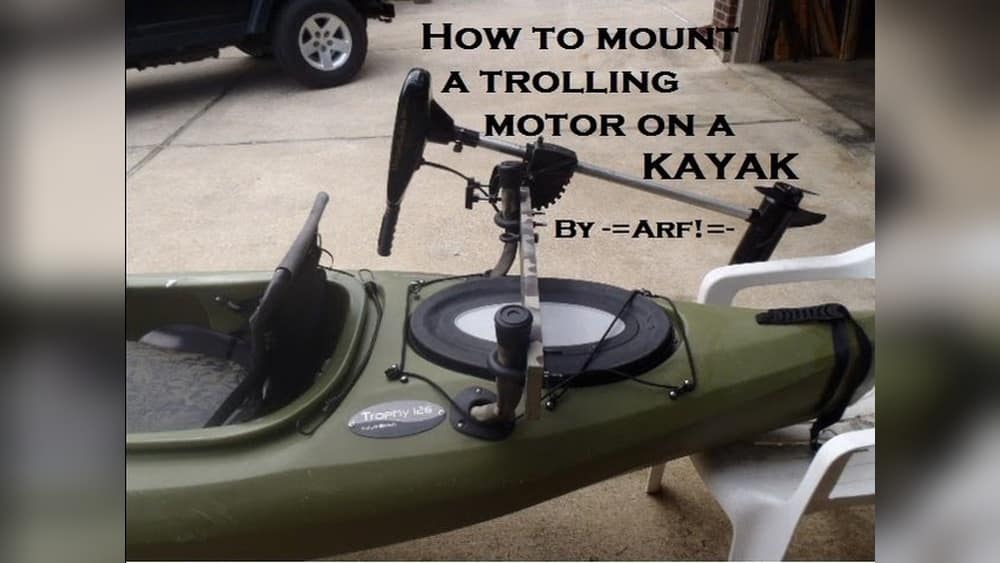
How To Mount A Trolling Motor On A Kayak
Mounting a trolling motor is a project you can do yourself, but it needs planning and care. Here’s a step-by-step overview:
1. Choose Your Mounting Location
The two main options are:
- Transom (rear) mount: Easier for most kayaks, keeps wiring simple.
- Side mount: Good for kayaks with limited rear space.
- Bow (front) mount: Rare, needs special brackets.
Most people choose the rear, as it offers better balance and steering.
2. Get A Mounting Bracket
Some kayaks have pre-installed brackets. If not, you can buy a universal kayak trolling motor mount or build one from strong materials like aluminum or marine-grade wood. The mount must be sturdy to handle vibration.
3. Attach The Motor
Carefully follow the instructions for your mount and motor. Check that all bolts and clamps are tight, but avoid over-tightening and damaging the kayak.
4. Install The Battery
Batteries should be:
- Placed low and central for balance
- Secured with straps or a battery box
- Connected with marine-grade wires
Always use fuses or circuit breakers for safety.
5. Wiring And Controls
Many motors use a hand tiller (handle) for steering and speed. Some have foot controls. Make sure wiring is neat, safe, and waterproofed.
6. Test Everything
Do a dry run on land to check balance and controls. Then try it in shallow water. Watch for leaks, loose parts, or handling problems.

Credit: hub.jacksonkayak.com
Costs Of Adding A Trolling Motor To A Kayak
Adding a motor is an investment. Here’s a breakdown of typical costs:
| Item | Average Price (USD) |
|---|---|
| Trolling Motor | $100 – $400 |
| Battery | $70 – $200 |
| Mount/Bracket | $30 – $100 |
| Wiring/Accessories | $20 – $50 |
Total cost usually ranges from $220 to $750 depending on quality and brand. Remember that better equipment lasts longer and offers more safety.
Legal And Safety Considerations
Many people forget that adding a motor can change the rules for your kayak.
Registration
In the U.S. and some other countries, motorized kayaks must be registered with the local boating authority. This is true even for small electric motors. Check your state or country’s rules before you install a motor.
Safety Equipment
You may be required to carry:
- Life jackets (PFDs) for each person
- Sound device (like a whistle or horn)
- Navigation lights if you go out early or late
- Fire extinguisher in some areas
Insurance
Motorizing your kayak may affect insurance. Some policies cover only paddle-powered boats. Check with your provider.
Age And Licensing
Some places require a boating license or have age limits for operating a motorized vessel.
Environment
Be careful in shallow or protected waters. Motors can disturb wildlife and damage underwater plants.
Performance: What To Expect
Adding a trolling motor changes how your kayak handles. Here’s what you can expect:
- Speed: Most trolling motors move kayaks at 3–5 mph. Not as fast as gas engines, but much faster than paddling for long distances.
- Range: With a good battery, you might get 6–8 hours of run time at low speed. Higher speeds drain the battery faster.
- Noise: Electric motors are quiet, but you’ll hear a soft hum.
- Handling: The extra weight and power make steering different. Practice in calm waters before trying strong currents or waves.
Common Mistakes To Avoid
Many beginners overlook important details. Here are two mistakes many people make:
- Ignoring weight limits: Overloading your kayak with a heavy battery and motor can make it unstable or unsafe.
- Poor waterproofing: Failing to seal battery boxes and wiring can lead to short circuits or dangerous leaks.
Another mistake is placing the battery too far to one side, which can make the kayak tip easily. Always keep heavy items low and centered.

Credit: hub.jacksonkayak.com
Practical Tips For A Better Motorized Kayak Experience
- Use quick-connect plugs for your battery to make charging and removal easier.
- Install a kill switch so you can quickly stop the motor in emergencies.
- Carry a spare paddle. Motors can fail, and you must be able to get back to shore.
- Regularly check for corrosion on terminals and connectors, especially in saltwater.
- Watch your battery level: Running out of power far from shore can be risky.
Real-world Example
Sarah, an avid kayak angler, added a 40 lbs thrust motor to her 12-foot fishing kayak. By using a 100Ah marine battery, she enjoyed up to eight hours of fishing without paddling. She reached areas she never could before. However, she learned the hard way that failing to register her kayak resulted in a fine.
Also, she noticed her kayak was harder to steer at top speed, so she practiced in calm waters to build confidence.
Comparison: Paddle Vs. Motorized Kayak
Here’s how a basic paddle kayak compares to one with a trolling motor:
| Feature | Paddle Kayak | Motorized Kayak |
|---|---|---|
| Speed | 2–3 mph | 3–5 mph |
| Range | Depends on stamina | Up to 8 hours per battery |
| Energy required | High | Low |
| Setup complexity | Simple | Moderate |
| Legal requirements | Few | More (registration, insurance) |
Frequently Asked Questions
What Size Trolling Motor Do I Need For My Kayak?
Most kayaks work well with a 30–55 lbs thrust trolling motor. For a small, lightweight kayak, 30 lbs is enough. Heavier kayaks with lots of gear may need up to 55 lbs. Too much power can make your kayak hard to control.
Do I Have To Register My Kayak If I Add A Trolling Motor?
In most U.S. states and many countries, any motorized vessel must be registered, even if the motor is electric and small. Check your local laws before installation.
Can I Use Any Battery For My Kayak Trolling Motor?
No, you should use a deep cycle marine battery. These are designed for long, slow discharges and can handle the demands of a trolling motor. Regular car batteries are not suitable and can fail quickly.
How Long Will My Trolling Motor Run On A Single Battery Charge?
It depends on the battery’s amp-hour (Ah) rating and how fast you run the motor. At low speeds, a 100Ah battery can last 6–8 hours. Running at full power will drain the battery much faster.

Credit: newportvessels.com
Is It Safe To Use A Trolling Motor In Saltwater?
Yes, but only if you use a saltwater-rated motor. These motors are built to resist corrosion. Always rinse your motor and wiring with fresh water after use in the ocean.
Adding a trolling motor to your kayak is a smart upgrade for many paddlers and anglers. It opens up new opportunities, saves your energy, and lets you explore further. Just remember to follow the rules, respect nature, and put safety first. For more details on state laws and safe boating, check the official U.S. Coast Guard Boating Safety website. With careful setup and a little practice, you’ll enjoy a more powerful and flexible kayak experience on every trip.
Pingback: Best Motorized Kayak: Top Picks For Easy Fishing - Wild Paddler