
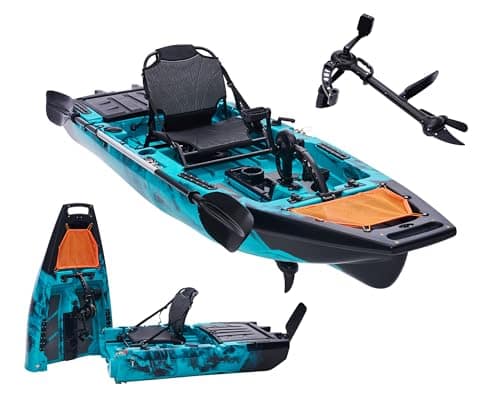
The best pedal kayak depends on your fishing style, storage space, body size, and need for easy transport.
You have a free Saturday, the weather looks good, and you want to spend a few hours on the water. But you also want to fish, move with ease, and keep your hands free for your gear. A paddle kayak can work, yet your arms may tire during a long day. A pedal kayak gives you another way to move. You can use your legs while keeping both hands ready for a rod, camera, or other gear. For many U.S. anglers, that can make a big lake trip, calm river trip, or coastal fishing day much easier. In this guide, I compare 10 pedal kayaks so you can find the right match for your needs.
🏆 Top 3 Products

Reel Yaks Rapido Modular Fishing Kayak, Prop Drive 10.8ft, 440lb capacity
Its 10.8-foot size, prop drive, and 440-pound capacity give anglers a strong mix of space and useful range.

Pelican Catch 110HDII Sit-On-Top Fishing Kayak
The 10-foot hull pairs a HyDryve pedal system with an Ergocast seat for a fishing-first setup.

Reel Yaks Raptor Modular Fishing Kayak, Fin Drive 9.5ft
Its compact 9.5-foot format and 380-pound capacity make it a practical option for anglers who value easier handling.
Albott Modular Pedal Fishing Kayak With Prop Drive

The Albott Modular Fishing Kayak with Propeller Drive System is built for anglers who want pedal power in a modular design. It uses a propeller drive, so you can move without relying only on a paddle. The hull uses durable HDPE, which is a common material for hard-shell kayaks. Its modular design can also appeal to people who care about storage and transport.
I would look at this model if your main goal is fishing rather than casual paddling. The propeller drive can help you keep your hands free while you fish. The HDPE construction also points toward a traditional hard-shell setup instead of an inflatable one. Before buying, I would check the latest seller details for total weight, packed size, drive clearance, and included gear.
✅ Pros
- ✔ Propeller drive supports hands-free movement while fishing.
- ✔ Modular design may make storage and transport easier.
- ✔ Durable HDPE construction suits hard-shell kayak use.
- ✔ Fishing-focused design fits anglers who want pedal control.
- ✔ A good option for buyers who prefer a propeller drive.
⚠️ Cons
- ✖ The hard-shell format may need more storage space than an inflatable kayak.
- ✖ Drive parts can need extra care around shallow or weedy water.
- ✖ Exact weight and packed dimensions should be checked before purchase.
My Recommendation
I would consider this Albott model for an angler who wants a modular hard-shell kayak with a propeller drive. It makes sense when hands-free fishing matters more than having the smallest possible kayak. I would also compare its current package and dimensions with the other Albott and Reel Yaks models before making a final choice.
| Best For | Why |
|---|---|
| Fishing | The propeller drive is designed for hands-free movement. |
| Storage-minded anglers | The modular design may help with storage and transport. |
| Hard-shell buyers | HDPE gives it a traditional rigid-kayak setup. |
Reel Yaks Raptor 9.5ft Fin Drive Fishing Kayak
The Reel Yaks Raptor is a 9.5-foot modular fishing kayak with a fin drive system. Its listed capacity is 380 pounds, which gives buyers a clear number to use when planning for body weight and gear. The shorter length can be useful for anglers who want a more compact boat. The fin drive also gives this model a different setup from propeller-drive kayaks.
I see the Raptor as a practical choice for solo fishing trips where easy handling matters. A 9.5-foot kayak can be easier to think about when garage space or vehicle transport is limited, though real weight and transport needs still matter. The 380-pound capacity should include the user and carried gear, so I would leave a sensible margin instead of treating the number as a target. For many buyers, that simple size and capacity balance can make this a useful option.
✅ Pros
- ✔ Compact 9.5-foot length can suit anglers with limited space.
- ✔ Fin drive provides pedal-powered movement.
- ✔ 380-pound listed capacity gives a useful load reference.
- ✔ Modular design can help buyers who need easier storage.
- ✔ Fishing-focused layout suits solo trips.
⚠️ Cons
- ✖ The 380-pound capacity may be limiting for heavier users with lots of gear.
- ✖ A shorter hull may offer less room than longer fishing kayaks.
- ✖ Fin drives need care in very shallow or obstacle-filled water.
My Recommendation
I would recommend the Raptor to anglers who want a smaller pedal fishing kayak and do not need a very high load rating. Its 9.5-foot length and 380-pound capacity create a clear use case. It can also be a sensible match for people who want a modular kayak but do not want a long 12-foot or 13.5-foot platform.
| Best For | Why |
|---|---|
| Solo anglers | Its compact size fits focused one-person fishing trips. |
| Smaller storage areas | The 9.5-foot length is shorter than several models in this list. |
| Fin-drive fans | The pedal system uses a fin drive instead of a propeller. |
Pelican Catch 110HDII Pedal Fishing Kayak
The Pelican Catch 110HDII is a 10-foot sit-on-top fishing kayak with the HyDryve pedal system. It also uses an Ergocast seat, which puts comfort high on the feature list. The 10-foot format sits near the middle of this group, so it may appeal to anglers who want a balance between compact size and useful space. It is a fishing kayak first, not just a basic recreational boat with pedals.
For my needs, the seat and pedal system would be two key points to check first. Long fishing sessions can feel very different when the seating setup works well. A pedal system also lets you focus more on your rod and less on repeated paddle strokes. If you want a known fishing-focused format with a 10-foot hull, this model deserves a close look.
✅ Pros
- ✔ HyDryve pedal system provides hands-free propulsion.
- ✔ Ergocast seat focuses on seated fishing comfort.
- ✔ 10-foot length offers a middle-ground size.
- ✔ Sit-on-top layout works well for fishing access.
- ✔ Purpose-built fishing design fits anglers who spend long sessions on the water.
⚠️ Cons
- ✖ The 10-foot hard-shell format still needs suitable storage and transport.
- ✖ Buyers should confirm the latest weight and capacity before ordering.
- ✖ Pedal hardware can require more cleaning than a simple paddle kayak.
My Recommendation
I would put this Pelican high on the list for anglers who care about comfort during a fishing trip. The HyDryve system and Ergocast seat make it easy to understand the design goal. It is especially worth considering if you want a 10-foot sit-on-top kayak and prefer a dedicated fishing setup over a basic recreational kayak.
| Best For | Why |
|---|---|
| Comfort-focused anglers | The Ergocast seat is a key part of its fishing setup. |
| Fishing trips | The HyDryve pedal system leaves your hands free for fishing. |
| Medium-size kayak buyers | The 10-foot length avoids the extremes of very short and very long kayaks. |
Danrelax 12ft Inflatable Pedal Fishing Kayak

The Danrelax model takes a different path from the hard-shell kayaks in this list. It is a 12-foot inflatable kayak with a pedal system and a PVC construction. The inflatable format can be useful for people who lack room for a rigid kayak at home. A 12-foot length also gives it a longer profile than many compact pedal kayaks.
I would consider this type of kayak when portability and storage matter a lot. An inflatable boat can be easier to store than a full-size rigid hull, but you must allow time to inflate and pack it. PVC also needs sensible care around sharp rocks, rough surfaces, and other hazards. For a buyer who wants a longer pedal kayak without storing a rigid hull, this model fills a useful niche.
✅ Pros
- ✔ Inflatable design can reduce storage demands at home.
- ✔ 12-foot length gives it a longer kayak profile.
- ✔ Pedal system supports hands-free movement.
- ✔ PVC construction is suited to an inflatable kayak format.
- ✔ Useful option for buyers who cannot store a rigid kayak.
⚠️ Cons
- ✖ Inflation adds setup time before a trip.
- ✖ Inflatable material needs care around sharp objects.
- ✖ Buyers should verify the included pump, drive parts, and repair items.
My Recommendation
I would look at the Danrelax if storage is your biggest problem. A 12-foot rigid kayak can be hard to keep in a small garage or apartment, while an inflatable format can pack down after use. This model also keeps the pedal feature, so it does not force you to give up hands-free movement just to gain easier storage.
| Best For | Why |
|---|---|
| Small homes | An inflatable design can reduce the space needed between trips. |
| Portable fishing | The design targets users who want a 12-foot kayak without a rigid hull. |
| Pedal beginners | It combines a pedal system with an inflatable format. |
Albott Modular Pedal Fishing Kayak With Fin Drive

This Albott Modular Fishing Kayak uses a fin drive instead of the propeller drive found on another Albott model in this list. It also uses a durable HDPE body. That gives shoppers a clear choice between two drive styles within the same broad product family. The modular design adds another point of interest for people who need a kayak that can fit their storage and transport plans.
I like the idea of comparing this model directly with the Albott propeller version. The choice between fin and propeller drives can matter in shallow water and around underwater objects, so your usual fishing spots should guide the decision. The HDPE shell also makes this a better fit for buyers who want a rigid kayak. I would check the current product details for weight, capacity, included accessories, and exact modular setup before purchase.
✅ Pros
- ✔ Fin drive provides pedal-powered movement.
- ✔ HDPE construction gives it a rigid kayak format.
- ✔ Modular design may simplify storage and transport.
- ✔ Fishing-focused setup suits anglers who want hands-free control.
- ✔ Offers an alternative to Albott’s propeller-drive version.
⚠️ Cons
- ✖ Rigid construction can require more storage space than an inflatable kayak.
- ✖ Fin systems need care around very shallow water and underwater obstacles.
- ✖ Exact capacity and package contents should be confirmed before buying.
My Recommendation
I would choose this Albott version when a fin drive better matches the water you fish. It is also a useful choice for someone who likes the idea of a modular HDPE kayak. If you often fish areas with weeds or shallow sections, compare the drive design and clearance with the propeller model before deciding.
| Best For | Why |
|---|---|
| Fin-drive users | The kayak uses a dedicated fin pedal system. |
| Hard-shell anglers | The HDPE body gives it a rigid construction. |
| Modular storage | The modular format can suit buyers with transport limits. |
Reel Yaks Raider 9.5ft Modular Pedal Kayak

The Reel Yaks Raider is a 9.5-foot modular fishing kayak made for adults and youth. Its listed capacity is 380 pounds, and its design focuses on compact storage and easy transport. The sit-on-top layout gives the user an open place to sit and fish. The product description also highlights its lightweight and compact approach, which makes it stand out from larger kayaks in this group.
This model can make sense when you want pedal fishing without stepping up to a long kayak. I would pay close attention to the 380-pound capacity once you add tackle, a cooler, a battery, and other gear. A compact kayak may also be easier to move from a garage to the water. For shorter trips and anglers who value transport, the Raider has a clear role.
✅ Pros
- ✔ 9.5-foot length keeps the overall format compact.
- ✔ 380-pound listed capacity gives a clear load limit.
- ✔ Modular design can support easier storage.
- ✔ Sit-on-top layout suits fishing access.
- ✔ Designed with transport and compact storage in mind.
⚠️ Cons
- ✖ The 380-pound capacity may not suit heavy loads.
- ✖ The shorter hull may offer less room than 10-, 12-, or 13.5-foot options.
- ✖ Buyers should confirm the current product weight before planning transport.
My Recommendation
The Raider is a strong match for buyers who want a compact pedal kayak for adults or youth. I would focus on it if your storage area is tight or you often move the kayak by hand. Its 9.5-foot size makes it one of the easier models in this list to consider when transport matters as much as water performance.
| Best For | Why |
|---|---|
| Compact fishing | The 9.5-foot format keeps the kayak relatively short. |
| Adults and youth | The listed product design covers both user groups. |
| Easy transport | Its modular and compact design targets simpler movement and storage. |
Reel Yaks Rapido 10.8ft Prop Drive Fishing Kayak
The Reel Yaks Rapido is a 10.8-foot modular fishing kayak with a prop drive and a listed 440-pound capacity. That capacity is one of its main points because it gives more room for the angler and fishing gear than the 380-pound models in this list. The 10.8-foot length also puts it between compact 9.5-foot kayaks and larger 12- to 13.5-foot models. For anglers who carry more equipment, that middle size can be useful.
I would give this model a close look when load capacity matters. A fishing kayak needs to carry more than just the person sitting in it. Rods, tackle, food, safety gear, and other items can add weight fast. The prop drive also supports hands-free movement, which is helpful when you want to stay focused on fishing instead of switching between a paddle and your rod.
✅ Pros
- ✔ 440-pound listed capacity gives useful room for user and gear.
- ✔ 10.8-foot length balances compact size with added space.
- ✔ Prop drive supports hands-free fishing movement.
- ✔ Modular format can help with storage and transport.
- ✔ Good fit for anglers who carry more equipment.
⚠️ Cons
- ✖ The larger size can need more storage room than a 9.5-foot model.
- ✖ Propeller hardware needs care around shallow water and underwater obstacles.
- ✖ A higher capacity does not mean you should load the kayak to its limit.
My Recommendation
The Rapido is the model I would study first if you need more carrying room but do not want a very large kayak. Its 10.8-foot length and 440-pound capacity give it a useful middle position in this group. It can suit serious anglers who bring a good amount of tackle and still want a manageable kayak size.
| Best For | Why |
|---|---|
| Gear-heavy anglers | The listed 440-pound capacity leaves more room for the user and equipment. |
| Hands-free fishing | The prop drive supports pedal-powered movement. |
| Medium-size kayak buyers | The 10.8-foot length sits between compact and larger choices. |
Reel Yaks Radar 10ft 430lb Modular Fishing Kayak

The Reel Yaks Radar is a 10-foot modular fishing kayak with a listed capacity of 430 pounds. That puts its capacity above the 380-pound Raptor and Raider while keeping the length at a compact 10 feet. This makes it an interesting option for anglers who want more carrying room without moving to a 12-foot or longer kayak. Its modular design also targets buyers who care about storage and transport.
I would consider the Radar when your gear list is larger than a basic day-trip setup. The 430-pound rating gives you a useful starting point, but the total should always cover both the angler and all gear. Its 10-foot length may also be easier to manage than a very long fishing kayak. Before ordering, I would confirm the drive type, total kayak weight, and included accessories because those details can affect the real-world fit.
✅ Pros
- ✔ 430-pound listed capacity supports a larger load.
- ✔ 10-foot length keeps the kayak relatively compact.
- ✔ Modular design can help with storage and transport.
- ✔ Fishing-focused format suits anglers with regular gear.
- ✔ Offers more listed capacity than the 380-pound models in this group.
⚠️ Cons
- ✖ The product’s current drive details should be confirmed before purchase.
- ✖ A 430-pound limit still includes the angler and all carried gear.
- ✖ Rigid kayak storage can be harder than inflatable storage.
My Recommendation
I would look at the Radar if you want a 10-foot kayak but need more capacity than a 380-pound model offers. It can be a useful middle option for anglers who bring a fair amount of tackle. I would make the final choice only after checking the current drive system and package details, since those can change the value of the setup.
| Best For | Why |
|---|---|
| Gear-heavy solo trips | Its 430-pound listed capacity gives more room for equipment. |
| Moderate storage | The 10-foot hull is shorter than several larger fishing kayaks. |
| Modular kayak buyers | The modular design can help with transport and storage plans. |
BKC Brooklyn 12.0 Single Pedal Fishing Kayak

The BKC Brooklyn 12.0 is a 12-foot single pedal fishing kayak with a sit-on-top design. Its longer hull gives it a different feel on paper from the 9.5- and 10-foot models in this list. The single-person format makes it a natural fit for solo anglers. If you want a longer kayak for your fishing routine, this model is worth comparing with the other single-person options.
I would focus on the Brooklyn 12.0 if you have enough room for a longer kayak and want a solo fishing platform. A 12-foot kayak can require more thought when it comes to garage storage, vehicle transport, and launching. In return, the longer format may appeal to people who prefer a larger fishing platform. Check the latest listed capacity and included accessories before buying, especially if you plan to carry a lot of equipment.
✅ Pros
- ✔ 12-foot length provides a larger solo kayak format.
- ✔ Single pedal setup supports hands-free movement.
- ✔ Sit-on-top design suits fishing use.
- ✔ Longer hull can appeal to anglers who want more kayak space.
- ✔ Built around a dedicated fishing-kayak format.
⚠️ Cons
- ✖ A 12-foot kayak needs more storage space than a 9.5-foot model.
- ✖ Longer kayaks can take more planning for transport and launch.
- ✖ Current capacity and included accessories should be checked before purchase.
My Recommendation
The Brooklyn 12.0 makes sense for solo anglers who want a longer kayak and have a good storage and transport plan. I would not pick a 12-foot kayak only because it is longer. Instead, I would choose this format when the extra size fits your fishing style and your launch routine. It is a strong comparison point for anyone searching for the best pedal kayak for solo fishing.
| Best For | Why |
|---|---|
| Solo anglers | The product is designed as a single pedal fishing kayak. |
| Larger fishing setups | Its 12-foot length offers a larger platform than the compact models. |
| Dedicated fishing use | The sit-on-top design targets fishing rather than simple recreation. |
BKC Brooklyn 13.5 Tandem Pedal Fishing Kayak

The BKC Brooklyn 13.5 is the largest kayak in this group by stated length, at 13.5 feet. It is a tandem pedal fishing kayak built for two people. That changes the buying decision because you must think about two users, two sets of gear, and the extra space needed to move and store a longer kayak. For couples, friends, or family fishing trips, the two-person layout can be the main reason to choose it.
I would consider this model when sharing the water is part of the plan. A tandem kayak can save you from taking two separate boats, but the trade-off is size and weight. A 13.5-foot kayak also needs a good transport plan before you buy it. If you have the space and want two-person pedal fishing, this BKC model gives you a clear tandem option in the group.
✅ Pros
- ✔ Tandem layout lets two people share one kayak.
- ✔ 13.5-foot length provides a large overall platform.
- ✔ Pedal setup supports hands-free movement for fishing.
- ✔ Useful for couples, friends, or family trips.
- ✔ Can avoid the need to transport two separate kayaks.
⚠️ Cons
- ✖ 13.5 feet requires significant storage space.
- ✖ A tandem kayak can be harder to transport and launch alone.
- ✖ Two users and their gear require careful attention to the total load limit.
My Recommendation
I would choose the Brooklyn 13.5 when two-person use is a real need. It is not the type of kayak I would suggest simply for casual solo use because its large tandem format can add transport and storage work. But for shared fishing days, it can be a practical way to put two people on the water in one pedal kayak.
| Best For | Why |
|---|---|
| Two-person fishing | The tandem design is built for two users. |
| Couples and friends | One kayak can support a shared day on the water. |
| Large kayak setups | The 13.5-foot length provides a large overall platform. |
Choosing The Best Pedal Kayak For You
When I compare the best pedal kayak options, I start with the way the kayak will be used. A short kayak may be easier to store and move. A longer kayak may give you more room, but it can take more effort to transport. A higher capacity can help if you carry a lot of gear, yet you should never ignore the total load limit. The right choice is the one that fits your body, gear, water, storage, and transport plan.
I also look at the drive system. A fin drive and a propeller drive both give you pedal power, but their design is different. Shallow water, weeds, rocks, and underwater objects can affect how useful a drive system feels on a real trip. For this reason, I would match the drive to the places you actually fish. That matters more than picking a kayak from a simple feature list.
✅ Pros
- ✔ A clear comparison helps match kayak size to your needs.
- ✔ Capacity gives you a way to plan for the angler and gear.
- ✔ Drive type can guide your choice for different water conditions.
- ✔ Storage needs can prevent an expensive mistake.
- ✔ Transport planning can make launch days much easier.
⚠️ Cons
- ✖ No single kayak fits every angler or water type.
- ✖ Product specifications and packages can change, so current listings matter.
- ✖ A feature-rich kayak can still be a poor fit if storage and transport are difficult.
My Recommendation
Use a simple checklist before buying the best pedal kayak for your needs. First, decide if you want solo or tandem use. Next, set a real load target that includes you and your gear. Then measure your storage area and plan how you will transport the kayak. Finally, choose the drive style that fits the water you fish. This process can narrow a long list into a few useful choices.
| Best For | Why |
|---|---|
| First-time buyers | A basic checklist makes the comparison easier. |
| Fishing anglers | Capacity, drive type, and storage all matter on fishing trips. |
| Online shoppers | Checking size and current specifications can reduce buying mistakes. |
Final Verdict: Which Should You Buy?
After comparing the options, the Reel Yaks Rapido stands out as my overall pick for the best pedal kayak in this group because its 10.8-foot length, prop drive, and listed 440-pound capacity create a useful balance for fishing. The Pelican Catch 110HDII is another strong choice for anglers who place extra focus on its HyDryve pedal system and Ergocast seat. For compact use, the Reel Yaks Raptor offers a 9.5-foot format with a listed 380-pound capacity. Your own body size, gear load, water, storage, and transport plan should decide the final match.
The best pedal kayak is not simply the longest or most feature-rich model. It is the one that fits your fishing style and daily routine. Check the latest size, weight, capacity, drive, and included accessories before you buy. With the right match, a pedal fishing kayak can make long days on U.S. lakes, rivers, and calm coastal water more comfortable and hands-free.
FAQs Of best pedal kayak
Q What is a pedal kayak?
Q Is a pedal kayak good for fishing?
Q Are pedal kayaks hard to transport?
Q What is better, fin drive or propeller drive?
Q How much weight can a pedal kayak carry?