
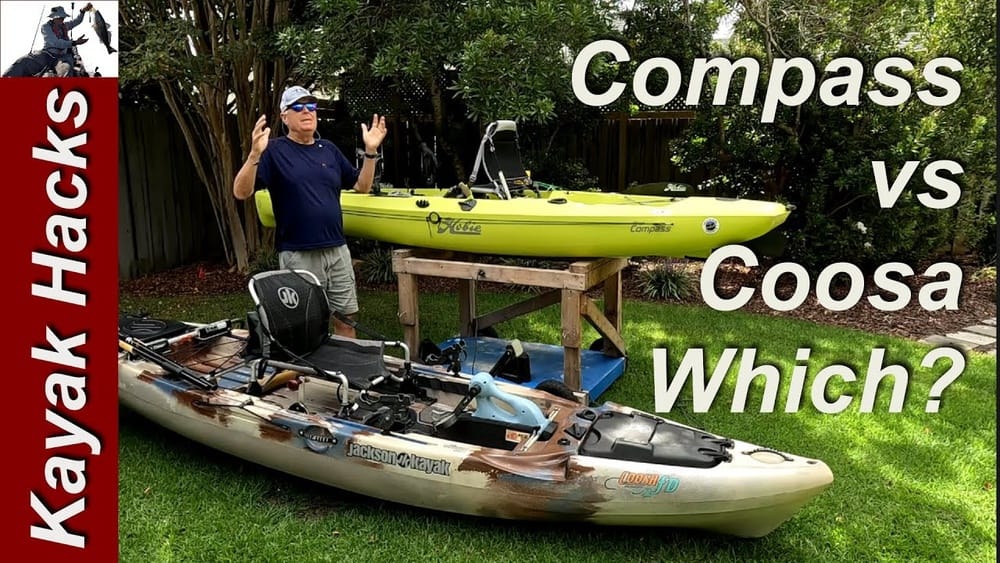
If you are a kayak enthusiast or just starting to explore the world of fishing and recreational kayaking, you have likely heard the names Hobie and Jackson Kayak. Both brands are giants in the kayak world, known for innovation, quality, and passionate followings. But when it comes to choosing between them, the decision is not simple. Many factors—like design, price, comfort, and performance—set them apart. This guide will take you deep into the real differences, highlight subtle details that matter for both beginners and experienced paddlers, and help you make a confident choice.
The Legacy Of Hobie And Jackson Kayak
Understanding the backgrounds of Hobie and Jackson Kayak can give you insight into their design philosophies.
Hobie has been around since 1950, originally famous for their sailboats. Their move into the kayak market brought a wave of innovation, especially with the MirageDrive pedal system. This allowed hands-free propulsion, changing the way anglers and recreational paddlers approached kayaking.
Jackson Kayak entered the scene in 2003, founded by world-champion kayaker Eric Jackson. The company quickly became known for whitewater and fishing kayaks, focusing on modular design, comfort, and versatility. Their boats are built with input from pro anglers and paddlers, making them especially attractive for those who want a tailored experience.
Both companies have strong communities, dedicated fans, and a reputation for listening to customer feedback. But their approaches to kayak design and function often differ in important ways.
Key Differences In Design Philosophy
The most obvious contrast is in how each brand approaches the kayak propulsion system.
Hobie’s claim to fame is the MirageDrive system. Instead of paddling, you use your feet to pedal, which moves two fins beneath the kayak. This allows you to move faster, fish with both hands, and handle wind or current more easily.
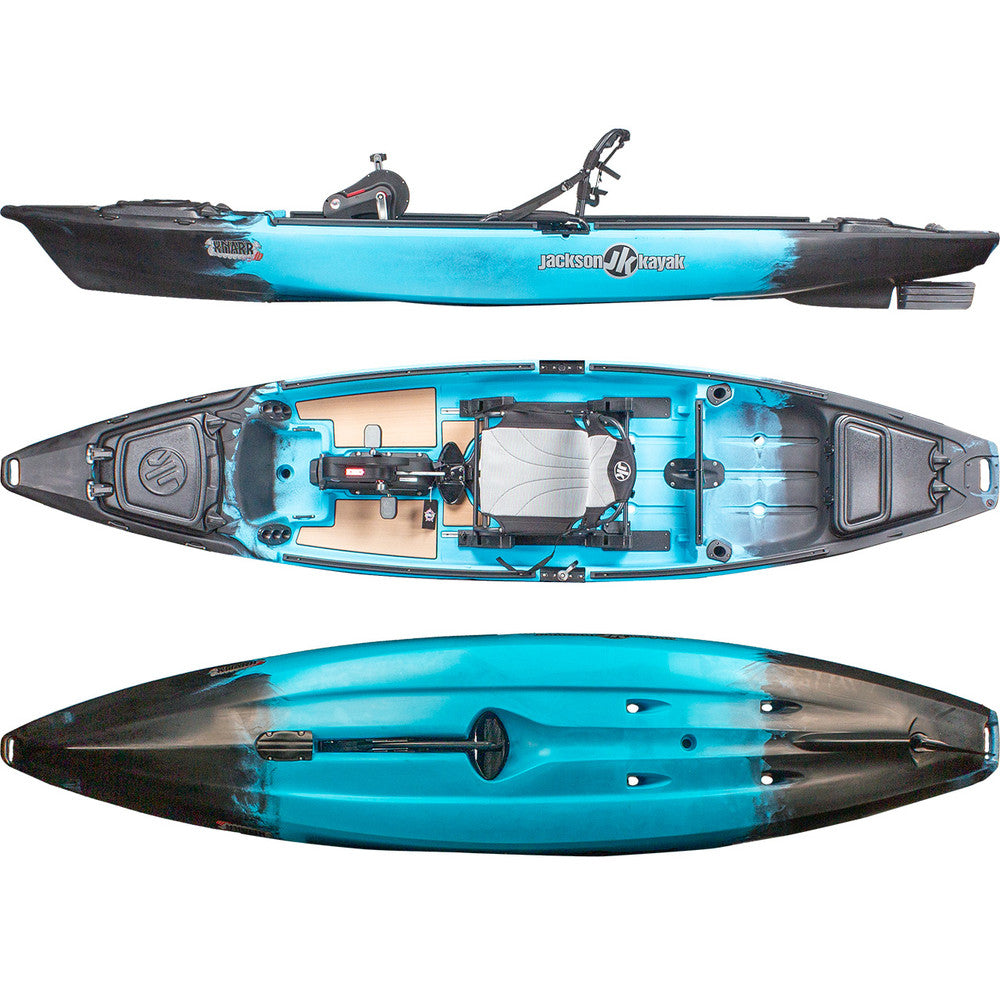
Jackson Kayak, on the other hand, offers both traditional paddle kayaks and pedal models (like the Flex Drive system). Their focus is more on versatility and comfort. Most Jackson models can switch between paddle and pedal, or even use a small motor.
Another difference is in storage and customization. Jackson is known for modular seats, removable gear tracks, and adjustable rod holders. Hobie focuses on integrated storage and a low-profile deck, which is great for standing and casting.
Credit: www.riversports.com
Comparing Popular Models: Hobie Vs. Jackson Kayak
Let’s look at some of the most famous and current models from both brands to highlight the differences.
| Model | Brand | Length (ft) | Width (in) | Weight (lbs) | Drive System | Max Capacity (lbs) |
|---|---|---|---|---|---|---|
| Mirage Outback | Hobie | 12’9″ | 34″ | 103 | MirageDrive 180 | 425 |
| Mirage Pro Angler 14 | Hobie | 13’8″ | 38″ | 120.5 | MirageDrive 180 | 600 |
| Big Rig FD | Jackson Kayak | 13’3″ | 40″ | 145 | Flex Drive | 550 |
| Coosa FD | Jackson Kayak | 12’7″ | 35″ | 115 | Flex Drive | 450 |
What This Means For You
- Hobie kayaks are slightly lighter and focus on the pedal drive.
- Jackson models are often wider, giving more stability for standing and fishing.
- Both brands offer high weight capacities for gear and anglers.
Propulsion: Miragedrive Vs Flex Drive
The MirageDrive is perhaps the most famous kayak pedal system worldwide. Its push-and-pull pedal motion is smooth, efficient, and allows for quick reversals (MirageDrive 180). The fins fold up for shallow water, and maintenance is minimal. Many users say you can pedal all day without sore arms, making it great for long fishing trips.
Jackson’s Flex Drive is different. It uses a rotational pedal system similar to a bicycle. The drive lowers into the water and can be adjusted for shallow spots. It’s easy to remove for transport or cleaning. One unique feature: the Flex Drive can also be fitted for an electric motor, giving you even more options.
Two insights often missed by beginners:
- Reverse Capability: Not all pedal drives go backward. Hobie’s MirageDrive 180 allows instant reverse with a pull of a lever. Jackson’s Flex Drive also reverses, but the mechanism is different and takes getting used to.
- Maintenance: MirageDrive needs less frequent adjustment, but spare parts can be expensive. Flex Drive is simpler to repair at home, but sometimes requires more frequent cleaning if used in weedy or muddy waters.
Comfort And Seating
Spending hours on the water means seat comfort is critical.
Hobie’s Vantage CTW seat is fully adjustable for height, recline, and lumbar support. You can remove it and use it as a beach chair. The frame is corrosion-resistant, and the mesh dries quickly.
Jackson Kayak’s Elite Seat System is also adjustable, with high and low positions. It is wider and often seen as more “cushiony. ” Jackson’s seats are mounted on rails, making them easy to slide forward or back and sometimes even remove.
For taller or heavier paddlers, Jackson’s extra width and seat adjustability are a big plus. Hobie’s seats are lower to the deck, which can feel more stable but less roomy for some people.
Stability And Performance On The Water
Both brands focus on stability, but they achieve it in different ways.
Hobie kayaks have a tri-hull design—the hull has three distinct points of contact with the water. This gives excellent initial stability (doesn’t tip when you get in) and secondary stability (stays upright even when you lean).
Jackson Kayak boats, especially the Big Rig and Coosa, are known for their wide, flat hulls. This makes them ideal for standing and sight fishing. They are slightly slower to paddle, but the trade-off is a super-stable platform.
Advanced users often notice:
- In choppy or windy conditions, Hobie’s hull tracks straighter.
- For standing and casting, Jackson’s width means you can move around more safely.
Storage And Gear Organization
If you plan long trips or serious fishing, how you store your gear matters.
Hobie kayaks have integrated H-Rail systems—mounting rails that let you add rod holders, electronics, or cup holders anywhere you want. The hatches are waterproof, and the under-seat storage is clever and accessible even when seated.
Jackson Kayak uses gear tracks and a more open deck. This makes it easy to add third-party accessories. The bow and stern hatches are larger, and there are “tackle stagers” for organizing boxes and tools.
A detail often missed: Jackson boats are easier to modify, but that means you need to plan your layout. Hobie’s system is more “plug and play.”
Customization And Accessories
Both brands offer a wide selection of add-ons, but their strategies are different.
- Hobie sells branded accessories like sail kits, live wells, and even electric power add-ons. Most are designed to fit perfectly out of the box.
- Jackson encourages third-party accessories and even DIY modifications. Their open gear tracks fit almost any brand.
If you like to tinker, Jackson is the winner. If you want things to just work, Hobie’s system is simpler.
Price And Value
Kayaks are a big investment, and prices can be a deciding factor.
| Model | Approx. Price (USD) | Included Features |
|---|---|---|
| Hobie Mirage Outback | $3,599 | MirageDrive 180, Vantage Seat, H-Rail, 4 rod holders |
| Hobie Pro Angler 14 | $4,799 | MirageDrive 180, Vantage Seat, H-Rail, livewell-ready |
| Jackson Big Rig FD | $3,499 | Flex Drive, Elite Seat, gear tracks, stand assist strap |
| Jackson Coosa FD | $3,199 | Flex Drive, Elite Seat, gear tracks, rod stagers |
Hobie models are usually more expensive, but come loaded with integrated features. Jackson kayaks are slightly less costly, but you might buy more accessories separately.
Transport And Weight
A kayak’s weight and shape influence how easy it is to transport and launch.
Hobie kayaks, especially the Pro Angler series, are heavy—sometimes over 120 pounds. The pedal drives are removable, which helps, but you may need a cart or trailer for solo transport.
Jackson Kayak’s pedal models are also heavy, but their hull shapes are easier to slide onto a cart or truck bed. The Flex Drive can be removed in seconds, making the boat lighter to lift.
One subtle point: Hobie’s hulls are more streamlined and can be easier to carry in windy weather.
Credit: www.louisianasportsman.com
Durability And Build Quality
Both companies use rotomolded polyethylene for most models—a tough, UV-resistant plastic. Hobie’s boats have a reputation for lasting over a decade with regular care. Their pedal drives use stainless steel and composite parts, which resist corrosion.
Jackson Kayak’s build quality is also high. Their hulls are thicker, which some anglers prefer for rugged rivers or rocky lakes. The Flex Drive is more modular, so repairs are often cheaper if something breaks.
A common mistake for new buyers is to ignore warranty. Hobie offers a 3-year limited warranty on hulls and 2 years on the MirageDrive. Jackson gives a 5-year hull warranty and 2 years on the Flex Drive.
On-water Experience: Fishing, Touring, And Beyond
Many users choose between these brands for fishing. Here’s how they compare:
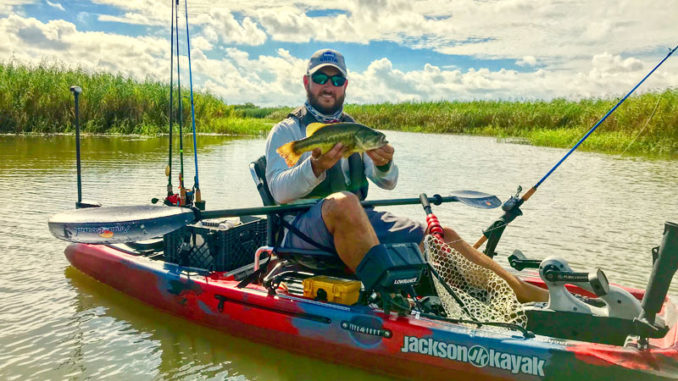
- Hobie is the favorite for saltwater, big lakes, or long distances. The pedal drive lets you move without scaring fish, and you can cover more water in less time.
- Jackson shines in rivers, small lakes, and areas where you want to stand and sight fish. Their kayaks are quieter when drifting, and the open deck is less likely to snag lines.
For touring or recreation, Hobie’s smoother glide and easier tracking are clear advantages. Jackson’s comfort and stability are better for all-day relaxation.
A practical example: If you want to troll lures at a steady speed, Hobie’s pedal drive is easier. If you often land on rough banks or need to carry your kayak over obstacles, Jackson’s hull is tougher.
Community And Support
After you buy a kayak, the support network matters.
Hobie has a global dealer network and many local fishing clubs. Their online forums are active, and you can find parts almost anywhere.
Jackson Kayak has a strong community, especially in the U.S. Their customer service is famous for quick responses and personal attention. Jackson also sponsors fishing tournaments and demo days, which is great if you want to try before you buy.
One thing beginners may not know: Jackson’s team often answers questions in Facebook groups and forums directly.
Environmental Focus
Both companies are aware of their environmental impact.
- Hobie uses recyclable materials where possible and reduces packaging waste.
- Jackson Kayak partners with conservation groups and uses efficient manufacturing to lower their carbon footprint.
If this matters to you, Jackson’s outreach programs and education efforts are more visible.
Choosing The Right Kayak For You
Here’s a quick summary to help match your needs:
- Choose Hobie if…
- You want the best pedal drive for speed and distance.
- You fish big water or travel far from launch points.
- You prefer integrated features and a “turnkey” kayak.
- Choose Jackson Kayak if…
- You want maximum stability for standing.
- You fish rivers, small lakes, or rough terrain.
- You love to customize and tweak your gear setup.
A subtle tip: Try to demo each brand before buying. Even small differences in seat comfort or hull shape can make a big difference after a long day on the water.
Common Buyer Mistakes
- Focusing only on the pedal system. Storage, comfort, and weight are just as important for long-term satisfaction.
- Ignoring transport needs. Heavy kayaks may require extra equipment or help to load and unload.
- Not considering resale value. Hobie kayaks often hold their value longer, making upgrades easier later.
- Forgetting about after-sales support. Local dealers and community support can solve problems faster than distant customer service.
Real-world User Experiences
Many seasoned anglers say that Hobie feels like “a sports car on the water”—fast, sleek, and efficient. The MirageDrive makes long days easy, and the engineering is top-notch.
Jackson Kayak users often describe their boats as “an all-terrain vehicle. ” They’re happy to drag them over rocks, stand and cast, and customize for each trip.
One user shared that after years with a Hobie Outback, he switched to a Jackson Big Rig for the extra deck space and stability—especially when fishing with kids.
Another long-time Jackson fan moved to Hobie for better speed on big lakes, saying, “I can cover twice as much water and still come home less tired. ”
How To Test And Decide
Before buying, visit a local dealer or attend a kayak demo day. Bring your fishing gear, wear the clothes you’ll use, and spend at least 30 minutes on each boat. Pay attention to:
- Seat comfort after 20+ minutes
- How easy it is to pedal/paddle in wind or current
- Stability when you shift your weight or stand up
- How accessible your gear is while seated
Take notes on what feels right for your body and your style of fishing or paddling.
Final Thoughts
Choosing between Hobie and Jackson Kayak is less about which brand is “better” and more about which fits your needs. If you value speed, hands-free operation, and integrated systems, Hobie is hard to beat. If you want stability, customization, and flexibility, Jackson Kayak is a top choice. Remember, the best kayak is the one that gets you on the water more often, with less hassle and more fun.
For more technical details on kayak designs and features, you can check out the official Hobie Kayaks site.
Frequently Asked Questions
What Is The Main Difference Between Hobie And Jackson Kayak?
The biggest difference is the pedal drive system. Hobie uses the MirageDrive, known for smooth, hands-free operation. Jackson Kayak uses the Flex Drive, which is more modular and easier to repair, but has a different pedal motion. Other differences include deck design, stability, and how much you can customize.
Which Kayak Is Better For Fishing In Rivers?
Jackson Kayak is usually better for rivers. Their wider, flatter hulls give more stability in moving water, and the open deck makes it easy to stand and cast. The Flex Drive also lifts quickly for shallow spots or obstacles.
Are Hobie Kayaks Worth The Higher Price?
For many users, yes. Hobie kayaks come with advanced features, a smooth pedal system, and high resale value. But if you don’t need all the extras, Jackson Kayak offers great performance for less money.
Can I Add A Motor To Hobie Or Jackson Kayaks?
Yes, both brands allow you to add a motor. Jackson’s Flex Drive system is designed to be upgraded with an electric motor. Hobie also sells the Evolve motor kit for their kayaks. Make sure your local laws allow powered kayaks.
How Do I Know Which Kayak Fits Me Best?
The best way is to test both brands. Sit in the seat, try the pedal or paddle system, and see how easy it is to access your gear. Comfort and fit are personal—what works for a friend may not feel right for you.
Whether you’re chasing trophy fish or enjoying a peaceful paddle, both Hobie and Jackson Kayak offer world-class options. Take your time, try them out, and choose the kayak that matches your adventures.

Credit: www.youtube.com