
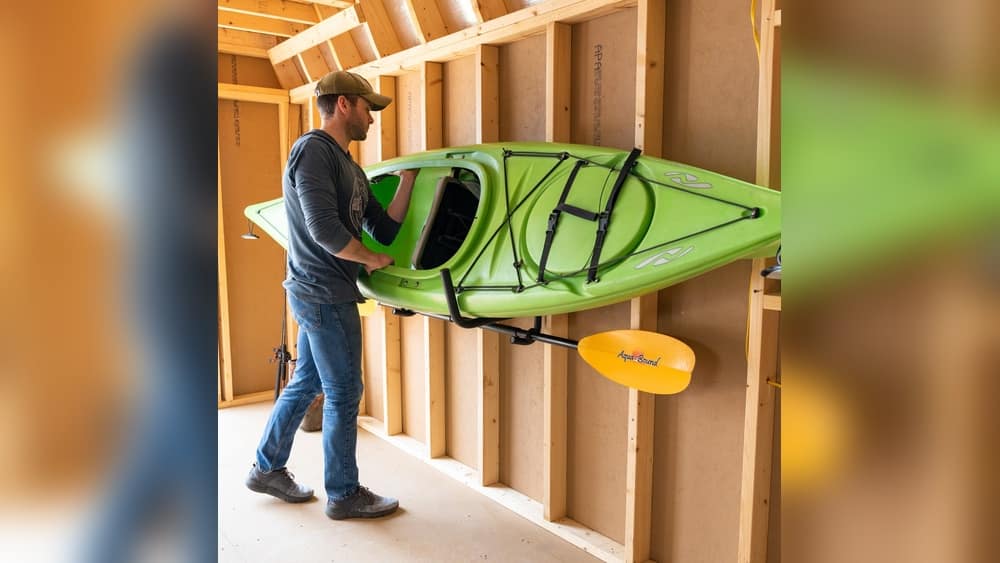
Storing your kayak in the garage can protect it from weather, theft, and sun damage. But if you just leave it on the floor, it can get scratched, warped, or become a tripping hazard. Hanging your kayak on the wall or ceiling is a smart way to save space and keep it in great shape for your next adventure.
Let’s explore safe, practical, and beginner-friendly ways to hang a kayak in your garage, including expert tips and common mistakes to avoid.
Why Hang Your Kayak In The Garage?
Kayaks are long, bulky, and awkward to store. Proper storage is important for two main reasons: it extends the life of your kayak and keeps your garage organized. When you hang a kayak:
- You free up valuable floor space for cars, bikes, and tools.
- The kayak is less likely to get damaged by being bumped or stepped on.
- You reduce the risk of mold and mildew, which can grow if your kayak sits on a damp floor.
- The kayak is out of reach from pets and children, improving safety.
Surprisingly, improper storage can lead to hull deformation even in one season. Studies show that storing plastic kayaks directly on hard surfaces can cause flat spots, reducing performance and comfort.
Choosing The Best Spot In Your Garage
Before hanging your kayak, evaluate your garage. Not every wall or ceiling is strong enough, and not every location is convenient. Here’s what to consider:
- Garage size and ceiling height: Standard kayaks are 10–14 feet long. Measure your garage to ensure you have enough space.
- Wall strength: Only hang a kayak from studs or strong ceiling joists. Drywall or thin plywood alone cannot support the weight.
- Access: Place your kayak where you can easily get it down without moving cars or other items.
- Climate: Avoid spots with direct sunlight or near heaters. Extreme heat can warp the kayak’s hull.
A smart trick: Use painter’s tape to outline the kayak’s position on the wall or ceiling before drilling any holes.
Credit: www.youtube.com
Types Of Kayak Hanging Systems
There are many ways to hang a kayak. The best choice depends on your budget, kayak weight, and how often you use it. Here are the most popular solutions:
1. Wall-mounted Racks
These racks attach directly to the wall. They usually have padded arms to protect the kayak’s hull.
- Best for: Easy access and regular use.
- Supports: 1–2 kayaks, depending on rack design.
- Installation: Moderate; you must find wall studs.
- Price: $40–$120 for a decent set.
Wall racks are ideal if you have free wall space and want to show off your kayak.
2. Ceiling Hoists
Ceiling hoists use pulleys and straps to raise the kayak overhead. You pull a rope to lift and lock the kayak in place.
- Best for: Small garages with limited wall space.
- Supports: 1 kayak; some systems hold up to 125 lbs.
- Installation: More complex; requires ceiling joists and ladder.
- Price: $50–$150 for quality hoists.
Ceiling hoists are great for keeping the kayak high and out of the way, but lowering it requires a bit more effort.
3. Diy Strap Systems
With heavy-duty straps, eye bolts, and carabiners, you can create a simple hanging system.
- Best for: Budget-conscious DIYers.
- Supports: 1 kayak.
- Installation: Easy, but you must anchor into studs or joists.
- Price: $15–$40 for materials.
This method is flexible—adjust the strap length as needed. Be sure to use wide straps to avoid damaging the kayak.
4. Freestanding Racks
Freestanding racks sit on the floor but lift the kayak above ground.
- Best for: Renters or those who can’t drill into walls.
- Supports: 1–2 kayaks.
- Installation: No drilling; just assemble.
- Price: $100–$300.
While these racks don’t technically “hang” your kayak, they keep it off the floor and are easy to move.
5. Horizontal Vs. Vertical Storage
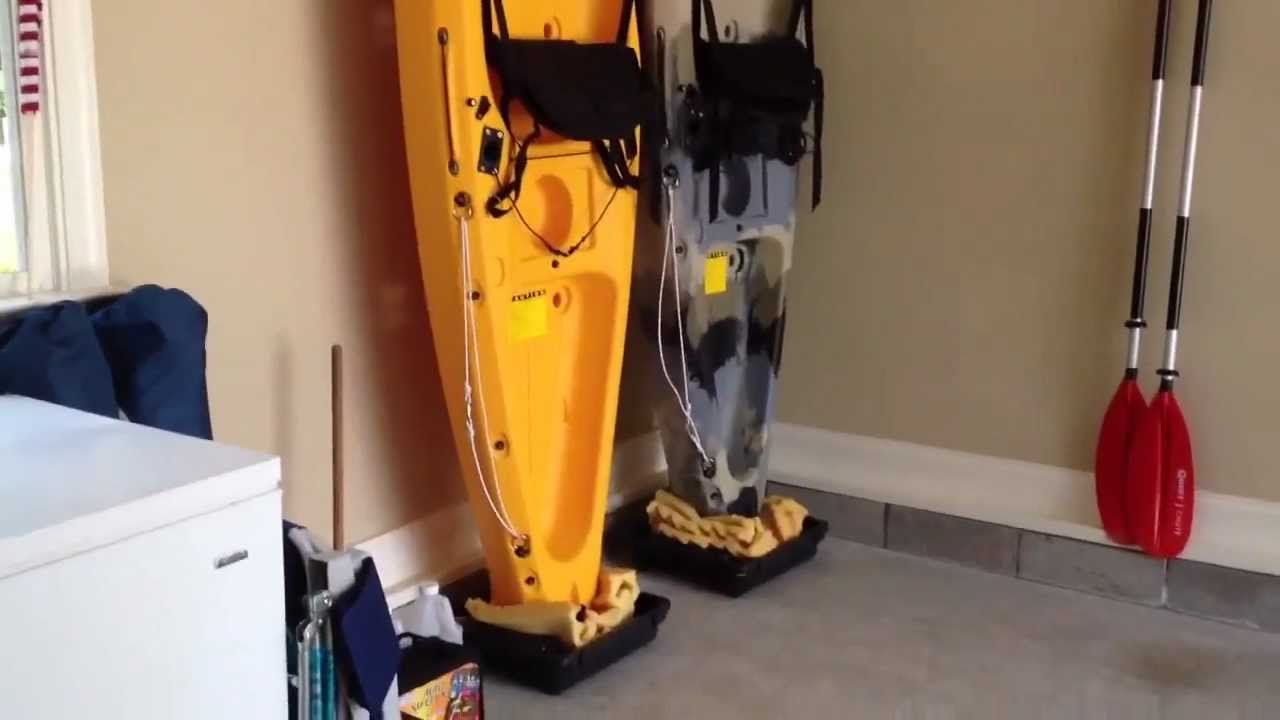
Some people want to hang their kayak vertically (standing up). This can work for short kayaks but is not recommended for longer models, as it puts stress on the hull and can lead to warping. Horizontal storage (sideways, with even support under the hull) is safer and better for the kayak’s shape.
What You’ll Need: Tools And Materials
Before starting, gather these items:
- Drill and bits: For making pilot holes.
- Stud finder: To locate strong wall studs or ceiling joists.
- Level: Ensures racks or straps are even.
- Heavy-duty screws/bolts: At least 2.5″ long.
- Padded straps or foam: Protect the kayak’s surface.
- Measuring tape: For precise placement.
- Ladder: For ceiling installations.
If you buy a commercial rack or hoist, follow the manufacturer’s instructions exactly.
Step-by-step Guide: Hanging A Kayak With Wall Racks
Let’s walk through the process for wall-mounted racks, as it’s the most popular and beginner-friendly method.
1. Measure And Mark
- Measure your kayak’s length and width.
- On your garage wall, mark two spots where the racks will go. The ideal distance: About one-third of the way from each end of the kayak. This supports the heaviest parts.
- Use a stud finder to find studs at these points.
2. Drill Pilot Holes
- Hold each rack against the wall at your marks.
- Use a level to ensure it’s straight.
- Mark the screw holes, then drill pilot holes into the studs.
3. Attach The Racks
- Use heavy-duty screws or bolts to secure the racks to the wall.
- Check that they are tight and don’t wobble.
4. Add Padding
- Wrap foam or thick cloth around the rack arms if they aren’t already padded.
- This prevents scratches and dents on your kayak.
5. Lift And Place The Kayak
- With a helper, lift the kayak and gently rest it on the racks.
- Make sure it sits on its side, not flat on the hull, to reduce pressure points.
6. Secure (optional)
- Use straps or bungee cords to gently hold the kayak in place, especially in areas with earthquakes or lots of activity.
Pro Tip: Never Over-tighten Straps. This Can Deform The Kayak’s Hull Over Time.
Hanging A Kayak With A Ceiling Hoist
For those who want to use ceiling space, a hoist is a practical option. Here’s how:
- Find two strong ceiling joists at least 4 feet apart.
- Attach the hoist brackets using heavy-duty screws.
- Thread the included straps through the kayak’s cockpit or around the hull.
- Use the pulley system to lift the kayak overhead.
- Lock the pulley so the kayak stays secure.
Ceiling hoists are perfect for larger, heavier kayaks, but be sure the system is rated for your kayak’s weight.

Credit: www.reddit.com
Table: Comparison Of Hanging Systems
Here’s a quick comparison of the most common kayak hanging solutions:
| System | Cost | Difficulty | Max Kayaks | Best For |
|---|---|---|---|---|
| Wall Rack | $40–$120 | Easy | 2 | Regular use, display |
| Ceiling Hoist | $50–$150 | Moderate | 1 | Small garages, overhead storage |
| DIY Straps | $15–$40 | Easy | 1 | Low budget, custom fit |
| Freestanding Rack | $100–$300 | Very easy | 2 | Renters, no drilling |
Common Mistakes To Avoid
Many beginners make small errors that can damage their kayak or create safety risks. Here are some to watch out for:
- Hanging by handles or ends: Kayak carry handles are not designed to support the full weight. This can damage the kayak.
- Using thin rope or wire: Thin materials can cut into the hull over time.
- Ignoring weight limits: Always check your rack or hoist’s max weight rating.
- Not anchoring to studs or joists: Fastening into drywall alone is dangerous.
- Leaving the kayak in direct sunlight: UV rays can cause fading and plastic breakdown.
Table: Kayak Storage Do’s And Don’ts
To make things clearer, here’s a simple guide:
| Do | Don’t |
|---|---|
| Use padded racks or wide straps | Hang by the ends or handles |
| Anchor into studs/joists | Mount in drywall only |
| Store out of direct sun and heat | Leave kayak near heaters or windows |
| Check weight ratings | Overload racks or hoists |
Maintenance Tips For Garage-stored Kayaks
Even with perfect storage, your kayak needs some care.
- Clean before storing: Rinse off salt, sand, or mud.
- Dry completely: Moisture can cause mildew and odors.
- Inspect regularly: Check for signs of warping, cracks, or pests.
- Loosen straps: Every few months, take the kayak down and let it “rest” if stored long-term.
A quick wipe with a UV protectant spray can also help extend the life of plastic kayaks.

Credit: www.discountramps.com
Non-obvious Insights For Better Kayak Storage
- Store with cockpit facing down or on its side: This reduces dust collection inside and avoids hull pressure points.
- Rotate position occasionally: If you store your kayak for months, move its position slightly every month to prevent long-term pressure spots.
- Use a breathable cover: Don’t cover your kayak with plastic tarps that trap moisture. Use a fabric cover or leave it uncovered in a dry garage.
Is It Safe To Hang Multiple Kayaks?
If you have more than one kayak, you can install double or triple racks, or use a ceiling hoist for each. Always check the combined weight against the rack or hoist rating. Never stack kayaks directly on top of each other unless the system is designed for it.
Some advanced systems include adjustable arms or shelves for stacking. For most home garages, wall racks with 2–3 levels are the safest choice.
Table: Recommended Rack Spacing By Kayak Length
Proper spacing supports the kayak evenly and prevents sagging.
| Kayak Length | Recommended Rack Distance |
|---|---|
| 8–10 feet | 3 feet apart |
| 10–12 feet | 4 feet apart |
| 12–16 feet | 5 feet apart |
Extra Safety Tips
- Always lift with your legs, not your back.
- Get help for heavy or long kayaks.
- If you have children, store the kayak high enough so they cannot reach or pull it down.
More Resources
For detailed installation videos, kayak storage ideas, and product reviews, visit REI Kayak Storage Guide. This guide offers expert advice and visuals for all skill levels.
Frequently Asked Questions
How Much Weight Can A Typical Garage Wall Hold For Hanging A Kayak?
Most garage walls can support a kayak if you anchor directly into wooden studs, which usually hold 100–150 lbs per anchor point. Always check your wall’s strength and the rack’s rating.
Is It Okay To Hang A Kayak Outside Instead Of In The Garage?
While you can hang a kayak outside, it’s best to store it inside. Sunlight, rain, and temperature changes can damage your kayak over time. If you must store it outside, use a breathable cover and avoid direct sunlight.
Can I Hang An Inflatable Kayak The Same Way?
Inflatable kayaks are lighter, so they can be hung using similar racks or straps. Make sure the kayak is completely dry and deflate it if storing long-term.
Should I Store My Kayak With The Hatch Covers On Or Off?
Remove hatch covers before long-term storage. This helps air circulation and prevents mold or mildew inside the compartments.
How Do I Prevent Pests From Nesting In My Stored Kayak?
Clean and dry your kayak thoroughly before storing. Cover cockpit openings with a breathable cloth or mesh. Avoid airtight plastic, as it can trap moisture and attract pests.
Storing your kayak properly in the garage doesn’t just protect your investment—it makes it easy to grab and go whenever you’re ready for the water. With these tips and careful planning, your kayak will be safe, accessible, and ready for adventure.