
Kayaking is an exciting way to explore rivers, lakes, and oceans. But before you can glide across the water with confidence, you need to master one essential skill: how to hold a kayak paddle. Many beginners overlook this step, thinking it is simple. However, a proper grip and technique make a huge difference in your comfort, speed, and even safety on the water. If you hold your paddle incorrectly, you may get tired faster or even develop injuries in your wrists or shoulders.
This guide walks you through everything you need to know about holding a kayak paddle. You will learn the right grip, common mistakes to avoid, how to adjust for different paddle types, and tips for better control. Whether you are a total beginner or just want to improve your technique, these steps will help you paddle more efficiently and enjoy your time on the water.
Understanding The Parts Of A Kayak Paddle
Before learning how to hold a paddle, it helps to know its main parts. Here’s a quick overview:
- Shaft: The long, straight part you hold with your hands.
- Blades: Flat or slightly curved ends of the paddle that move the water.
- Drip rings: Small rings near the blades to keep water from running down the shaft.
- Feather angle: The angle between the two blades; sometimes they are lined up, sometimes offset.
Knowing these terms will make the instructions clearer as you learn to hold and use your paddle correctly.
Choosing The Right Paddle Length
Many problems with holding a kayak paddle start with using the wrong size. Your paddle should match your height and the width of your kayak. Here’s a quick comparison to help you select the right paddle length:
| Paddler Height | Kyak Width | Paddle Length (cm) |
|---|---|---|
| Below 5’5″ (165 cm) | 24″ – 28″ (61-71 cm) | 210 – 220 |
| 5’5″ – 5’11” (165-180 cm) | 24″ – 28″ (61-71 cm) | 220 – 230 |
| Over 6′ (180 cm+) | 28″ – 32″ (71-81 cm) | 230 – 250 |
A paddle that is too long or too short can force you to hold it awkwardly. This leads to bad technique and discomfort. When in doubt, ask for help at a local kayak shop or use an online paddle size calculator.

Credit: www.youtube.com
The Correct Hand Position
How you place your hands on the paddle is the foundation of good paddling. Follow these steps for the best grip:
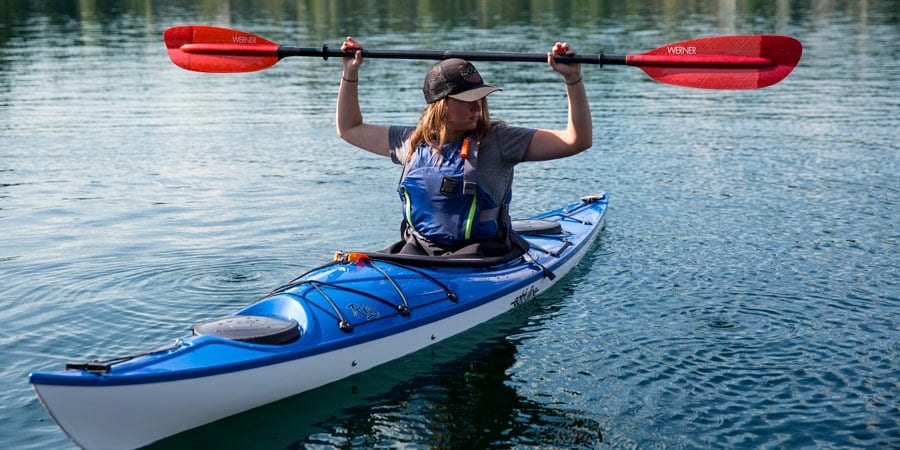
- Find the center: Hold the paddle above your head with both hands. Your elbows should make a 90-degree angle (like a football goal post).
- Balance your hands: Your hands should be the same distance from the paddle’s center. This keeps your strokes even.
- Face the blades correctly: Most kayak blades have a scooped or curved side. The scooped side should face you, while the back of the blade faces away. If your paddle has writing or a logo, that usually faces you.
- Relax your grip: Hold the shaft loosely, like holding a bird—firm enough not to drop it, but not so tight you hurt the bird. This prevents hand fatigue and blisters.
Example
Imagine you are sitting with the paddle across your lap. Lift it above your head and check your elbows. Move your hands until you find the “goal post” position. That’s your best starting hand position.
Understanding Blade Orientation
Many beginners do not realize that kayak blades have a right and wrong way to face. Here is how to get it right:
- Concave side faces you: Most blades have a curve or scoop. This side should face you to push more water and give better power.
- Blades are vertical: When you dip a blade in the water, it should be straight up and down, not tilted or upside down.
Holding the paddle with the wrong blade orientation makes paddling harder and less efficient. If you see water splashing or feel resistance, check your blade position.
Feathered Vs. Unfeathered Paddles
Kayak paddles come in two main types: feathered (blades at an angle) and unfeathered (blades in line). Here’s a quick comparison:
| Type | Blade Angle | Best For |
|---|---|---|
| Feathered | Blades at an angle (30-60°) | Windy conditions, advanced paddlers |
| Unfeathered | Blades aligned | Calm water, beginners |
If you use a feathered paddle, you need to “rotate” your wrists slightly with each stroke. For beginners, unfeathered paddles are easier to start with because there’s less to think about.
Step-by-step: How To Hold A Kayak Paddle
Let’s put it all together. Here’s how to hold your kayak paddle the right way:
- Sit upright in your kayak. Good posture helps with balance and control.
- Hold the paddle in front of you. The shaft should rest on your lap.
- Check blade orientation. The scooped side faces you, and the blades are vertical.
- Lift the paddle above your head. Position your hands so your elbows form 90-degree angles.
- Adjust your grip. Hands should be equal distance from the center. Use the “goal post” rule.
- Relax your hands. Do not squeeze. A light, relaxed grip prevents pain and lets you paddle longer.
- Position your knuckles. Your knuckles should line up with the top edge of the blades. This keeps your wrist in a neutral position.
- Check your drip rings. They should be just outside your hands, not against the blades.
If you follow these steps, you will start with a solid grip and be ready to paddle efficiently.
Common Mistakes To Avoid
Many beginners make the same errors when learning to hold a kayak paddle. Watch out for these:
- Holding too close together: This makes your strokes weak and less effective.
- Gripping too tightly: Causes hand cramps, fatigue, and blisters.
- Using the wrong blade face: Reduces power and makes paddling harder.
- Offset hands: One hand closer to the center than the other; leads to uneven paddling.
- Bent wrists: Increases risk of injury. Keep wrists straight with the shaft.
If you notice any discomfort or your kayak turns unexpectedly, check your grip and hand position.
Adapting Your Grip For Different Paddle Types
Kayak paddles come in several styles. You may need to adjust your grip based on these differences:
Bent Shaft Paddles
Some paddles have a “bent” shaft that fits the natural angle of your wrists. These are designed to reduce fatigue. Place your hands on the “bent” sections for the best comfort and control.
Small Shaft Paddles
Paddlers with smaller hands may prefer a paddle with a thinner shaft. This makes it easier to hold without squeezing hard.
One-piece Vs. Two-piece
Most recreational paddles are one piece. Some are two-piece and can be taken apart for travel. Make sure the connection is tight so the paddle does not twist during use.
The Role Of The Control Hand
When using a feathered paddle, you need a “control hand. ” This is the hand that stays fixed while the other rotates the shaft. Usually, right-handed paddlers use their right hand as the control hand. If you are left-handed, you might prefer the left.
To find your control hand:
- Hold the paddle as usual.
- As you make a forward stroke, let one hand (the non-control) rotate freely on the shaft.
- The control hand stays firm and helps rotate the blade for the next stroke.
This technique reduces wind resistance and helps you paddle smoothly in different conditions.
How A Proper Grip Improves Your Kayaking
A good grip does more than prevent sore hands. It helps you:
- Paddle farther with less effort
- Steer your kayak more easily
- Reduce risk of injury
- Stay in control during rough water or wind
For example, studies show that proper paddle technique can cut energy use by up to 20% compared to poor technique. That means you can explore longer without feeling tired.
Tips For Better Paddle Control
Here are a few advanced tips to help you get even more out of your paddle grip:
- Change your grip for different strokes: For turning or bracing, you may need to slide your hands slightly.
- Practice on land first: Try the “goal post” grip and blade orientation before you get in the water.
- Use gloves or tape: If you paddle often, consider kayak gloves or grip tape to avoid blisters.
- Warm up your wrists: Gentle stretches before paddling reduce the chance of injury.
- Check your grip every 30 minutes: Small adjustments keep your hands comfortable during long trips.
Safety Considerations When Holding A Kayak Paddle
Safety starts with a good grip. If you lose your paddle or grip incorrectly in rough water, you could lose control of your kayak. Always keep both hands on the shaft, even when you are resting. If you need to use one hand, keep the paddle across your lap with the other hand ready.
If you capsize, hold onto your paddle as you exit the kayak. It helps you stay afloat and can be used as a flotation device in emergencies.
Credit: www.rei.com
Practice Drills To Improve Your Paddle Grip
Regular practice is the best way to build muscle memory and confidence. Try these simple drills:
- Dry land practice: Stand with the paddle and practice the correct grip and blade orientation.
- Short paddling sessions: Focus on relaxing your hands and checking your elbows and wrist position.
- Switch hands: Try using your non-dominant hand as the control hand to build skill and balance.
- Blindfolded grip test: Close your eyes and find the center and blade orientation by feel. This helps you adjust quickly on the water.
How To Hold A Kayak Paddle For Different Conditions
Water conditions can change how you hold your paddle:
- Calm water: Keep a relaxed, even grip. Use gentle strokes.
- Windy or rough water: Tighten your grip slightly and keep your control hand steady.
- Surf or whitewater: Hold the paddle firmly but not tightly. Be ready to adjust quickly.
Experienced kayakers develop a “feel” for their paddle. With time and practice, you will too.

Credit: www.wikihow.com
Maintenance Tips For Your Paddle
A well-maintained paddle feels better in your hands and lasts longer. Here’s what you can do:
- Rinse your paddle with fresh water after use, especially in salt water.
- Store it out of direct sunlight to prevent fading and damage.
- Check the shaft and blades for cracks or rough spots.
- Apply a little silicone spray to moving parts (like a feathered connection).
Proper care makes your paddle more comfortable and safer to hold, trip after trip.
When To Replace Your Paddle
No paddle lasts forever. If you notice the following, it’s time to get a new one:
- Deep cracks or chips in the shaft or blades
- Shaft feels weak or bends too much
- Drip rings no longer stay in place
- Blades are loose and twist easily
A damaged paddle can break when you need it most. Check yours regularly, especially before long trips.
Frequently Asked Questions
How Far Apart Should My Hands Be On A Kayak Paddle?
Your hands should be spaced so that your elbows are bent at a 90-degree angle when you hold the paddle above your head. This is usually shoulder-width apart. Adjust slightly for comfort, but keep it balanced.
Can I Switch My Control Hand When Paddling?
Yes, you can switch your control hand, especially if you get tired or want to train both sides. Most people have a natural preference (right or left), but practicing both makes you a more skilled paddler.
What Grip Should I Use If I Have Small Hands?
If you have small hands, look for a paddle with a small-diameter shaft. This lets you hold the paddle comfortably without squeezing too hard. Some brands offer women’s or youth models for this reason.
Is A Feathered Paddle Better Than An Unfeathered Paddle?
Feathered paddles can be more efficient in windy conditions because one blade slices through the air. However, unfeathered paddles are easier for beginners. Try both to see which feels best for you. More details are available at Wikipedia.
Why Do My Hands Get Tired Or Sore When Paddling?
Tired or sore hands usually mean you are gripping the paddle too tightly or using the wrong hand position. Relax your grip, check your wrist position, and take breaks to stretch your hands and arms.
Kayaking is more fun and less tiring when you hold your paddle the right way. With the right technique, you will paddle farther, steer better, and enjoy every trip on the water. Remember, even small adjustments in your grip can make a big difference.
Practice these tips, and soon holding a kayak paddle will feel natural—leaving you free to enjoy the adventure.