
Anchoring a kayak may seem simple, but doing it right can change your entire paddling experience. Whether you want to fish, relax, or stay in one spot on a river or lake, knowing how to anchor a kayak is essential.
Many beginners think dropping an anchor is enough, but there’s more to it. The right technique keeps you safe, stops you from drifting, and helps you enjoy your time on the water. In this guide, you’ll learn everything about anchoring a kayak, from choosing the best anchors to setup, safety tips, and common mistakes.
Even if English isn’t your first language, you’ll find easy explanations, practical advice, and useful examples.
Why Anchoring Matters For Kayaks
Kayaks are light and easy to move. This makes them fun, but also means they can drift quickly with wind or water currents. Anchoring lets you stay in place when fishing, taking photos, or resting. It also improves safety, especially in busy areas or strong currents. Here are a few situations where anchoring is useful:
- Fishing: Keeps your kayak steady so you can focus on catching fish.
- Wildlife watching: Lets you stay still and observe animals without disturbing them.
- Photography: Helps you take clear photos without movement.
- Resting: Allows you to relax without worrying about drifting away.
Understanding why you anchor is the first step to choosing the right equipment and technique.
Types Of Kayak Anchors
Choosing the right anchor depends on where you paddle and your kayak type. Each anchor has pros and cons. Let’s look at the main types:
| Anchor Type | Best For | Weight Range | Key Features |
|---|---|---|---|
| Grapnel Anchor | Lakes, rivers with rocks or weeds | 1.5–3 lbs | Foldable, grips well, compact |
| Mushroom Anchor | Muddy or sandy bottoms | 3–5 lbs | Stable, easy to use, less grip on rocky bottoms |
| Sand Bag Anchor | Shallow, calm waters | 2–6 lbs | Flexible, won’t scratch kayak, easy to store |
| Stake-Out Pole | Very shallow waters | Usually 6–8 ft long | Quick setup, good for marshes, no rope needed |
Most kayakers use a grapnel anchor for its versatility. It folds up small and works in many conditions. Mushroom anchors are better for muddy bottoms, but not great in fast currents. Sand bag anchors are gentle and easy for beginners, but may not hold well in wind. Stake-out poles are perfect for marshes and flats.
Credit: www.kayakfishing.blog
What You Need To Anchor A Kayak
Anchoring isn’t just about the anchor itself. You need a few things to do it safely and efficiently:
- Anchor: Choose the type and weight based on your kayak and water conditions.
- Anchor Rope or Line: Usually 50–100 feet of strong, non-stretch line. Thicker ropes are easier to handle but heavier.
- Anchor Trolley System: Lets you move the anchor point along the kayak for better control.
- Carabiner or Clip: Makes attaching and detaching easy.
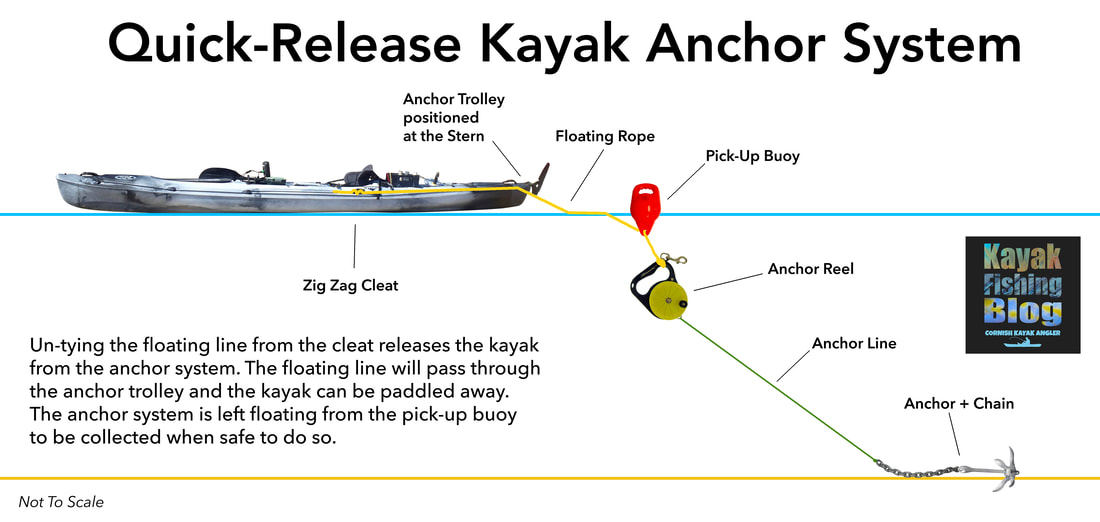
- Buoy or Float: Helps you locate the anchor if you need to release it quickly.
- Storage Bag: Keeps your anchor and rope organized.
Many beginners skip the anchor trolley, but it’s a big help for adjusting your position. It also improves safety by letting you quickly change where the anchor pulls from.
Step-by-step Guide To Anchoring A Kayak
Anchoring a kayak needs planning and technique. Here’s how to do it:
1. Choose The Right Spot
Look for areas away from strong currents, busy boat traffic, or underwater obstacles. Avoid places where anchoring is forbidden. Always check local rules. Some lakes and rivers have restrictions to protect wildlife.
2. Prepare Your Equipment
Check your anchor, rope, and trolley system. Make sure the rope is not tangled and the anchor is ready to deploy. Attach the rope to the anchor using a strong knot, like a bowline or anchor knot.
3. Set Up The Anchor Trolley
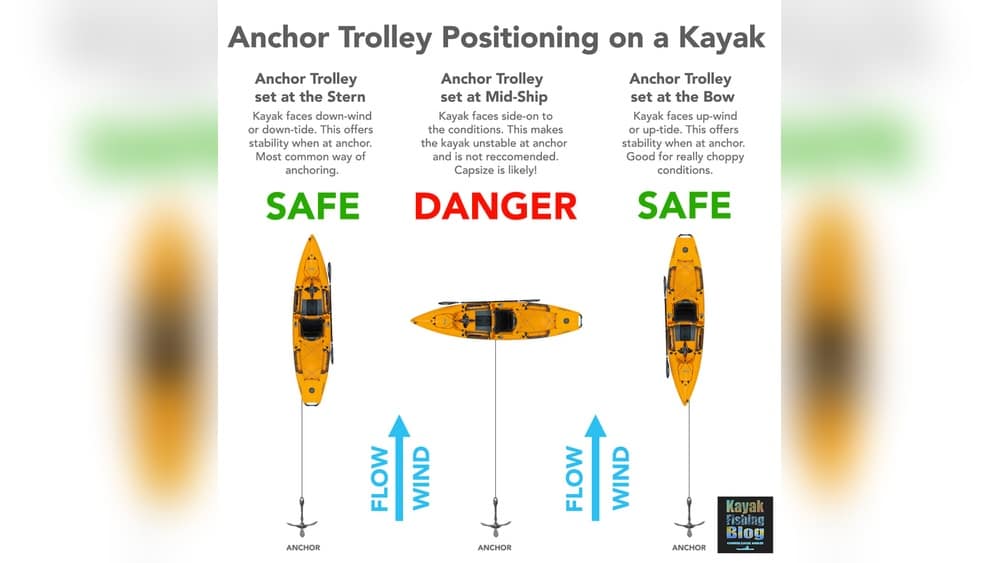
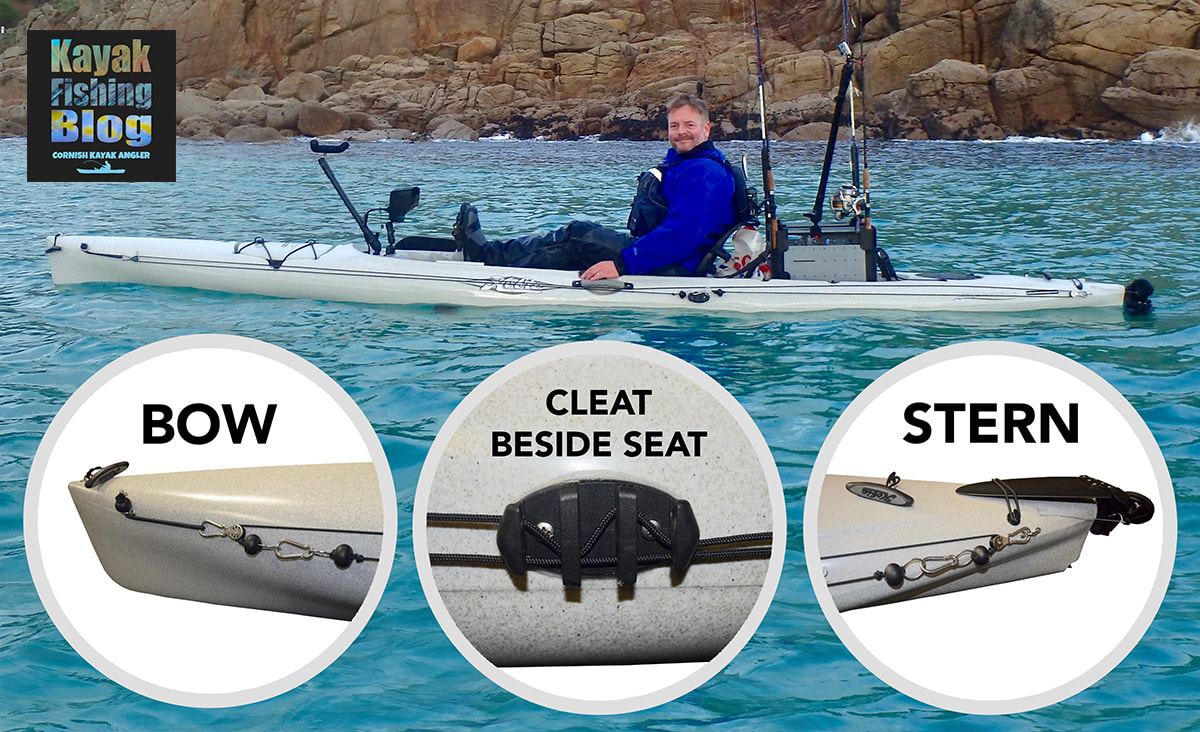
An anchor trolley is a line running along the side of your kayak, with a ring or pulley. Attach the anchor rope to the ring. This lets you move the anchor point from front to back, changing the angle your kayak faces.
4. Deploy The Anchor
Lower the anchor slowly into the water, never throw it. Let the rope out until the anchor reaches the bottom. Let out extra rope—called scope—to help the anchor grip. A good rule is 7:1 scope (for every 1 foot of depth, let out 7 feet of rope).
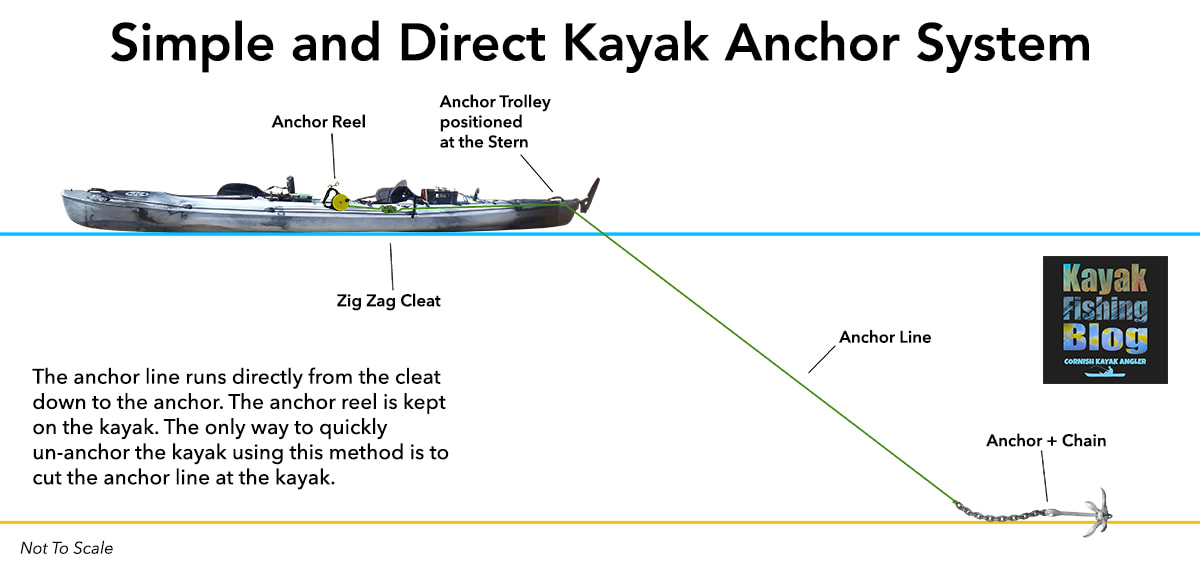
5. Secure The Rope
Tie off the rope to a cleat or handle. If you use a trolley, move the anchor point to where you want it (front, middle, or back). The kayak will turn to face wind or current, depending on anchor position.
6. Check Stability
Wait for a minute. If the kayak drifts, let out more rope or reset the anchor. Make sure the anchor is holding. If not, try a different spot or anchor type.
7. Use A Quick-release System
Attach a float to your anchor rope. If you need to leave the anchor quickly (for safety), unclip and paddle away. The float marks where your anchor is.
Anchor Trolley Systems Explained
Anchor trolley systems give you control over your kayak’s position. They are especially useful for fishing and windy conditions. Let’s see how different setups compare:
| Trolley Type | Installation Difficulty | Control Level | Best For |
|---|---|---|---|
| Single-Side Trolley | Easy | Moderate | Beginner kayaks, quick setups |
| Full-Length Trolley | Medium | High | Fishing kayaks, advanced users |
| DIY Rope System | Hard | Variable | Custom setups, budget kayaks |
A full-length trolley lets you anchor from any point along the kayak. This is best for changing wind or current. Beginners often start with a single-side trolley for simplicity.
Common Mistakes When Anchoring A Kayak
Many beginners make these mistakes. Avoid them for a safer, easier experience:
- Too short anchor rope: Not letting enough rope out stops the anchor from holding. Always use the 7:1 scope rule.
- Wrong anchor type: Using a mushroom anchor on rocks, or a grapnel in mud, means poor holding power.
- Anchoring in dangerous areas: Avoid anchoring in fast currents, near boats, or underwater hazards.
- Tangled rope: Always check the rope before deploying. Tangles can make retrieval hard or dangerous.
- No quick-release: Not having a float or clip makes emergency exits difficult.
- Ignoring weather: Wind and storms change conditions fast. Always check forecasts before anchoring.
A non-obvious tip: Many kayakers forget to check the bottom type. Using the wrong anchor for sand, mud, or rocks is a common cause of drift.
Safety Tips When Anchoring A Kayak
Anchoring sounds simple, but safety is key. Here are practical tips:
- Wear a life jacket: Always, even if you’re a strong swimmer.
- Check weather: Sudden storms or winds make anchoring risky.
- Have a knife: In emergencies, you may need to cut the rope.
- Tell someone your plan: Let friends or family know where you’re paddling.
- Avoid anchoring in busy channels: Boats may not see a small kayak.
- Watch water depth: Too deep means the anchor won’t reach or hold.
- Practice retrieval: Sometimes anchors get stuck. Learn how to free them safely.
One overlooked tip: Practice anchoring near shore before trying it in deep water. This builds confidence and skill.
How To Retrieve The Anchor
Retrieving the anchor is as important as deploying it. Here’s how to do it smoothly:
- Pull the rope in slowly, keeping your kayak steady.
- If the anchor is stuck, paddle forward to change the angle.
- Use a float or buoy for easier location.
- If you can’t free the anchor, use a knife to cut the rope. Safety first.
Some kayakers use a breakaway rig, which attaches the anchor rope to the bottom of the anchor with a zip tie. If the anchor gets stuck, the zip tie breaks, and you can pull the anchor from the other end.
Comparing Anchoring In Different Waters
Anchoring in lakes, rivers, and coastal waters each has unique challenges.
| Water Type | Anchor Needed | Key Challenge | Best Practice |
|---|---|---|---|
| Lake | Grapnel or mushroom | Wind and waves | Use anchor trolley, check wind |
| River | Grapnel | Strong current | Anchor upstream, quick-release |
| Coastal | Sand bag, grapnel | Tides, saltwater | Check tides, rinse gear after use |
For river anchoring, always anchor from the bow (front) so your kayak faces upstream. In coastal waters, salt can damage anchors and ropes—rinse them after every use.
Expert Tips For Better Anchoring
- Use colored rope for easy visibility in water.
- Mark rope length with knots every 10 feet to estimate depth.
- Use a small dry bag for anchor storage, keeping everything organized.
- If fishing, anchor quietly to avoid scaring fish.
- Always keep backup rope and carabiners.
A less-known insight: Anchoring from the stern (back) is risky in strong currents. Always anchor from the bow for stability.
Credit: www.kayakfishing.blog
Maintenance And Care For Anchor Gear
Taking care of your anchor gear means longer life and safer trips:
- Rinse anchor and rope after every use, especially in saltwater.
- Check for wear and tear—replace old ropes and rusty anchors.
- Store anchors dry to prevent rust.
- Lubricate moving parts on trolleys and carabiners.
Regular maintenance saves money and keeps you safe.
Anchoring For Kayak Fishing
Fishing from a kayak is popular, but anchoring is tricky. Fish often move with wind or current, so you need to adjust your position. Here’s how to anchor for fishing:
- Use an anchor trolley to change your angle easily.
- Anchor quietly to avoid noise.
- Keep gear organized—fish can tangle lines and ropes.
- Use a float for quick-release if you hook a big fish.
Many anglers use a stake-out pole in shallow water for fast changes.
Credit: www.kayakfishing.blog
Frequently Asked Questions
How Much Anchor Rope Do I Need For A Kayak?
You need at least 7 times the depth of water. For 10 feet deep, use 70 feet of rope. This helps the anchor grip and holds your kayak steady.
What Is The Best Anchor For A Kayak?
A grapnel anchor is best for most conditions, especially lakes and rivers. For muddy bottoms, use a mushroom anchor. In shallow water, a stake-out pole works well.
Is It Safe To Anchor In Fast Currents?
No, anchoring in strong currents is risky. The kayak can flip or drag. Only anchor in slow, stable waters. Use a quick-release system for emergencies.
Can I Anchor From Any Part Of The Kayak?
It’s safest to anchor from the bow (front). This keeps your kayak stable in wind and currents. Anchoring from the stern (back) can cause tipping or spinning.
How Do I Free A Stuck Kayak Anchor?
First, paddle forward to change the angle. If it’s still stuck, use a breakaway rig or cut the rope with a knife. Safety is more important than gear.
Anchoring a kayak is simple once you know how. The right gear, good technique, and safety habits make every trip better. If you want more technical details, you can check Wikipedia for anchor types and history. With practice, you’ll anchor confidently and enjoy your time on the water.