

Carrying a kayak by yourself may seem difficult, especially if you’re new to paddling. Many people worry about dropping their kayak, hurting their back, or damaging the boat before it even reaches the water. The good news is that with the right approach, you can move your kayak safely and with confidence, even if you’re alone.
This guide will show you how to carry a kayak by yourself, what tools can help, and how to protect both you and your kayak from common mistakes.
Understanding Your Kayak’s Weight And Size
Before picking up your kayak, it’s important to know how heavy and how long it is. Most recreational kayaks weigh between 35 and 65 pounds (16 to 30 kg), while touring and sea kayaks can be heavier. The average length of a solo kayak is 10 to 14 feet (3 to 4.2 meters), but some can be longer.
Why does this matter? Because the weight and shape affect how you lift and balance the kayak. A lightweight kayak is easier to carry, but even these can be awkward because of their length. It’s also easier to lose control in windy weather, especially with a longer kayak.
Example:
- Sit-on-top kayak: 40 lbs, 10 feet long, easy for most adults to carry.
- Tandem sea kayak: 75 lbs, 16 feet long, very hard for one person to move.
If you’re not sure about your kayak’s weight, check the manufacturer’s label or manual.
Essential Preparation Before Lifting
Carrying a kayak is not just about strength. Good preparation is key to doing it safely and efficiently.
- Clear Your Path: Make sure the way from your storage spot to the water is free of obstacles like rocks, branches, or steps.
- Wear Proper Shoes: Non-slip, closed-toe shoes give you better grip and protect your feet.
- Check the Weather: Wind can make your kayak act like a sail. If it’s very windy, be extra careful or ask for help.
- Warm Up: Stretch your arms, back, and legs for a few minutes. This reduces your risk of injury.
Many beginners overlook these steps, but skipping them leads to accidents or muscle strain.
Step-by-step: How To Carry A Kayak By Yourself
Different kayaks and body types call for different methods. Here are the most common, reliable ways to carry a kayak alone.
1. The Classic Shoulder Carry
This is the most popular method for solo paddlers. It works well for most single-person kayaks.
- Stand at the side of your kayak, near the middle (the balance point).
- Squat down with your knees bent.
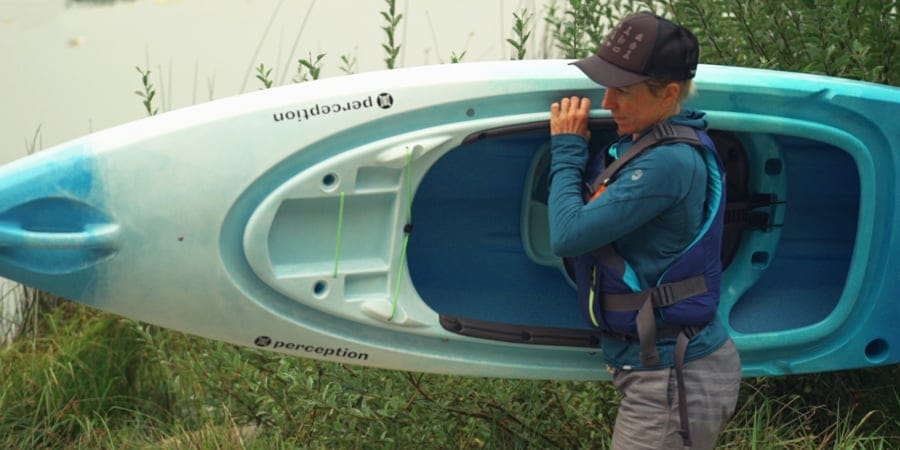
- Grab the cockpit rim (the opening) with both hands.
- Tip the kayak onto its side, so the opening faces you.
- Slide one arm inside the cockpit and lift the kayak up, resting the rim on your shoulder.
- Center the weight on your shoulder and keep your other hand on the edge for balance.
Tip: Keep your back straight and use your legs to lift, not your back.
2. The Overhead Carry
If you’re strong and the kayak is light, you can carry it over your head.
- Stand at the center of the kayak.
- Grab both sides of the cockpit rim.
- Lift the kayak straight up, then balance it upside down on your head and shoulders.
- Walk slowly, watching for wind or obstacles.
This method keeps the kayak balanced, but can be tiring for long walks.
3. The Dragging Method
Some kayaks are designed to be dragged short distances on smooth grass or sand.
- Stand at the stern (back) of the kayak.
- Grab the handle.
- Lift the stern slightly and drag the kayak, making sure the bottom doesn’t scrape on rocks.
Warning: Dragging on concrete or gravel can damage the hull. Only use this method if your kayak has a replaceable skid plate.
4. Using A Kayak Cart
A kayak cart is a small, wheeled device that supports the weight of your kayak. It makes solo transport much easier.
- Place the kayak on the cart, usually under the back third of the boat.
- Secure the kayak with straps.
- Lift the front handle and pull or push the kayak like a suitcase.
Kayak carts are great for long distances or heavy boats.
How To Lift A Kayak Off A Car Roof Alone
Getting a kayak off your vehicle is a common challenge for solo paddlers. Here’s how to do it safely:
- Stand at the back of your car.
- Slide the kayak towards you until the stern is off the rack and resting on the ground.
- Move to the side and lift the bow off the roof, holding it at the balance point.
- Lower the kayak gently to the ground, keeping control so it doesn’t drop or roll.
Pro tip: Use a bath mat or foam pad on the ground to protect your kayak’s hull.
Tools That Make Carrying Easier
You don’t have to rely only on your muscles. Here are some helpful tools and accessories:
| Tool | How It Helps | Best For |
|---|---|---|
| Kayak Cart | Wheels carry most of the weight | Long walks, heavy kayaks |
| Shoulder Strap | Distributes weight across your body | Short walks, light kayaks |
| Grab Handles | Gives a better grip | All kayaks |
| Padding/Gloves | Protects hands and shoulders | Rough surfaces, heavy boats |
Many beginners ignore these tools, thinking they’re unnecessary. But investing in even a basic kayak cart can save your back and make paddling more enjoyable.
Common Mistakes To Avoid
It’s easy to make mistakes when carrying a kayak alone. Here are some errors even experienced paddlers sometimes make:
- Lifting with your back: Always use your legs to lift. Bending and twisting your back can lead to injury.
- Not balancing the kayak: Carrying the kayak off-center makes it harder to control and tires you out quickly.
- Ignoring wind: A gust can flip a kayak in your hands, especially if it’s a long boat.
- Dragging on rough surfaces: This will scratch or crack your kayak’s hull.
- Rushing: Take your time, especially near water or on slippery ground.
Safety Tips For Solo Kayak Carrying
Your goal is to move your kayak safely, not quickly. Keep these safety tips in mind:
- Ask for help if unsure: There’s no shame in asking a stranger or another paddler for a quick hand.
- Use both hands whenever possible: This gives you more control and balance.
- Rest if you need to: Stop if you feel tired or off-balance.
- Check for injuries: If you feel pain in your back, shoulders, or arms, put the kayak down safely and assess before continuing.
Comparing Carry Methods
Here’s a simple comparison of the most common solo kayak carry methods:
| Method | Best For | Effort Level | Distance |
|---|---|---|---|
| Shoulder Carry | Medium kayaks, short-medium trips | Moderate | Up to 100 meters |
| Overhead Carry | Light kayaks, strong paddlers | High | Short |
| Dragging | Durable kayaks, sandy ground | Low | Short to medium |
| Kayak Cart | All kayaks, long distances | Low | Long |

Credit: brooklynkayakcompany.com
Special Considerations For Different Body Types
Body size, strength, and even height can change how easy or hard it is to carry a kayak alone.
- Shorter paddlers: May find it harder to balance the kayak on one shoulder. A kayak cart or shoulder strap often helps.
- Older adults: Should consider using a cart to avoid injury.
- Small-framed people: Lighter kayaks or inflatables are much easier to manage.
If you have back or shoulder problems, always check with a doctor before lifting heavy objects like a kayak.
Carrying Inflatable And Folding Kayaks
Inflatable and folding kayaks are popular because they’re lighter and easier to transport.
- Inflatable kayaks: Usually weigh less than 30 lbs (13 kg). You can carry them in a backpack, making solo transport very easy.
- Folding kayaks: Also light, and come with carrying cases.
These types are ideal if you plan to paddle alone often.

Credit: paddling.com
When Should You Ask For Help?
Even with the best technique, some situations call for a second person:
- Strong wind: Makes it risky to carry a kayak alone.
- Heavy or double kayaks: Too much for one person.
- Rough ground: Increases the chance of tripping or dropping your kayak.
- Injury or fatigue: Never push yourself if you feel weak or dizzy.
Remember, there’s no prize for doing everything alone. Safety always comes first.
How To Store Your Kayak After Carrying
Once you’ve moved your kayak to or from the water, proper storage is important:
- Place the kayak on padded bars or a rack, not directly on the ground.
- Store your kayak upside-down (hull up) to protect its shape.
- Use a cover if storing outside to prevent UV damage.
These steps keep your kayak in good shape for your next adventure.
Credit: www.rei.com
Real-world Example
Imagine you arrive at the lake alone with a 45-pound sit-on-top kayak. The parking lot is 200 meters from the water. Here’s how you might do it:
- Attach a kayak cart under the rear.
- Secure it with a strap.
- Lift the front handle and pull the kayak behind you.
- When you reach sand, remove the cart and use the shoulder carry for the last 20 meters.
This combination keeps your energy up and your kayak safe.
Frequently Asked Questions
How Heavy Is Too Heavy To Carry A Kayak By Yourself?
If your kayak weighs more than 50–60 pounds and is longer than 12 feet, it’s safer to use a cart or ask for help. Your own strength, fitness, and experience also matter.
Can I Drag My Kayak On The Ground?
You can drag some kayaks short distances on smooth surfaces, but it’s risky on gravel, pavement, or rocks. Only do this if your kayak has a skid plate and the ground is soft. Otherwise, use a cart or carry by hand.
Are Inflatable Kayaks Easier To Carry Alone?
Yes. Most inflatable kayaks weigh less than 30 pounds and come in a bag or backpack, making solo transport easy. They’re a good option if you often paddle alone.
What’s The Best Way To Avoid Injury When Carrying A Kayak?
Always lift with your legs, not your back. Warm up before lifting, use both hands, and rest if you get tired. If possible, use a kayak cart or shoulder strap to reduce strain.
Where Can I Find More Information About Safe Kayak Carrying?
You can visit the American Whitewater safety page for expert advice and videos on kayak handling.
Carrying a kayak by yourself is a useful skill for any solo paddler. With the right method, tools, and safety habits, you’ll be able to get your kayak to the water smoothly and start enjoying your time outdoors—without risking injury or damaging your gear.
Take your time, use the right technique, and soon, carrying your kayak will feel like just another part of the adventure.