

For many paddlers, choosing between Delta and Eddyline kayaks is a big decision. Both brands have strong reputations, loyal fans, and a lineup of high-quality kayaks for different skills and purposes. But what truly sets them apart? If you are shopping for your first touring kayak, upgrading your gear, or just curious about these top brands, this guide will help you make a confident choice.
This article will compare Delta vs Eddyline kayaks in detail. We’ll look at their history, construction, design, performance on the water, durability, comfort, price, and more. You’ll find non-obvious insights, real-world examples, and practical advice for both beginners and experienced paddlers. By the end, you’ll know which brand better fits your needs.
Brand Backgrounds: Delta And Eddyline
Understanding the story behind each brand helps you see why they build kayaks the way they do.
Delta Kayaks
Delta Kayaks started in British Columbia, Canada, in 2005. They focused from the start on making lightweight, tough kayaks for touring and recreational use. Delta is best known for their use of thermoformed plastic—a material that offers many of the benefits of fiberglass without the high cost or weight.
Delta’s core values are quality, innovation, and durability. They build every kayak in their own factory, which gives them strict quality control. Their models are popular among both beginners and advanced paddlers, especially those who want a kayak that’s easy to handle and lasts for years.
Eddyline Kayaks
Eddyline Kayaks is one of the oldest kayak makers in North America, founded in 1971 in Seattle, Washington. Eddyline is famous for pioneering the use of Carbonlite (a type of thermoformed ABS plastic) in kayak building. The brand focuses on light, stylish, and performance-driven kayaks for touring, day trips, and even fishing.
Eddyline’s founders were passionate about making kayaks that work well on the water and look beautiful, too. Their boats are designed for paddlers who care about performance but also appreciate attention to detail.
Non-obvious insight: While both companies use thermoformed materials, their specific techniques and finishes differ. This subtlety affects appearance, durability, and even repair options, which we’ll cover below.
Construction And Materials
One of the main reasons paddlers compare Delta and Eddyline is their materials. Both brands use thermoformed plastics, but the details matter.
What Is Thermoforming?
Thermoforming is a process where sheets of plastic are heated and shaped into kayak hulls. This produces a strong, smooth, and lightweight boat. The main benefits are:
- Lower weight compared to rotomolded polyethylene
- High UV resistance
- Easier to repair than fiberglass or composite
- Glossy finish, similar to fiberglass
Delta’s Approach
Delta uses a proprietary acrylic-ABS blend for their kayaks. This gives the boats a shiny, hard outer shell that resists scratches and UV damage. The hulls are often two-tone, with extra reinforcement on the bottom.
Delta’s kayaks are known for being very stiff. This means less flex when paddling, which helps with performance and speed.
Eddyline’s Approach
Eddyline’s signature material is Carbonlite 2000—a type of ABS plastic with an acrylic cap. It’s lightweight, stiff, and has a glossy finish. Eddyline’s process is slightly different from Delta’s, which gives their kayaks a unique look and feel.
Eddyline puts extra attention into the seams and joins of their boats. This makes them not only strong but also attractive, with clean lines and smooth edges.
Comparing Build Quality
Both brands offer excellent build quality, but there are small differences:
- Delta kayaks have more visible seam lines, but these are reinforced for strength.
- Eddyline kayaks have smoother, less visible seams, which many paddlers find more attractive.
- Both brands have strong customer support for repairs, but Eddyline’s unique Carbonlite sometimes needs specialized repair kits.
Non-obvious insight: Thermoformed kayaks can develop “oil canning” (a dent in the hull) if stored incorrectly in hot weather. Both brands resist this, but Delta’s stiffer hulls are slightly less likely to deform.

Credit: paddlingmag.com
Design And Model Lineup
Choosing a kayak is about more than just materials. The design and models available will shape your experience on the water.
Delta Kayaks: Range And Features
Delta offers a simple but well-thought-out lineup:
- Touring kayaks (Delta 12.10, 15s, 16, 17)
- Recreational kayaks (Delta 12AR, 10AR)
- Sit-on-top models (Delta Catfish)
- Specialty kayaks (tandems, youth models)
Key features include:
- Large, comfortable cockpits for easier entry and exit
- Adjustable seats and footrests
- High-volume storage hatches for gear
- Deck bungees and perimeter lines for safety
Delta kayaks are famous for their stability and comfort. The cockpit area is roomy, which helps beginners feel safe and lets advanced paddlers pack more gear.
Eddyline Kayaks: Range And Features
Eddyline’s lineup is broad and performance-focused:
- Touring kayaks (Fathom, Journey, Equinox)
- Day-touring (Skylark, Rio, Sitka series)
- Recreational and fishing kayaks (Sandpiper, Caribbean series)
- Tandems and specialty boats
Key features include:
- Sleek, elegant hull shapes for better speed and tracking
- Ergonomic, supportive seats
- Lighter overall weights compared to Delta (in most models)
- Flush, rubber-sealed hatches for water protection
Eddyline kayaks are designed for speed and efficiency. Their hulls are longer and narrower, which gives better glide and tracking on open water.
Model Comparison Example
Here’s a look at two popular models from each brand:
| Model | Length | Width | Weight | Best For |
|---|---|---|---|---|
| Delta 15s | 15′ 0″ | 22″ | 44 lbs | Day/Short Touring |
| Delta 17 | 17′ 0″ | 22.5″ | 50 lbs | Expedition Touring |
| Eddyline Fathom | 16′ 6″ | 22″ | 50 lbs | Performance Touring |
| Eddyline Skylark | 12′ 0″ | 26″ | 41 lbs | Day/Light Touring |
Key takeaway: Delta’s models lean toward comfort and gear capacity. Eddyline’s boats favor paddlers looking for speed and a more connected feel with the water.
On-water Performance
How a kayak feels on the water is the most important factor for many buyers. Let’s look at how Delta and Eddyline compare for stability, speed, tracking, and handling.
Stability
- Delta kayaks are known for their initial stability. Beginners often feel more secure, especially in the wider recreational models.
- Eddyline kayaks have a bit less initial stability but better secondary stability. This means they may feel “tippier” at first but are less likely to capsize when leaned on edge.
Speed And Glide
- Eddyline usually wins for speed. Their hulls are long and narrow, which means less resistance and better glide.
- Delta kayaks are not slow, but they focus more on all-around performance than outright speed.
Tracking
- Both brands track very well, but Eddyline’s longer models (like the Fathom) hold a straight line extremely well, even in wind or current.
- Delta’s shorter models are more maneuverable but may require more correction strokes in rough water.
Turning And Maneuverability
- Delta kayaks are easier to turn, especially the shorter recreational and day-touring models.
- Eddyline’s Sitka and Equinox models balance tracking with good maneuverability, but their longer kayaks need more skill to turn quickly.
Real-world Example
A beginner paddler described their first trip in a Delta 15s as “very stable, easy to get in, and comfortable for four hours. ” An experienced paddler in an Eddyline Fathom said, “It felt like the boat became part of me after 10 minutes.
Fast, smooth, and fun to edge on turns. ”
Non-obvious insight: Most paddlers outgrow their fear of “tippy” boats after a few sessions. If you plan to paddle in rougher water or learn advanced skills, a little less initial stability can actually help you improve faster.
Durability And Maintenance
Kayaks are a big investment, so you want a boat that lasts. Both Delta and Eddyline are known for durability, but there are differences in real-world use.
Impact Resistance
- Delta kayaks have a slightly thicker hull in high-wear areas. They can handle bumps and scrapes on rocks or docks.
- Eddyline kayaks are also strong but prioritize lightness, so you might see more scratches on the bottom after many landings.
Uv Protection
Both brands use an acrylic outer layer that resists sun damage. If you store your kayak outside, it will fade much slower than a standard plastic boat.
Repairs
- Delta kayaks can be repaired with specialized adhesives and plastic welding. Delta also sells repair kits for common damage.
- Eddyline’s Carbonlite is trickier but still repairable. Many shops can fix cracks or dents, but color-matching the glossy finish is sometimes a challenge.
Maintenance Tips
- Always rinse your kayak with fresh water after paddling in saltwater.
- Store the kayak on its side or upside down—never flat on the hull.
- Use a cockpit cover to keep out dirt, bugs, and UV rays.
- Check hatch seals and hardware at least once a season.
Real-world note: Both Delta and Eddyline kayaks hold their value well for resale, as long as you avoid deep gouges and sun damage.
Comfort And Ergonomics
A kayak’s comfort matters on long trips. Both brands pay attention to ergonomics, but their styles are different.
Delta Kayaks
- Wide, padded seats with adjustable backrests
- Large cockpits for easy entry/exit
- Ample legroom, good for taller paddlers
- Footpegs adjust easily, even on the water
Eddyline Kayaks
- Contoured seats for better support on long paddles
- Snugger fit in the cockpit (especially in touring models)
- Premium seat padding, less bulk than Delta
- Ergonomic thigh braces for better control
Non-obvious insight: Some beginners choose a kayak that feels “roomy” in the shop, then find it too loose on the water. If you plan to paddle in wind or waves, a snugger fit (like Eddyline offers) gives more control.
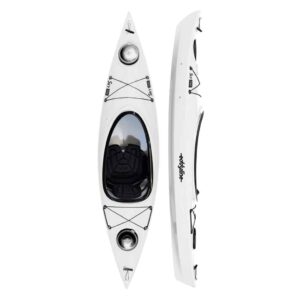
Credit: www.riverboundsports.com
Storage And Transport
If you need to move your kayak often, weight and shape matter.
Weight Comparison
Eddyline kayaks are usually a few pounds lighter than similar Delta models. This makes car-topping, solo carrying, or portaging easier—especially for smaller paddlers.
Storage Features
- Both brands have watertight hatches and deck bungees.
- Delta’s hatches are larger, which helps if you pack camping gear.
- Eddyline’s hatch seals are famous for keeping water out, even in rough conditions.
Transport Tips
- Use kayak carts for long distances to avoid hull damage.
- Always tie down both ends of your kayak on the roof rack.
- Invest in cockpit covers to keep your kayak clean during storage.
Price And Value
High-quality kayaks are an investment. Let’s compare what you get for your money.
Price Range
- Delta kayaks: $1,300–$2,500 USD (depending on model)
- Eddyline kayaks: $1,500–$3,000 USD (some specialty models cost more)
What You Get
- Both brands offer great resale value and durability.
- Delta gives you more features for the price (like larger hatches and included rudders on some models).
- Eddyline commands a higher price for lighter weight, elegant design, and slightly better on-water performance.
Cost-saving Tips
- Buy last year’s model for a discount.
- Look for package deals with paddles and life vests.
- Used Delta and Eddyline kayaks hold value, but you can save $300–$700 compared to new.
Real-world example: Many paddlers buy a used Delta, enjoy it for a few seasons, then sell it for nearly what they paid to upgrade to a higher-end Eddyline.
Who Should Choose Delta?
Delta kayaks are a strong choice for:
- Paddlers who want comfort and stability
- Beginners nervous about “tippy” boats
- People who pack a lot of gear (camping, photography)
- Those who want a tough, long-lasting kayak for a fair price
Delta is also a good fit for taller or larger paddlers, thanks to roomy cockpits and high weight limits.
Who Should Choose Eddyline?
Eddyline kayaks are best for:
- Paddlers who want speed, glide, and “performance” feel
- Intermediate or advanced users who paddle long distances
- Those who care about the lightest possible boat
- People who value elegant design and fine details
Eddyline is a favorite among coastal paddlers and those who want to learn advanced skills (like edging, rolling, or surf launches).
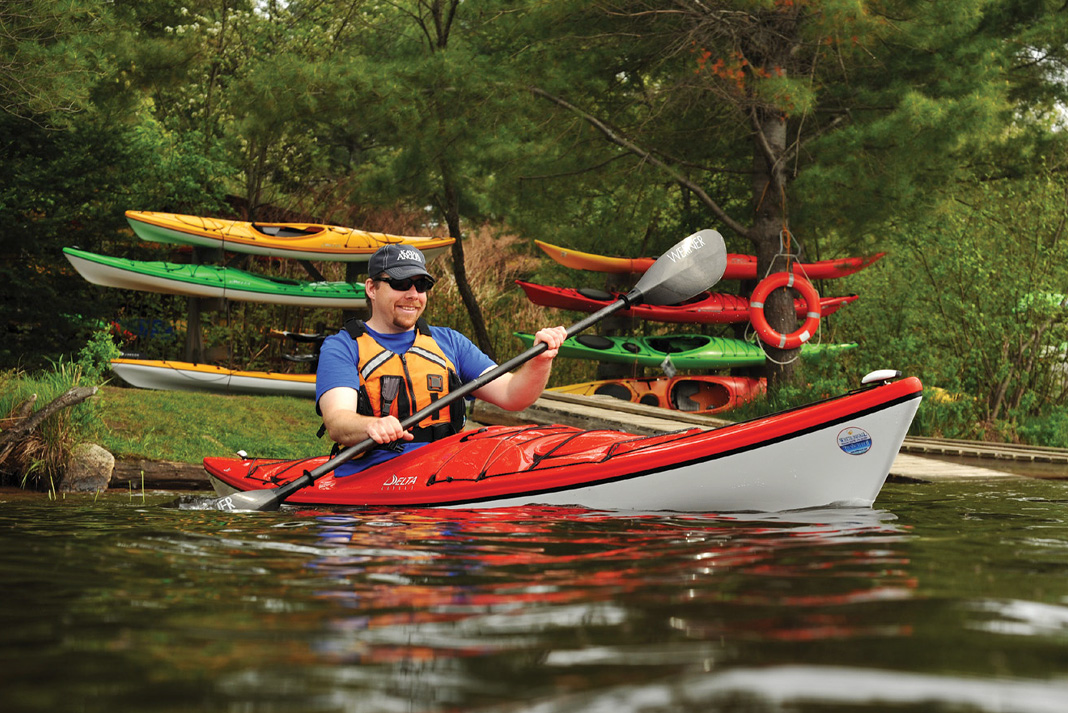
Credit: paddlingmag.com
Common Buyer Mistakes
Even experienced paddlers make mistakes when choosing a kayak. Watch out for these:
- Focusing only on weight: A lighter kayak is easier to carry, but too light can feel less stable on windy days.
- Ignoring cockpit fit: Comfort in the shop does not always mean comfort on the water. Try before you buy.
- Overlooking resale value: Some colors or models sell faster used. White, blue, and red boats are most popular.
- Forgetting accessories: A good paddle, life vest, and dry bags add $200–$400 to your budget.
- Not checking transport: Make sure your car rack fits your kayak’s width and weight.
Real-world Comparison Table
To help you quickly compare Delta and Eddyline across key features:
| Feature | Delta Kayaks | Eddyline Kayaks |
|---|---|---|
| Stability | High initial stability | Better secondary stability |
| Weight | Moderate (44–52 lbs) | Lighter (41–50 lbs) |
| Price Range | $1,300–$2,500 | $1,500–$3,000 |
| On-water Performance | Balanced, comfortable | Fast, agile |
| Best For | Beginners, campers | Experienced, performance seekers |
| Hatch Size | Larger | Smaller, more watertight |
| Resale Value | High | Very high |
Environmental Commitment
Both Delta and Eddyline care about the environment. They use recyclable plastics and minimize waste in production. Eddyline, in particular, has earned awards for green manufacturing practices. If you want to support brands that care for nature, both are solid choices.
For more on kayak materials and sustainability, see the Wikipedia Kayak page.
Final Thoughts: Which Should You Choose?
Choosing between Delta and Eddyline kayaks comes down to your personal needs, skill level, and what you value most. If comfort, gear storage, and price are your top priorities, Delta is an excellent choice. If you dream of speed, light weight, and a more “connected” paddling experience, Eddyline is hard to beat.
Remember, no kayak is perfect for everyone. Try to paddle both brands before you decide. Look at your main paddling locations, your physical strength, and your long-term goals as a kayaker. With either Delta or Eddyline, you’re investing in a kayak that will last for years and give you many adventures on the water.
Frequently Asked Questions
Is A Delta Or Eddyline Kayak Better For Beginners?
Both are good for beginners, but Delta kayaks are more stable and comfortable for new paddlers. The wider cockpit and high initial stability help reduce the fear of tipping. Eddyline kayaks are also suitable, especially the wider models, but may feel less stable at first.
Which Brand Is Lighter, Delta Or Eddyline?
Eddyline kayaks are usually lighter than Delta models of the same size. This is due to their focus on performance and slightly thinner hulls. If weight is a top concern (for car-topping or solo carrying), Eddyline is the better choice.
Are Delta And Eddyline Kayaks Suitable For Ocean Paddling?
Yes, both brands make touring kayaks that perform well on the ocean. Choose a longer model (over 15 feet) with sealed hatches and perimeter lines. Eddyline’s Fathom and Delta’s 17 are popular for coastal trips.
How Long Do Thermoformed Kayaks Last?
With proper care, both Delta and Eddyline thermoformed kayaks can last 15–20 years or more. Avoid dragging them on rough surfaces and store them out of direct sunlight. Both brands offer customer support and repair options if you need help.
Can I Add A Rudder Or Skeg To Delta And Eddyline Kayaks?
Some Delta and Eddyline models come with rudders or skegs, while others have the option to add them. Always check the model before buying. Adding a rudder helps with tracking in wind and current, especially on longer trips.
With this information, you should feel confident comparing Delta vs Eddyline kayaks for your next paddling adventure.