

Kayaking is a favorite activity for people who love water and adventure. Whether you plan to paddle on a calm lake, a flowing river, or out at sea, one question often comes up: how many people can fit in a kayak? The answer depends on the type of kayak, its design, and what you want to do on the water. If you’re new to kayaking, or thinking about buying or renting a kayak, understanding how many people can fit safely is important for both fun and safety.
Kayaks come in many sizes and shapes. Some are designed for solo paddlers, while others can carry two, three, or even more people. There are also special kayaks for families, fishing, or group tours. This article explores all the main types of kayaks, the factors that affect their capacity, and what you should know before loading up your boat.
You’ll also learn some practical tips and answers to common questions about kayak capacity.
Understanding Kayak Capacity
Before you choose a kayak or pile in with friends, it helps to know what “capacity” really means. Kayak capacity is not just about how many people can physically sit in the boat. It’s also about safety, comfort, and the kayak’s ability to float and move properly.
Most kayaks have a manufacturer’s weight limit. This number tells you the total combined weight of people and gear the kayak can safely carry. Exceeding this limit can make the kayak unstable or even dangerous. For example, a kayak rated for 350 pounds may fit two small adults, but will not be safe for two larger adults and a lot of gear.
There are also practical limits. Even if three people could squeeze into a long kayak, it doesn’t mean the boat will handle well, or that everyone will be comfortable. Always check both the number of seats and the weight rating.
Types Of Kayaks And Their Typical Capacity
Different kayaks are built for different purposes. Here’s what you can expect from the main types:
1. Single (solo) Kayaks
Solo kayaks are the most common. They are designed for one person. Most are between 8 and 12 feet long, and have a weight limit from 200 to 350 pounds. The seat is shaped for one paddler, and the boat is balanced for solo use.
Solo kayaks are ideal for:
- People who want to paddle alone
- Light gear or a small dog as extra load
Trying to fit two people in a solo kayak is not safe or comfortable. Even a child sitting in front may throw off the balance.
2. Tandem Kayaks
Tandem kayaks are built for two people. They are longer (usually 12 to 16 feet) with two seats, one behind the other. The weight limit is higher, often between 400 and 600 pounds.
Tandem kayaks are good for:
- Couples, friends, or parent and child
- Extra gear for fishing or camping
Some tandems have a middle seat for a small child or pet, but not all do. Always check the specs.
3. Three-person Kayaks
While less common, some kayaks are made for three paddlers. These are often called triple kayaks or “three-person” kayaks. They are longer and wider, with seats for each person.
Typical features:
- Length: 16 to 20 feet
- Weight limit: 500 to 700 pounds
These are popular with families (two adults and one child) or for group outings.
4. Sit-on-top Kayaks
Sit-on-top kayaks can come as solo, tandem, or even three-person models. They have open seats on the deck, not inside a cockpit. Because of their design, they are easy to climb on and off, and often have space for more than one person.
Sit-on-top tandems and triples are common for:
- Recreational paddling
- Kids and beginners
These kayaks often have flexible seating, but you must watch the weight limit.
5. Inflatable Kayaks
Inflatable kayaks are lightweight boats that can be packed away and pumped up when needed. They come in solo, tandem, and three-person versions.
Key points:
- Easy to transport
- Capacity depends on size: Solo (1 person), Tandem (2 people), Triple (3 people)
They are popular for travel and family outings but always check the capacity before launching.
6. Fishing Kayaks
Fishing kayaks are built for stability. Most are solo, but there are tandem models. They tend to have higher weight limits, to carry gear and sometimes a second person.
- Solo fishing kayaks: 1 person, up to 400 pounds
- Tandem fishing kayaks: 2 people, up to 600 pounds
Extra seats may allow a child or pet, but not always.
7. Sea Kayaks
Sea kayaks are long, narrow boats made for open water. Most are solo or tandem, but a few designs allow for three people.
- Solo: 1 person, up to 350 pounds
- Tandem: 2 people, up to 500 pounds
Sea kayaks focus on speed and efficiency, so overloading them can make paddling much harder.
8. Whitewater Kayaks
Whitewater kayaks are designed for rapids and rough water. Most are single-seaters, very short (6 to 9 feet), and not made to carry extra people.
- Solo: 1 person, up to 250 pounds
Some tandem whitewater kayaks exist, but they are rare and need skilled paddlers.
9. Specialty Kayaks
There are also custom or group kayaks, such as those used for tours, races, or records. Some can carry six, eight, or even more people, but these are not typical for recreation.
- Group kayaks: 4-10 people or more, used for special events
These are large, heavy, and need teamwork to paddle.
Kayak Capacity Comparison Table
Here’s a quick look at how many people different kayak types usually hold:
| Kayak Type | Usual Capacity (People) | Weight Limit (lbs) |
|---|---|---|
| Solo Kayak | 1 | 200–350 |
| Tandem Kayak | 2 | 400–600 |
| Three-Person Kayak | 3 | 500–700 |
| Sit-On-Top Kayak | 1–3 | 250–700 |
| Inflatable Kayak | 1–3 | 200–650 |
| Fishing Kayak | 1–2 | 350–600 |
| Sea Kayak | 1–2 | 250–500 |
| Whitewater Kayak | 1 | 200–250 |
| Group/Specialty Kayak | 4–10+ | Varies |
Factors That Affect Kayak Capacity
Not all kayaks are the same, even if they’re built for the same number of people. Here are key things that affect how many people can fit in a kayak:
Kayak Length And Width
Longer, wider kayaks can hold more people and more weight. Tandem and triple kayaks are longer to fit extra seats. Wider kayaks are more stable when carrying extra weight.
Weight Limit
This is the most important number. Always check the manufacturer’s weight rating. Remember, this includes people and all gear—coolers, fishing rods, life jackets, or pets.
Seat Design
Some kayaks have molded seats, while others have adjustable or open seating. Sit-on-top kayaks may allow an extra small person or child, but only if the weight and space allow.
Intended Use
A kayak for whitewater is very different from one made for family outings. Don’t try to fit extra people in a kayak designed for solo or high-performance use.
Material And Build Quality
Heavier-duty materials (like plastic or fiberglass) can carry more weight, but always rely on the maker’s numbers.
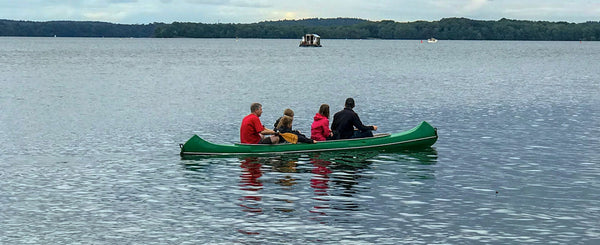
Credit: www.gilisports.com
Real-world Examples
Let’s look at a few real kayak models and their capacities:
- Perception Pescador 12.0: Solo, 1 person, up to 375 pounds
- Ocean Kayak Malibu Two: Tandem sit-on-top, 2 adults + 1 child, up to 425 pounds
- Sevylor Big Basin 3-Person: Inflatable, 3 people, up to 490 pounds
- Hobie Mirage Oasis: Tandem fishing kayak, 2 people, up to 550 pounds
As you can see, even among tandems, some allow a child or pet, but others don’t.
Common Mistakes With Kayak Capacity
Many beginners make the same errors when choosing or loading a kayak:
- Ignoring the weight limit. Overloading the kayak makes it hard to paddle and easy to tip.
- Forgetting about gear. Two adults plus a cooler can quickly reach the limit.
- Assuming more seats mean more people. Some “middle seats” are only for kids or pets, not adults.
- Trying to fit three adults in a tandem. It’s not safe, even if you fit.
- Choosing a kayak based on price, not size. A cheap solo kayak may not suit a heavier or larger paddler.
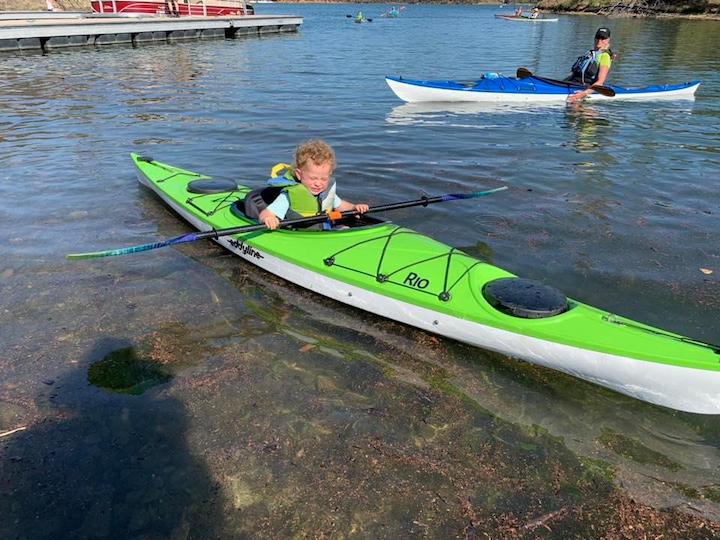
Credit: www.aquabound.com
Safety And Comfort Tips
If you want to make the most of your kayak trip, follow these tips:
- Always check the weight capacity before getting on the water.
- Never overload the kayak. Water close to the edge is a warning sign.
- Distribute weight evenly. Put heavier people or gear in the center.
- Wear life jackets, especially with kids or pets.
- Practice getting in and out, especially with multiple people.
- If you’re not sure, ask at the rental shop or check the manual.
When To Choose A Multi-person Kayak
Multi-person kayaks are great for:
- Families with young children (one adult can focus on paddling, the other on the child)
- Beginners who want help paddling
- Couples or friends who want to share the experience
But, paddling a tandem or triple kayak needs teamwork. Communication is key, or you may end up going in circles!
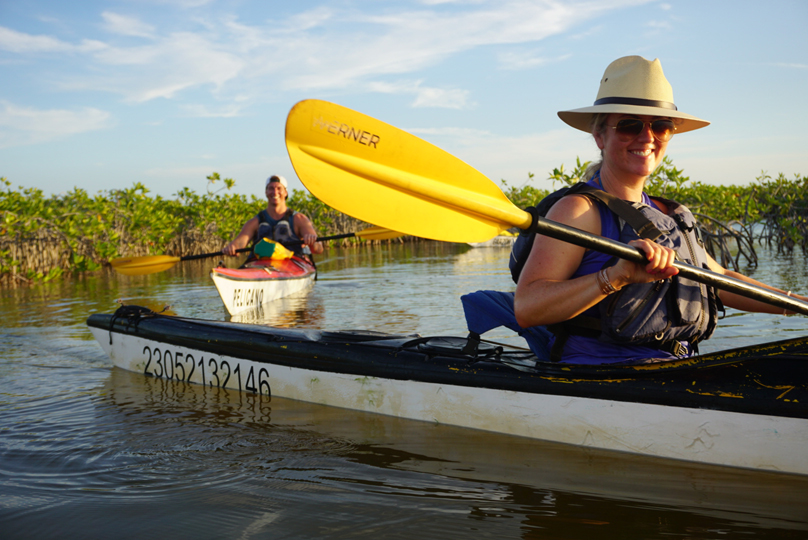
Credit: www.yucatanoutdoors.com
Kayak Models Compared By Capacity
Here’s another look at popular models and their seating:
| Model Name | Type | Seats | Max Weight (lbs) |
|---|---|---|---|
| Pelican Maxim 100X | Solo | 1 | 275 |
| Intex Explorer K2 | Inflatable Tandem | 2 | 400 |
| Lifetime 10 Foot Tandem | Sit-On-Top | 2 adults + 1 child | 500 |
| Old Town Dirigo 155T | Tandem | 2 | 475 |
| Sevylor Big Basin | Inflatable Triple | 3 | 490 |
Non-obvious Insights
Most people don’t realize that manufacturer capacity ratings are often optimistic. For the best stability and performance, you should only load up to about 75% of the max weight. For example, if your kayak is rated for 400 pounds, aim for no more than 300 pounds including people and gear. This keeps the kayak higher in the water, paddles better, and is safer.
Another thing many miss is that comfort drops fast as you add people. A tandem kayak with three people may technically fit, but the middle seat is often cramped with less back support and legroom. If you’re planning a long trip, always prioritize comfort over max capacity.
How To Choose The Right Kayak For Your Group
To pick the best kayak for your group, ask yourself:
- How many adults and children will go?
- Will you bring a dog or large gear?
- What is the total weight (people plus gear)?
- Are you paddling on calm water, rivers, or the ocean?
- Do you prefer more speed or more stability?
If you have a group of three or more adults, it’s often better to take multiple kayaks. For families with a small child, a tandem or sit-on-top kayak with a third seat works well.
For more details on kayak types, you can check out the Kayak Wikipedia page.
Frequently Asked Questions
How Many Adults Can Fit In A Tandem Kayak?
Most tandem kayaks are made for two adults. Some have a small middle seat for a child or pet, but it’s not safe or comfortable for three adults. Always check the weight limit and seating design.
Can A Child Ride With Two Adults In A Kayak?
Yes, many tandem kayaks have a space for a child between two adults, especially sit-on-top models. Make sure the child wears a life jacket and stays seated. Check the total weight against the kayak’s limit.
What Happens If I Overload My Kayak?
If you put too much weight in a kayak, it will sit lower in the water, become unstable, and be hard to paddle. There’s also a higher risk of tipping or sinking. Always stay under the kayak’s weight rating.
Are There Kayaks For Four Or More People?
Yes, but they are specialty or group kayaks, not common for recreation. Most are used for guided tours, team sports, or records. For most people, it’s better to use two tandem kayaks instead.
Can I Bring My Dog In A Kayak?
Many kayaks (especially sit-on-top or inflatable models) allow room for a medium-sized dog. Make sure your dog is calm, wears a pet life jacket, and does not overload the kayak. Never force a dog into a small cockpit.
Kayaking is a wonderful way to enjoy the outdoors, but choosing the right kayak size and understanding capacity makes all the difference. Whether solo or with friends and family, always check the specs, plan ahead, and stay safe on the water.