
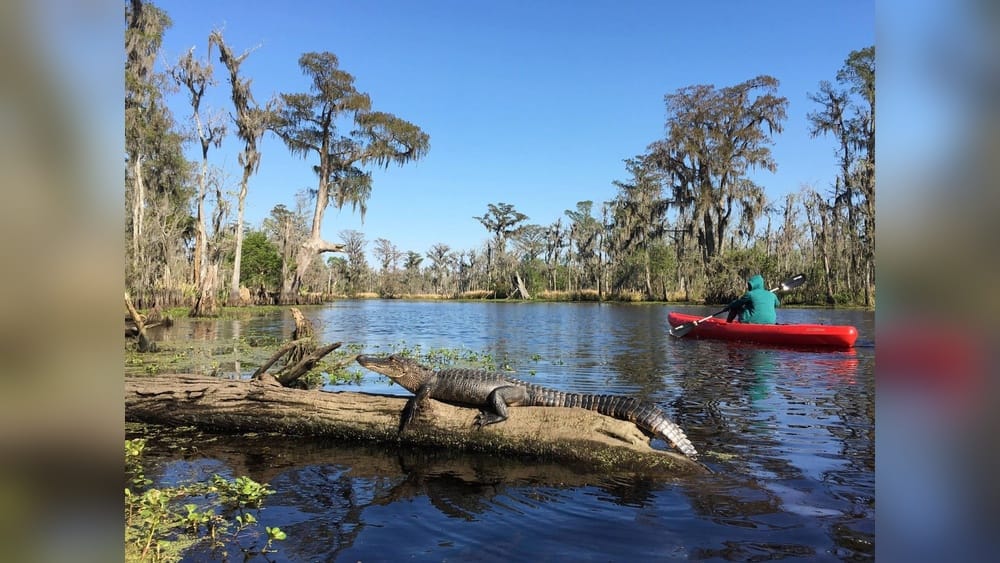
Kayaking is a wonderful way to enjoy nature, offering a peaceful view of rivers, lakes, and swamps. But for those exploring waters in the southeastern United States, one question often comes up: Do alligators attack kayaks? Stories and social media sometimes show dramatic encounters, but how common are these situations, and what should kayakers really expect? Understanding alligator behavior and the risks involved is essential for anyone paddling in their territory.
Alligator Behavior: What You Need To Know
Alligators are large reptiles that live in freshwater environments like lakes, rivers, and swamps, especially in states like Florida, Georgia, and Louisiana. These animals are usually shy and avoid humans. Alligators hunt mainly at dawn and dusk, feeding on fish, birds, and small mammals.
They are not naturally aggressive towards people or boats, but their behavior can change during certain times of the year.
During the spring and early summer, alligators enter mating season. Males become more territorial and may act more boldly to protect their area. In late summer, female alligators guard their nests and can become defensive if they feel their eggs are threatened. Both of these periods increase the chances of an alligator approaching a kayak, but even then, attacks are extremely rare.
Do Alligators Attack Kayaks? The Real Risk
It’s natural to worry about safety when kayaking in alligator habitats. The truth is, alligator attacks on kayaks are extremely uncommon. According to data from the Florida Fish and Wildlife Conservation Commission, the majority of alligator attacks involve swimmers or people wading in shallow water, not those in boats.
Here are some important points to consider:
- Alligators prefer to avoid conflict. They usually slip quietly into the water when a kayak approaches.
- Most attacks are defensive, not predatory. Alligators may defend their territory, young, or feel startled if surprised at close range.
- Kayaks are not seen as prey. Alligators hunt smaller animals, not large objects like boats.
A few rare incidents have occurred, often when kayakers unknowingly get too close to nests or make sudden movements near alligators. Videos online can give a false impression that these events are common, but official records show they are exceptional rather than normal.
Why Alligators May Approach Or Touch Kayaks
While attacks are rare, alligators may sometimes approach a kayak. This behavior is not always aggressive:
- Curiosity: Alligators are naturally curious and may come closer to investigate an unfamiliar object.
- Territory: During mating season, males may approach to warn you away from their area.
- Mistaken identity: If people feed alligators, they can lose their natural fear of humans and come closer expecting food. This is illegal and dangerous.
- Nesting season: Females protecting eggs may display defensive behaviors like hissing, lunging, or jaw slapping if you get too close.
Usually, the alligator will stop or turn away if you stay calm and give it space.
How Kayaks Compare To Other Watercraft Around Alligators
Different boats can affect how alligators behave. Kayaks are smaller and closer to the water than canoes, paddleboards, or motorboats. This sometimes makes paddlers feel more exposed. Let’s compare the main types:
| Watercraft | Alligator Risk Level | Common Encounters |
|---|---|---|
| Kayak | Low | Curiosity, rare defensive approach |
| Canoe | Low | Similar to kayak |
| Paddleboard | Low-Moderate | Feels more exposed, but risk is still very low |
| Motorboat | Very Low | Noise usually scares alligators away |
Kayaks and canoes are quiet, so you may see more wildlife, including alligators, but this does not mean you are in danger. Motorboats are louder and tend to scare alligators into hiding.
:max_bytes(150000):strip_icc():focal(703x422:705x424)/alligator-attack-kayakers-polk-county-062325-72760b2281cd4e93b9c69c5d0ff1617c.jpg "Do Alligators Attack Kayaks? Safety Tips Every Paddler Needs")
Credit: people.com
Real-life Incidents And Statistics
Media coverage often exaggerates the risk, but official data tells a different story. In the United States, there are about 6,000,000 alligators, with most living in Florida and Louisiana. The Florida Fish and Wildlife Conservation Commission reports an average of eight unprovoked alligator bites per year in Florida, mostly involving swimmers.
Attacks on kayaks are so rare they are not a separate category in most wildlife reports. For example, between 1948 and 2021, Florida documented only a handful of incidents where alligators made contact with a kayak or canoe, and most did not result in serious injury.
One notable case occurred in 2020, when a Florida kayaker had his boat bumped by an alligator guarding a nest. The kayak was scratched but the paddler was unharmed. In another widely shared video, a Louisiana woman filmed an alligator biting her kayak, but she stayed calm and paddled away without injury.
These stories are news because they are so unusual.
When And Where Are Alligator Encounters Most Likely?
Certain conditions make alligator sightings or encounters more likely:
- Warm weather: Alligators are more active from April to September.
- Mating season: March through June is when males defend territory.
- Nesting season: June and July, females may be near nests.
- Low light times: Early morning and evening are prime feeding times.
- Shallow, calm water: Alligators like sunbathing on banks or logs.
Areas with regular human activity, like busy parks or marinas, have fewer alligator encounters because animals avoid these places. Remote or less-used waterways may have more wildlife sightings.
How To Stay Safe Kayaking With Alligators
You can enjoy kayaking in alligator country safely by following key precautions:
- Give alligators space: Stay at least 30 feet (10 meters) away from any alligator you see.
- Never feed alligators: This is illegal and makes them lose their fear of people.
- Avoid nesting areas: If you see a mound of vegetation or a mother alligator, back away quietly.
- Be extra careful at dawn and dusk: These are the times when alligators hunt.
- Don’t dangle hands or feet in the water: This avoids accidental bites.
- Travel in groups: Multiple kayaks are more noticeable and less interesting to alligators.
- Watch your surroundings: Move away if an alligator hisses, lunges, or raises its head.
- Keep pets out of the water: Dogs can attract alligators because they resemble natural prey.
If an alligator approaches your kayak, stay calm. Splashing or loud noises can sometimes discourage it. Paddle away steadily and avoid sudden movements.
Signs That An Alligator May Be Threatened Or Aggressive
Most alligators you see will ignore you, but it’s important to recognize warning signs of defensive behavior:
- Hissing or growling: A clear sign to back off.
- Raising head and tail out of water: Shows the animal is trying to look bigger.
- Jaw slapping or lunging: Defensive, not hunting behavior.
- Staying in place instead of moving away: Alligators usually retreat; if one holds its ground, give it space.
Understanding these signals helps you avoid conflict and keeps both you and the wildlife safe.
What To Do If An Alligator Approaches Your Kayak
If you find yourself close to an alligator, do not panic. Here’s what you should do:
- Remain calm: Sudden movements may startle the animal.
- Back away slowly: Paddle smoothly and quietly in the opposite direction.
- Avoid direct confrontation: Do not try to “shoo” the alligator or hit it with your paddle.
- Make yourself look bigger: Raise your paddle slowly if the animal comes too close.
- Leave the area: If the alligator seems agitated, it’s best to end your paddle for the day.
In the rare event an alligator bumps or bites your kayak, focus on getting to shore safely. Most incidents end with the animal losing interest once you move away.
Myths And Facts About Alligators And Kayaks
There are many myths about kayaking with alligators. Here are the facts:
- Myth: Alligators attack every kayak they see.
- Fact: Most alligators ignore boats and avoid people.
- Myth: Kayaks look like prey to alligators.
- Fact: Alligators hunt smaller animals; a kayak is too large and unfamiliar.
- Myth: Alligators are aggressive by nature.
- Fact: Alligators are defensive, not aggressive, unless threatened.
Misinformation can cause unnecessary fear. Knowing the truth helps you enjoy your time on the water.

Credit: www.youtube.com
How Kayak Color And Size May Affect Alligator Encounters
Some paddlers wonder if the color or size of a kayak makes a difference. While there’s no scientific proof that certain colors attract alligators, bright colors like yellow or orange make you more visible to other boaters, which is a safety plus.
Larger kayaks may feel more stable and secure, but alligators do not usually approach kayaks based on size or color. The key is movement and distance, not appearance.
Here’s a quick comparison:
| Kayak Feature | Possible Effect on Alligators |
|---|---|
| Bright color | More visible to people, no proven effect on alligators |
| Large size | May feel more secure, but alligators avoid any kayak |
| Quiet movement | Better for wildlife viewing, but always stay alert |
The Importance Of Local Knowledge
Every waterway is different. Before you kayak in alligator country, it’s smart to talk with local rangers, outfitters, or experienced paddlers. They can tell you about current wildlife activity, nesting areas, and any recent incidents. Local advice is often more useful than general rules, because it reflects the latest conditions.
Why Most Kayakers Never Have Problems With Alligators
Millions of people kayak every year in alligator habitat without any negative encounters. Why? Because alligator attacks are rare, and following safety practices greatly reduces risk. Most alligators are more afraid of you than you are of them.
One key insight: alligators are part of the ecosystem, not a threat to avoid at all costs. Many paddlers enjoy seeing these ancient creatures from a safe distance, making the trip more memorable.
Final Thoughts
Kayaking in alligator country does not mean you are in constant danger. While it’s smart to be aware and prepared, the real risk is low if you respect wildlife and follow simple precautions. Most alligators avoid people and boats, and attacks on kayaks are extremely rare.
Understanding alligator behavior, knowing when and where to paddle, and using common sense will keep your adventure safe and enjoyable.
If you want more in-depth information on alligator behavior and safety, you can visit the Florida Fish and Wildlife Conservation Commission website.

Credit: www.ndtv.com
Frequently Asked Questions
Do Alligators See Kayaks As Food?
No, alligators do not see kayaks as food. They hunt small animals and fish. A kayak is too big and unfamiliar to be seen as prey.
What Should I Do If I See An Alligator While Kayaking?
Stay calm and keep your distance. Paddle away slowly if the alligator is close. Do not approach or try to feed it.
Are Certain Colors Of Kayaks Safer Around Alligators?
There is no evidence that kayak color affects alligator behavior. Bright colors can help other boaters see you, but alligators do not target kayaks by color.
Can I Kayak Safely With My Dog In Alligator Country?
It’s not recommended. Dogs can attract alligators because they look like natural prey. Keep pets out of the water to stay safe.
How Common Are Alligator Attacks On Kayaks?
Extremely rare. Most alligator attacks involve people swimming or wading. Kayaks are almost never targeted if you follow basic safety rules.