
Choosing the right kayak paddle size can make your time on the water much more enjoyable. Many beginners think any paddle will work, but the truth is, paddle size affects everything from comfort to speed and even safety. A paddle that’s too long or short can cause fatigue, sore wrists, and poor control.
But with a few key measurements and some practical advice, you can confidently pick the right paddle for your body and your kayak.
Why Kayak Paddle Size Matters
Paddle size is not just about length. The correct paddle size means you can paddle efficiently, reduce the risk of injury, and enjoy your trip without tiring your arms too quickly. A paddle that’s too short will make you hit your knuckles on the side of the kayak. If it’s too long, you’ll waste energy swinging extra weight with every stroke.
A well-sized paddle helps you:
- Maintain a smooth paddling rhythm
- Reduce stress on your shoulders and wrists
- Steer and control your kayak more easily
- Enjoy longer trips with less fatigue
Many beginners overlook sizing, but it’s one of the most important gear choices you’ll make.
Key Factors In Sizing A Kayak Paddle
Finding the right paddle size means considering a few factors. Let’s look at what really matters.
1. Your Height
Your body height is a starting point for paddle sizing. Taller paddlers need longer paddles, while shorter paddlers need shorter paddles. Your arms have to reach the water comfortably with each stroke.
2. Kayak Width
The width of your kayak is just as important as your height. Wider kayaks require longer paddles because you have to reach farther to get your blade into the water. Narrow kayaks need shorter paddles.
3. Paddling Style
How you paddle also affects size. There are two main styles:
- Low-angle paddling: The paddle is more horizontal, with smooth, relaxed strokes. Good for touring and long trips.
- High-angle paddling: The paddle is more vertical, with quick, powerful strokes. Used for speed and maneuvering.
High-angle paddling usually requires a shorter paddle than low-angle paddling.
4. Blade Shape And Size
The blade shape can change how a paddle feels, but it doesn’t change the ideal length. However, larger blades are often paired with shorter paddles for quick, powerful strokes, while smaller blades suit longer paddles for gentle, steady movement.
5. Shaft Type
Straight shafts and bent shafts change how you hold the paddle but not the overall length you need. If you have smaller hands or want less stress on your wrists, a bent shaft can help, but the sizing rules stay the same.

Credit: www.ez-dock.com
How To Measure For The Right Kayak Paddle Size
To size your kayak paddle correctly, follow these steps:
- Measure your height (without shoes).
- Check your kayak’s width – this is often found in the kayak’s manual or online.
- Decide if you prefer high-angle or low-angle paddling.
- Use a reliable sizing chart as a starting point (see below).
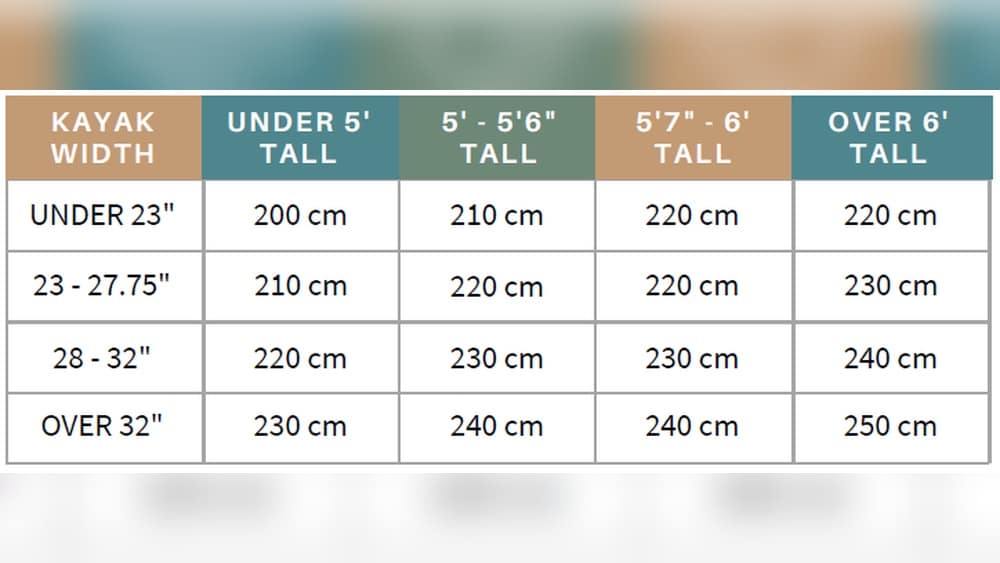
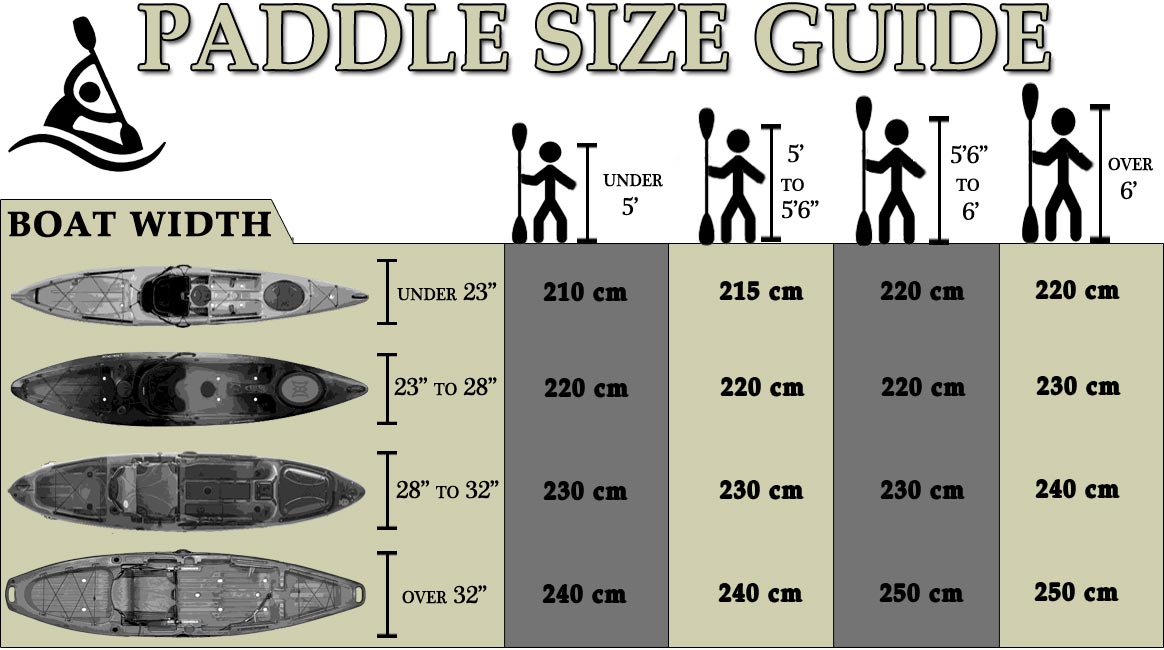
Here’s a common paddle sizing guide:
| Kayak Width | Paddler Height | Low-Angle Paddle Length | High-Angle Paddle Length |
|---|---|---|---|
| Under 23 in (58 cm) | Under 5’5″ (165 cm) | 210-220 cm | 200-210 cm |
| 23-28 in (58-71 cm) | 5’5″–5’11” (165–180 cm) | 220-230 cm | 210-220 cm |
| Over 28 in (71 cm) | Over 6′ (183 cm) | 230-240 cm | 220-230 cm |
Always remember, these numbers are a starting point. Your comfort and the type of water you paddle in can shift your ideal size by 5-10 cm.
Practical Paddle Sizing Methods
Charts are helpful, but here are two practical methods you can try yourself:
The Arm Reach Test
Hold the paddle upright next to you. Reach up with one hand. Your fingers should just curl over the top of the blade. If you have to stretch or can easily reach past the blade, the paddle is likely the wrong length.
Simulated Paddling
Sit in your kayak or on a low bench. Hold the paddle as you would when paddling. As you mimic the paddling motion, your top hand should not rise above your eyes, and the blade should dip fully into the water without hitting the boat.
Sizing For Different Kayaking Activities
The right paddle size also depends on your main activity. Here’s a breakdown:
| Activity | Recommended Paddle Length | Notes |
|---|---|---|
| Recreational Kayaking | 220-240 cm | Comfort is key; go slightly longer for wide kayaks |
| Touring/Sea Kayaking | 210-230 cm | Efficiency matters; choose based on paddling style |
| Whitewater Kayaking | 188-203 cm | Shorter paddles for quick turns |
| Fishing Kayaking | 230-260 cm | Long paddles reach around gear and wide kayaks |
If you switch between activities, consider a two-piece adjustable paddle.
Common Mistakes When Sizing A Kayak Paddle
Many paddlers make small errors that affect their comfort. Here are some things to avoid:
- Ignoring kayak width: Many just measure their height, but kayak width is just as important.
- Choosing too long: Longer paddles feel heavier and slow you down, especially for high-angle strokes.
- Using one paddle for all activities: Whitewater, touring, and fishing each need different paddle sizes.
- Not considering paddling style: High-angle paddlers need a shorter paddle for efficiency.
- Guessing without testing: Always try a paddle before buying if possible, or buy from a store with a good return policy.
Non-obvious Insights For Better Paddle Sizing
Most beginners focus only on length, but two extra factors can improve your experience:
- Shaft Diameter: If you have smaller hands, a smaller-diameter shaft can reduce fatigue and increase grip comfort. Many brands offer “small shaft” options.
- Feathering Angle: Adjustable paddles let you change the angle between the blades. This can reduce wind resistance and wrist strain. If you often paddle in windy conditions, try a paddle with feathering options.
Also, remember that paddle weight matters, especially for longer trips. Lighter paddles cost more but reduce fatigue over hours on the water.
Sizing For Kids And Smaller Paddlers
If you’re buying for a child or a small adult, the same rules apply, but focus on the lower end of paddle size charts. Kids’ paddles are usually 180–200 cm, and lighter weight is even more important. Avoid adult paddles for kids—they’ll be too heavy and long, making it hard to learn proper technique.
Paddle Materials And Their Impact On Sizing
While paddle material doesn’t change the length you need, it does affect comfort and use:
- Aluminum: Affordable, heavier, good for short trips or beginners.
- Fiberglass: Lighter, more comfortable, common for regular paddlers.
- Carbon fiber: Lightest, best for long trips or those wanting top performance.
If you choose a heavier paddle (like aluminum), it’s better to pick a slightly shorter length to reduce swing weight.
When To Consider An Adjustable Paddle
Adjustable paddles are a smart choice if:
- You share your paddle with others
- You use the same paddle for different kayak widths
- You switch between high-angle and low-angle paddling
Many adjustable paddles offer 10–20 cm of length variation. This flexibility is useful if you’re still learning what works best for you.

Credit: www.bendingbranches.com
Sizing Kayak Paddles For Special Situations
There are times when you may need a different approach:
Inflatable Kayaks
Inflatable kayaks are often wider than hard-shell models. If your kayak is over 30 inches wide, add 10–20 cm to the recommended paddle length.
Sit-on-top Kayaks
Since you sit higher on these, you may need a slightly longer paddle. Add 5–10 cm to your usual size.
Tall Or Short Torso
If you have a long torso, you’ll reach further down the side of the kayak. Use the next size up on the chart. If your torso is shorter, go down a size.
Real-world Example: Sizing For Touring
Let’s say you’re 5’8” (173 cm) and your kayak is 24 inches (61 cm) wide. You enjoy long, relaxed paddling trips. According to the sizing chart, you’d start with a 220–230 cm paddle. If you have a long torso, try 230 cm for more reach.
If you paddle with a high angle for speed, choose 210–220 cm instead.
Credit: www.bassgrab.com
How To Try Before You Buy
Whenever possible, test paddles at a local shop or rental. Many stores allow you to try different sizes on the water. Pay attention to:
- How your shoulders feel after 10–15 minutes
- Whether your knuckles hit the kayak
- If the paddle feels too heavy or awkward
If you can’t try before you buy, choose an adjustable paddle or buy from a store with a solid return policy.
Caring For Your Paddle
Proper sizing is important, but so is paddle care. Rinse your paddle after use, especially in saltwater. Store it out of the sun and avoid dropping it on hard surfaces. This keeps your paddle in good shape and ensures it stays the right length and balance for years.
When To Replace Your Paddle
A paddle that’s damaged, cracked, or feels heavy due to water inside should be replaced. If your paddling style changes or you upgrade your kayak, check your sizing again. Your needs might shift over time.
Useful Resources For Kayak Paddle Sizing
If you want more details, many manufacturers offer online paddle sizing guides. The REI Kayak Paddle Guide is a trusted resource for in-depth advice.
Frequently Asked Questions
What Is The Most Common Kayak Paddle Length?
For most adult recreational paddlers, the common paddle length is between 220–230 cm. However, the right size depends on your height, kayak width, and paddling style.
How Do I Know If My Paddle Is Too Long?
If your paddle feels heavy, your top hand rises above your head, or your strokes splash water far from the kayak, it may be too long. Try a shorter paddle or adjust your technique.
Can I Use The Same Paddle For Different Kayaks?
Yes, but only if the kayaks are similar in width. If you use very different kayaks (like a narrow touring kayak and a wide fishing kayak), an adjustable paddle or two paddles in different sizes is better.
Does Paddle Weight Matter For Sizing?
Paddle weight doesn’t change sizing rules, but heavier paddles are harder to use, especially if they’re long. For long trips, a lighter paddle sized correctly is best.
Are Expensive Paddles Worth It?
Expensive paddles are usually lighter and more comfortable. If you paddle often or go on long trips, investing in a high-quality, well-sized paddle can reduce fatigue and make paddling more fun.
Picking the right kayak paddle size is a small step that makes a big difference. Take time to measure, test, and adjust. Your shoulders—and your adventures—will thank you.