
Pelican Kayak Vs Perception: Which Brand Should You Choose?
Choosing the right kayak is not easy, especially when comparing Pelican Kayak and Perception. Both brands are popular, with a long history of making reliable boats. But which one is really better for your needs? You might see many opinions online, but most are not clear or only focus on one side. In this guide, you’ll get a full comparison based on design, materials, performance, comfort, price, and real user experiences. By the end, you’ll know exactly which brand matches your paddling style and goals.
Brand Overviews
Before comparing features, let’s look at what makes each brand unique.
Pelican Kayak
Pelican International is a Canadian company with over 50 years in the industry. They focus on making affordable, lightweight, and durable kayaks for beginners and casual paddlers. Most Pelican kayaks use a special plastic called RAM-X™, which is tough and flexible. Pelican is known for easy-to-handle recreational kayaks, but they also offer fishing and touring models.
Perception
Perception Kayaks, based in the USA, has been around since the 1970s. They are seen as pioneers in modern kayak design, especially with their use of rotomolded polyethylene. Perception’s range covers beginners to advanced paddlers, with a strong reputation for comfort and performance. Their boats are often a bit heavier but known for stability and customization options.
Kayak Types And Model Range
Both brands offer a wide range, but there are key differences in focus and variety.
Recreational Kayaks
- Pelican: Strong focus here. Models like the Pelican Argo 100X and Pelican Trailblazer 100 NXT are lightweight (about 36-40 lbs), easy to carry, and perfect for calm lakes or slow rivers.
- Perception: The Perception Joyride 10 and Perception Sound 9.5 are more feature-rich but a little heavier (40-50 lbs). They often include better seat padding and accessory rails.
Fishing Kayaks
- Pelican: Offers affordable fishing models like the Pelican Catch 100 and Pelican Sentinel 100X Angler. These are stable, easy to maneuver, and often lighter than competitors.
- Perception: The Perception Pescador Pro 10 and Outlaw 11.5 are favorites among anglers. They feature adjustable seats, gear tracks, and higher weight capacity, but tend to cost more.
Touring And Sit-in Kayaks
- Pelican: Limited selection. Touring models like the Pelican Sprint 120XR are designed for speed but focus on short to mid-range trips.
- Perception: Strong in this area. Models like the Perception Carolina 12 and Expression 11.5 are built for longer journeys, with more storage and advanced hull shapes.
Tandem Kayaks
- Pelican: The Pelican Alliance 136T is affordable and simple, but lacks advanced comfort features.
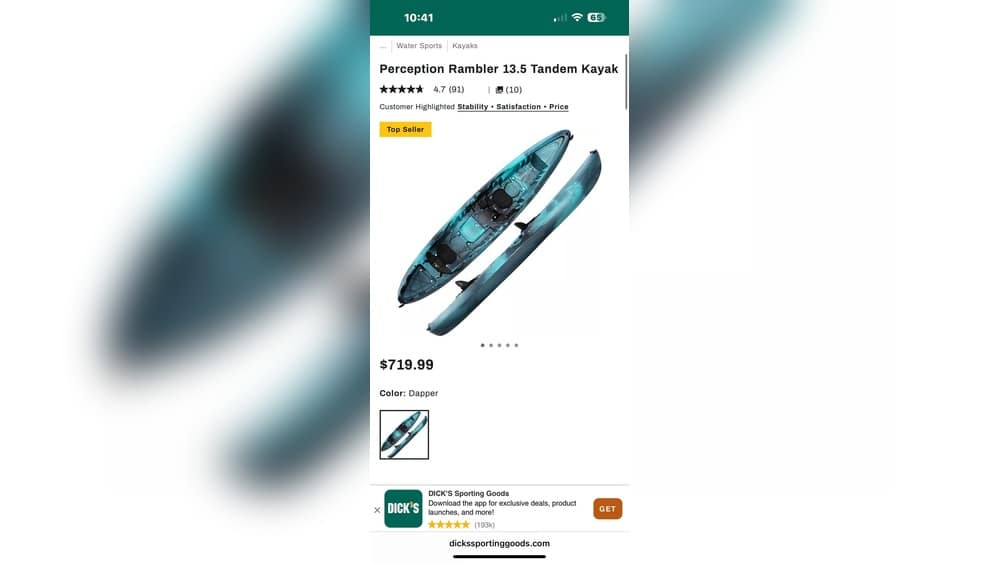
- Perception: The Perception Rambler 13.5 and Tribe 13.5 have more customization options and comfortable seating for two.
Build Materials And Durability
The material affects weight, durability, and price.
Pelican’s Ram-x™ Material
Pelican uses RAM-X™, a multi-layer polyethylene. It is UV-protected, flexible, and resists impacts well. This makes Pelican kayaks light and tough, but the plastic can feel “softer” and sometimes show scratches more easily.
Perception’s Rotomolded Polyethylene
Perception uses rotomolded polyethylene, a standard in mid to high-end kayaks. This material is thicker and usually more rigid, giving a solid feel on the water. It adds weight but increases lifespan and resistance to deep gouges.
Non-obvious insight: RAM-X™ kayaks can sometimes “flex” over rocks and return to shape, while rotomolded hulls may feel stiffer but can get dented if hit hard enough.
Comfort And Ergonomics
How you feel after a few hours in your kayak matters more than you think.
Seating
- Pelican: Uses simple, molded seats with some padding in higher-end models. Seats are often not adjustable in entry-level kayaks.
- Perception: Most models feature the Comfort Seating System—thicker cushions, adjustable backrests, and better lumbar support.
Legroom And Cockpit Size
- Pelican: Cockpits are generally wide and open for easy entry/exit, which is great for beginners but less secure in rough water.
- Perception: Offers both wide cockpits and smaller, more fitted options for touring. Foot pegs are often adjustable, helping paddlers of different heights.
Beginner tip: Many users only notice poor seat comfort after 1-2 hours. Trying a kayak for longer periods before buying can save you back pain later.

Credit: www.reddit.com
Performance On The Water
A kayak’s hull shape, length, and width all affect how it moves.
Stability
- Pelican: Prioritizes initial stability (feels steady when you get in), which helps new paddlers feel safe. Great for flatwater.
- Perception: Offers both initial and secondary stability (how stable the kayak feels when tipped on edge). This means more confidence in waves or currents.
Speed And Tracking
- Pelican: Shorter, wider hulls = easier turning but slower speed. Tracking (going straight) is good for calm water but can drift in wind or current.
- Perception: Longer, narrower hulls track better and paddle faster, especially touring models. Some include keel lines or rudder options for better control.
Maneuverability
- Pelican: Lightweight and short models turn easily—perfect for small lakes or narrow rivers.
- Perception: Heavier but can be just as maneuverable with the right design. Some models sacrifice turning for better straight-line speed.
Weight, Portability, And Storage
Weight
- Pelican: Most models are under 45 lbs, with some as light as 36 lbs. Easy to lift onto a car or carry to the water.
- Perception: Usually heavier—40 to 65 lbs depending on model and features.
Carrying And Handling
Pelican’s lighter weight makes solo transport much easier. Perception kayaks often have molded handles and better balance points, so they’re not impossible for one person but may require more effort.
Storage Space
- Pelican: Focuses on open storage wells and small dry hatches. Good for day trips.
- Perception: Larger rear and front hatches, plus bungee cords and gear tracks. Better for multi-day trips or fishing gear.
Price And Value
Entry-level Models
- Pelican: Most recreational kayaks range from $300 to $600. Fishing models start at $500. Great for people on a budget.
- Perception: Entry-level boats start around $400 but quickly rise to $800+ with more features.
Mid-range And Specialty Models
- Pelican: Touring and tandem kayaks can reach $900, but most stay under $1,000.
- Perception: Fishing and touring models often range from $800 to $1,500. More expensive, but you get better seats, storage, and customization.
Non-obvious insight: Many beginners buy the cheapest model, then upgrade within a year. Spending a bit more up front often saves money and frustration later.
Real-world User Experiences
Pelican Owners
- Appreciate the lightweight design—easy for kids or older adults to handle.
- Say the kayaks are “ready to paddle” out of the box with little setup.
- Some mention the basic seats get uncomfortable after a few hours.
- Good choice for families, beginners, and anyone who needs to move the kayak alone.
Perception Owners
- Consistently praise comfort and tracking—kayaks feel stable and smooth, even on choppy water.
- Like the accessory options (rails, mounts, extra hatches).
- Some say the extra weight makes car-topping a challenge, especially for solo paddlers.
- Popular with anglers, touring paddlers, and those who want a “buy it for life” kayak.
Side-by-side Comparison
To make things clearer, here’s a direct comparison of two popular models from each brand:
| Feature | Pelican Argo 100X | Perception Joyride 10 |
|---|---|---|
| Length | 10 ft | 10 ft |
| Width | 28 in | 29.5 in |
| Weight | 36 lbs | 50 lbs |
| Max Capacity | 275 lbs | 250 lbs |
| Seat | Basic padded | Comfort Seating System |
| Price | ~$350 | ~$650 |
Features For Fishing Enthusiasts
If you plan to fish, these extras matter.
| Feature | Pelican Catch 100 | Perception Pescador Pro 10 |
|---|---|---|
| Rod Holders | 2 flush-mount | 2 molded-in, 1 gear track |
| Seat Type | ErgoLounge™ adjustable | Lawn chair style, highly adjustable |
| Storage | Rear tank well, front hatch | Large rear well, sealed bow hatch |
| Weight | 54 lbs | 57 lbs |
| Price | ~$750 | ~$900 |
Credit: www.reddit.com
Advanced Features And Customization
Gear Tracks And Mounts
- Pelican: Basic models have few, but higher-end fishing kayaks add gear rails.
- Perception: Many models come “ready to rig” with gear tracks, paddle holders, and even fish finder mounts.
Rudders And Skegs
- Pelican: Rarely includes rudders or skegs, except in some touring models.
- Perception: Many touring and higher-end fishing models offer factory-installed rudders or the option to add one. This improves tracking in wind and current.
Accessory Compatibility
Perception kayaks generally use standard track systems, making it easy to add cup holders, GPS, cameras, and rod holders. Pelican models often require brand-specific accessories.
Safety Considerations
Buoyancy And Floatation
- Pelican: Many models have built-in flotation blocks. The lightweight material helps keep the kayak afloat if swamped.
- Perception: Uses bulkheads (sealed sections inside the hull) for extra safety in sit-in models.
Visibility And Color Options
Both brands offer bright colors for safety, but Perception offers more two-tone and high-visibility choices.
Child And Pet Friendliness
Pelican’s wide, stable hulls and open cockpits make them good for kids or pets. Perception’s sit-on-tops are also safe for families, but the heavier weight may be a challenge for younger paddlers.
Credit: www.reddit.com
Warranty And Customer Support
- Pelican: Offers a limited lifetime warranty on the hull, and 1 year on parts. Customer support is responsive but sometimes slow in busy seasons.
- Perception: Limited lifetime warranty on hulls, 1-5 years on parts. Strong reputation for supporting warranty claims and helping with replacement parts.
Non-obvious insight: Some buyers don’t register their kayak for warranty. Make sure to do this right after purchase for full coverage.
Environmental Impact
Both brands use recyclable polyethylene. Pelican has made public efforts to reduce waste during manufacturing. Perception, as part of the Confluence Outdoor group, also follows industry standards, but neither brand currently offers a “green” or recycled kayak line.
When To Choose Pelican
Pelican kayaks are best for:
- Beginners: Lightweight, stable, and affordable.
- Casual paddlers: Perfect for short trips, lakes, and calm rivers.
- Families: Easy for kids or older adults to handle.
- Budget buyers: Great value if you don’t need advanced features.
When To Choose Perception
Perception kayaks are best for:
- Intermediate to advanced paddlers: Better performance and comfort.
- Anglers: Ready-to-customize fishing models.
- Touring enthusiasts: Built for longer distances and rougher water.
- Buyers wanting “one kayak for life”: More durable and customizable.
Common Buyer Mistakes
- Choosing by price only: A $300 kayak may be fine for an hour, but not for a full day.
- Ignoring seat comfort: Many regret not testing the seat for long periods.
- Overlooking weight: Can you lift it alone? Will you need help every time?
- Buying the wrong type: A fishing kayak is not great for long-distance touring.
- Not checking warranty registration: This simple step can save money if something breaks.
Real-world Example Scenarios
Scenario 1: Short Lake Trips
You want a lightweight, easy kayak for 1-2 hour paddles on calm water. The Pelican Argo 100X is ideal: light, affordable, and stable.
Scenario 2: Multi-day Tours
You plan to paddle long distances and camp overnight. The Perception Carolina 12 offers better storage, comfort, and tracking for your trip.
Scenario 3: Dedicated Fishing
You want to fish in different spots and customize your setup. The Perception Pescador Pro 10 or Pelican Catch 100 are both good, but Perception gives you more add-on options for gear and electronics.
User Ratings And Reviews
To give you a sense of satisfaction, here’s a summary of user ratings (from major retailers):
| Model | Average Rating (5 stars) | Top Praise | Common Complaint |
|---|---|---|---|
| Pelican Argo 100X | 4.7 | Lightweight, stable | Basic seat comfort |
| Perception Joyride 10 | 4.8 | Comfort, tracking | Heavier to lift |
| Pelican Catch 100 | 4.6 | Stability for fishing | Limited add-ons |
| Perception Pescador Pro 10 | 4.9 | Customizable, comfortable | Price |
Where To Buy And Test
You can find both brands at big retailers like Dick’s Sporting Goods, REI, and Amazon, as well as local paddle shops. Many shops offer demo days—this is the best way to test seat comfort and fit before buying. Visiting a local dealer also helps with after-sales service and warranty issues.
For more detailed specs, see the official Perception Kayaks website.
Final Thoughts
Choosing between Pelican Kayak and Perception depends on your main goal. If you want something light, simple, and affordable for short, casual trips, Pelican is hard to beat. If you care more about comfort, advanced features, or want to paddle longer distances, Perception is worth the higher price. The best advice: think about how, where, and how often you’ll paddle. Try before you buy if possible. And remember, a kayak that fits your body and needs will give you more fun—and fewer regrets—on the water.
Frequently Asked Questions
Is Pelican Or Perception Better For Beginners?
Both are good, but Pelican kayaks are usually lighter and more stable, making them easier for new paddlers. Perception offers more comfort but is heavier and more expensive.
Are Pelican Kayaks As Durable As Perception?
Pelican’s RAM-X™ is very tough and flexible, but Perception’s rotomolded polyethylene is thicker and feels more solid. For heavy use or rough conditions, Perception may last longer.
Which Brand Is Best For Fishing?
Perception has more customizable fishing models with better seats and gear tracks. Pelican offers lighter, budget-friendly options. Choose based on your budget and how much gear you plan to use.
Can I Store A Pelican Or Perception Kayak Outside?
Both brands use UV-resistant plastics, but it’s best to store any kayak out of direct sun and off the ground. Use a cover or keep it in a shed/garage for longer life.
Do These Kayaks Come With Paddles?
Most Pelican kayaks include a basic paddle in entry-level packages. Perception usually sells paddles separately, but they are often higher quality.
Both Pelican and Perception have their strengths. Take time to consider your needs, try different models if possible, and enjoy your adventures on the water!