
Is Wilderness Systems Aspire 105 Good?
Yes, the Aspire 105 is a strong choice for paddlers who want more control and more carrying capacity. It measures 10 feet 6 inches long and 29 inches wide. Its published weight is 48 pounds, and its maximum capacity is 400 pounds. The boat also has a TruTrak adjustable skeg. That skeg can help the kayak hold a straighter line when wind or current starts pushing it around.
The Aspire also has a Phase 3 AirPro seat, thigh and knee padding, adjustable foot braces, a stern hatch, and front and rear bungee storage. For a typical American weekend trip to a lake or slow river, that is a useful mix. The main thing I would check before buying is the exact model year. Wilderness Systems has sold Aspire 105 versions with similar names and features, so used buyers should verify the actual hull, seat, and hardware.
What Makes It Stand Out / Key Features
- LengthThe Aspire 105 is 10 feet 6 inches long, giving it a useful balance of stability, tracking, and maneuverability.
- WidthThe 29-inch beam keeps the kayak fairly compact while still providing a stable recreational platform.
- CapacityThe published maximum load is 400 pounds, which gives it more carrying room than the Pungo 105.
- TruTrak SkegThe adjustable skeg helps reduce unwanted sideways movement in wind and current.
- Phase 3 AirPro SeatThe adjustable seat is designed to support the back and legs during longer paddles.
- Stern HatchThe covered stern hatch and bulkhead provide protected space for dry gear.
- Bungee StorageFront and rear deck bungees give you quick access to items that do not need to stay inside the hatch.
My Recommendation
Consider the Aspire 105 if you want better load flexibility, a skeg, and more control when wind or current affects your course.
| Best For | Why |
|---|---|
| Paddlers carrying more gear | Its published 400-pound capacity gives you more room for paddler weight and equipment. |
| Windy lake trips | The adjustable TruTrak skeg helps with directional control. |
| Mixed recreational use | The hull balances stability, maneuverability, and useful storage. |
Is Wilderness Systems Pungo 105 Good?
Yes, the Pungo 105 is a very appealing recreational kayak if comfort and easy cruising matter most. It is 10 feet 6 inches long and about 30 inches wide. Published listings report a hull weight around 47 pounds, while Wilderness Systems documentation for a discontinued Pungo 105 lists 51.5 pounds. That difference shows why checking the exact model year matters when shopping used.
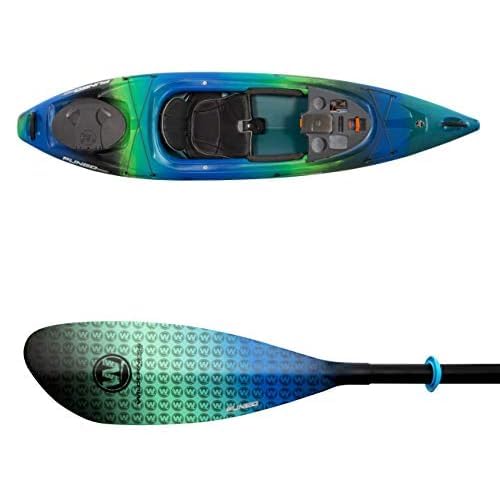
The Pungo’s big selling point is its cockpit setup. The Phase 3 AirPro seat, thigh padding, adjustable foot system, dashboard, dry box, cup holders, and SlideTrax mounting system make it feel more like a small touring cockpit than a bare recreational boat. For a calm Saturday on a U.S. lake, that setup can be a real treat. The trade-off is its 300-pound published maximum capacity, which is much lower than the Aspire 105.
What Makes It Stand Out / Key Features
- Pungo HullThe hull is designed to offer reassuring stability while still moving efficiently across flatwater.
- Phase 3 AirPro SeatThe adjustable seat gives strong back and leg support for longer recreational trips.
- DashboardThe integrated dashboard adds a dry box, cup holders, accessory mounting space, and a SlideTrax rail.
- StorageThe kayak combines an Orbix stern hatch with deck bungees for protected and quick-access storage.
- WidthThe 30-inch beam provides a stable feel for relaxed recreational paddling.
- CapacityThe published maximum capacity is 300 pounds, so paddler weight and gear need more careful planning.
- Polyethylene HullThe hard plastic hull is built for normal recreational use and can handle routine contact with beaches and launch areas.
My Recommendation
Consider the Pungo 105 if you want a comfortable, stable recreational kayak with a smart cockpit and easy accessory mounting.
| Best For | Why |
|---|---|
| Relaxed lake paddlers | The stable hull and comfortable seat suit calm recreational trips. |
| Accessory users | The dashboard and SlideTrax system make it easy to add useful gear. |
| Comfort-focused paddlers | The AirPro seat and cockpit padding support longer outings. |
wilderness systems aspire 105 vs pungo 105: Side-by-Side Test
Looking at the wilderness systems aspire 105 vs pungo 105 side by side makes the difference clearer. Both share the same 10-foot-6-inch length and both use polyethylene construction. Their goals are slightly different.
The Aspire puts more emphasis on control and load flexibility. The Pungo puts more emphasis on comfort and cockpit features. That is the key theme behind this wilderness systems aspire 105 vs pungo 105 comparison.
Size and Weight: Which Is Easier to Handle?
Both kayaks are compact enough for many car-top setups, but the exact weight can vary by Pungo model year.
| Feature | Aspire 105 | Pungo 105 |
|---|---|---|
| Length | 10 ft 6 in | 10 ft 6 in |
| Width | 29 in | 30 in |
| Published weight | 48 lb | About 47 lb on many listings; 51.5 lb on an official discontinued listing |
| Construction | Polyethylene | Polyethylene |
⭐ Aspire 105 – 9/10 | Pungo 105 – 9/10
The size difference is tiny, so model year and actual hull weight matter more than the name.
Capacity: How Much Can You Carry?
Capacity matters when your trip includes a larger paddler, camping gear, fishing gear, or a cooler.
| Feature | Aspire 105 | Pungo 105 |
|---|---|---|
| Maximum capacity | 400 lb | 300 lb |
| Gear flexibility | Higher | More limited |
| Best use case | Paddler plus more gear | Paddler plus lighter day gear |
⭐ Aspire 105 – 10/10 | Pungo 105 – 7/10
The Aspire has a clear capacity advantage.
Tracking: Which Holds a Line Better?
Wind can turn a calm lake into a steering test. The Aspire has a useful tool for this problem.
| Feature | Aspire 105 | Pungo 105 |
|---|---|---|
| Adjustable skeg | Yes, TruTrak | No |
| Wind control | Strong tool for correction | Relies on hull and paddling technique |
| Flatwater tracking | Very good | Very good |
⭐ Aspire 105 – 9/10 | Pungo 105 – 8/10
The Aspire gets the edge when wind and current make straight-line paddling harder.
Comfort: Which Feels Better?
Comfort can decide whether a two-hour paddle becomes a five-hour adventure or an early trip back to shore.
| Feature | Aspire 105 | Pungo 105 |
|---|---|---|
| AirPro seat | Yes | Yes |
| Thigh and knee support | Yes | Yes |
| Adjustable foot support | Yes | Yes |
| Cockpit focus | Comfort plus control | Comfort plus convenience |
⭐ Aspire 105 – 9/10 | Pungo 105 – 9.5/10
Both are comfortable, but the Pungo’s cockpit layout adds extra convenience.
Storage: Which Carries Gear Better?
Both boats give you protected and open storage, but they organize that space in different ways.
| Feature | Aspire 105 | Pungo 105 |
|---|---|---|
| Stern hatch | Yes | Yes |
| Deck bungees | Front and rear | Configurable deck bungees |
| Dashboard | Basic molded console | Feature-rich dashboard |
| Dry box | No dedicated dashboard dry box | Yes |
⭐ Aspire 105 – 8.5/10 | Pungo 105 – 10/10
The Pungo has the more useful cockpit storage system.
Stability: Which Feels More Relaxed?
For new paddlers, stability can feel like the difference between sitting on a bench and balancing on a log.
| Feature | Aspire 105 | Pungo 105 |
|---|---|---|
| Beam | 29 in | 30 in |
| Hull character | Shallow arch with strong chines | Stable recreational Pungo hull |
| Maneuverability | Very good | Very good |
| Beginner friendliness | High | High |
⭐ Aspire 105 – 9/10 | Pungo 105 – 9.5/10
The Pungo’s extra inch of width and hull design give it a relaxed recreational feel.
Best Use: Where Does Each Shine?
The best choice changes with the water and the way you plan to spend your day.
| Feature | Aspire 105 | Pungo 105 |
|---|---|---|
| Calm lakes | Excellent | Excellent |
| Slow rivers | Excellent | Excellent |
| Windy open water | Better suited due to skeg | Good with proper technique |
| Accessory-heavy setup | Good | Excellent |
⭐ Aspire 105 – 9/10 | Pungo 105 – 9/10
The Aspire leans toward control, while the Pungo leans toward comfort and convenience.
Final Verdict: Which Should You Buy?
The wilderness systems aspire 105 vs pungo 105 choice comes down to what you value most. The Aspire 105 has the bigger published capacity and an adjustable TruTrak skeg. Those are useful advantages for paddlers who carry more gear or face wind and current. The Pungo 105 has a wider hull, a strong comfort setup, and a better-equipped dashboard.
For the wilderness systems aspire 105 vs pungo 105 decision, I would look first at your body weight, gear load, water type, and need for accessories. Choose the Aspire when control and capacity matter more. Choose the Pungo when comfort and cockpit convenience matter more. Also check the exact model year, since Pungo 105 specifications and availability can differ across production years.