
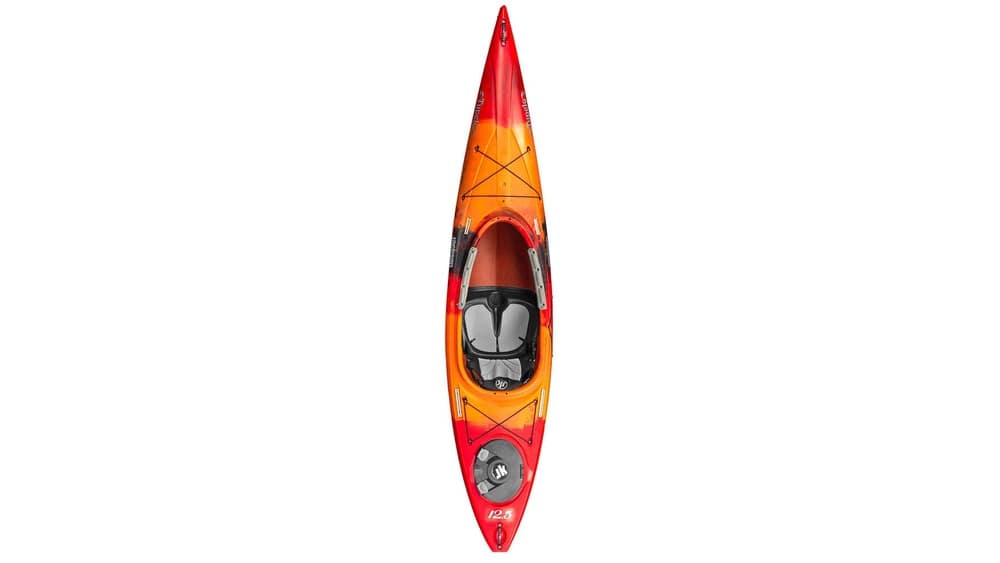
The world of kayaking is full of choices, and picking the right brand can make or break your water adventures. Two of the biggest names you’ll come across are Jackson Kayak and Wilderness Systems. Both are respected, both have loyal fans, and both offer a wide range of models. But how do they really compare? If you’re wondering which one to choose for your next kayak, you’re not alone. This guide will help you understand what sets these brands apart, what they have in common, and which might be the best fit for your needs.
Whether you’re new to kayaking or looking to upgrade, you’ll find this in-depth comparison valuable. We’ll look at design, performance, comfort, price, and much more. Along the way, you’ll learn some key insights that most beginners miss, helping you make a confident, informed choice.
Brand Background: Jackson Kayak And Wilderness Systems
Jackson Kayak was founded in 2003 in Tennessee, USA, by world-champion kayaker Eric Jackson. The company quickly became known for innovative designs, especially in whitewater and fishing kayaks. Jackson Kayak is a family-owned business with a focus on performance, quality, and community. They are famous for their user-friendly kayaks, and their pro staff includes some of the best paddlers in the world.
Wilderness Systems began in the mid-1980s and is now part of Confluence Outdoor, a major player in paddlesports. Based in North Carolina, Wilderness Systems has built a reputation for reliable touring, recreational, and fishing kayaks. Their designs are well-tested and their models have won numerous awards. Wilderness Systems is known for their comfortable seating, stable hulls, and commitment to innovation.
Both companies have strong histories, but their approach to kayak design and user needs can be quite different.
Design Philosophy And Build Quality
Jackson Kayak Approach
Jackson Kayak focuses on versatility and performance. Their boats are often lighter than competitors, making them easy to transport and handle. They use high-density linear polyethylene, which is both durable and relatively light. The company puts a strong emphasis on innovation—many of their models have unique features, like modular seats or adjustable foot braces.
One non-obvious detail: Jackson often builds kayaks with river safety in mind. For example, their whitewater models include features like reinforced bow and stern for impact protection, and quick-drain systems for fast water removal.
Wilderness Systems Approach
Wilderness Systems is known for comfort and stability. Their kayaks are usually a bit heavier, but this adds to the feeling of solidness and tracking on the water. The brand is famous for its Phase 3 AirPro seating system, which is one of the most adjustable and comfortable kayak seats available. They also use top-quality polyethylene and advanced molding techniques, resulting in strong, long-lasting kayaks.
A detail many overlook: Wilderness Systems often includes more dry storage and gear tracks as standard features, which is a big plus for long trips or fishing.
Build Quality Comparison
Both brands use rotomolded polyethylene for most models, but the feel and finish can differ. Jackson Kayak usually offers a slightly lighter construction, while Wilderness Systems prioritizes comfort and ruggedness.
| Brand | Main Focus | Build Material | Weight (avg.) | Special Feature |
|---|---|---|---|---|
| Jackson Kayak | Performance & Versatility | HD Polyethylene | 55 lbs | Modular Seats |
| Wilderness Systems | Comfort & Stability | HD Polyethylene | 65 lbs | AirPro Seating |
Model Range And Target Users
Jackson Kayak Models
Jackson Kayak offers a wide range, but they’re best known for:
- Whitewater kayaks: E.g., the Antix and Zen series, designed for river play and technical water.
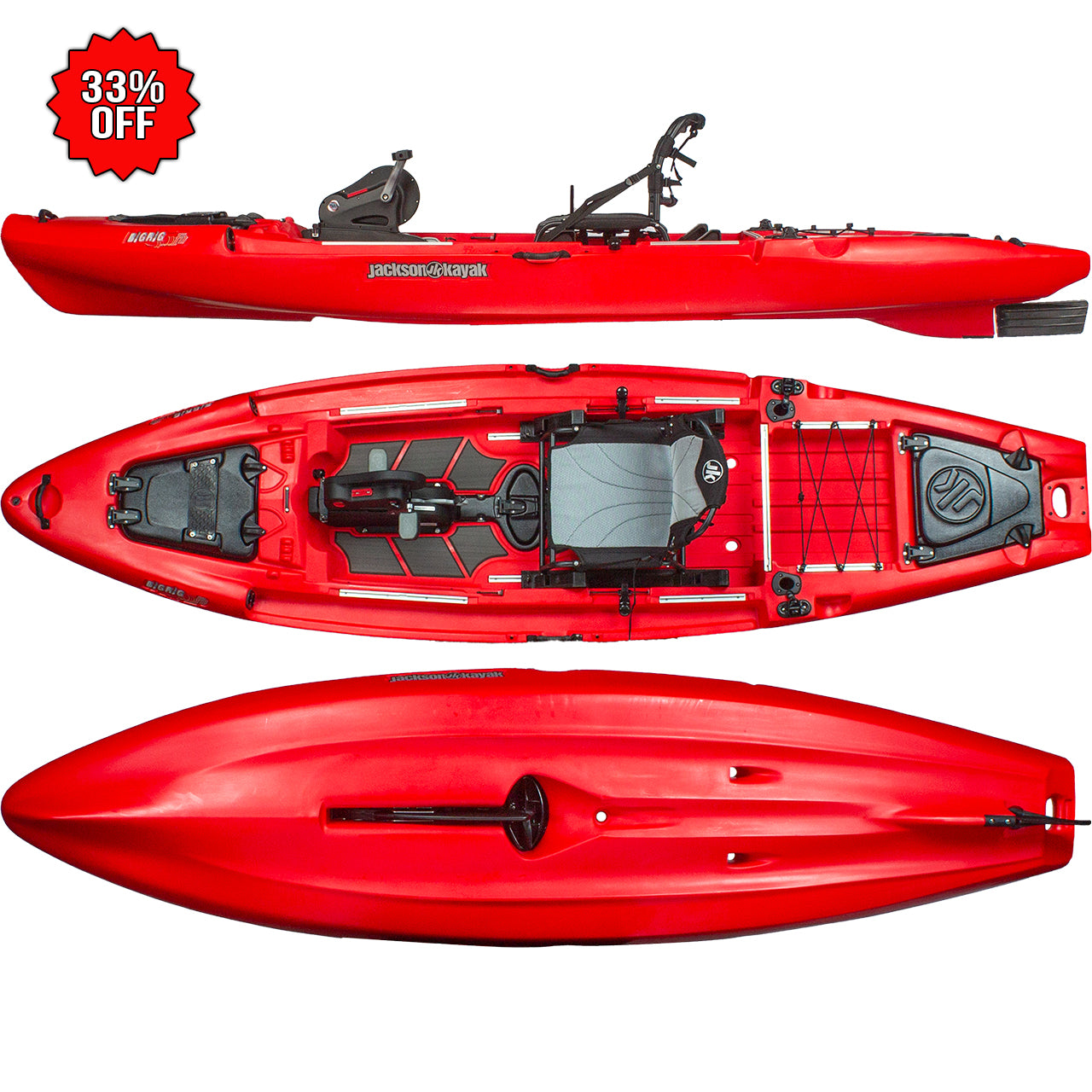
- Fishing kayaks: Like the Coosa HD and Big Rig, made for stability, standing, and gear storage.
- Recreational/touring kayaks: Smaller segment but includes models like the Tupelo.
Their whitewater models are especially popular with advanced paddlers, while their fishing kayaks are made for serious anglers who want to stand and cast.
Wilderness Systems Models
Wilderness Systems covers a slightly broader market, including:
- Recreational kayaks: E.g., the Pungo series, great for lakes and slow rivers.
- Touring kayaks: Like the Tempest and Tsunami, designed for speed and distance.
- Fishing kayaks: The ATAK and Radar series, with pedal and power options.
- Sit-on-top kayaks: Good for beginners and warm climates.
Wilderness Systems is a favorite among new and intermediate paddlers who want comfort for longer trips, but their fishing and touring kayaks are also top-notch.
Model Range Comparison
Wilderness Systems covers more types of kayaking, while Jackson Kayak is more focused on performance and fishing. If you want a specialized fishing or whitewater kayak, Jackson is often the go-to. If you prefer general recreation or touring, Wilderness Systems has more options.
On-water Performance
Speed And Tracking
- Jackson Kayak models are usually a bit quicker to accelerate and turn, thanks to their lighter weight and hull design. Their whitewater models are especially agile.
- Wilderness Systems kayaks tend to track straighter, which means they stay on course more easily. This is ideal for touring and long distances.
Stability And Handling
- Primary stability (how stable a kayak feels at rest) is higher in Wilderness Systems boats, especially the Pungo and ATAK series. These kayaks are hard to tip over, making them friendly for beginners.
- Secondary stability (stability when edging or leaning) is often better in Jackson Kayak models, which helps in rougher water or for advanced maneuvers.
Comfort
- Wilderness Systems leads in seating comfort. Their Phase 3 AirPro seat is adjustable in height, tilt, and back support. For long days on the water, this makes a real difference.
- Jackson Kayak seats are well-padded and supportive, but not as adjustable. However, they are easy to remove for transport or cleaning.
Fishing Features
- Jackson Kayak fishing models come with features like rod stagers, large standing decks, and integrated gear tracks. The Big Rig is famous for stability, letting anglers stand and cast with confidence.
- Wilderness Systems fishing kayaks offer pedal drives (Helix PD system), power options, and a wide range of mounting points for electronics.
Real-world Example
A beginner who wants to paddle on calm lakes will likely feel more comfortable in a Wilderness Systems Pungo, thanks to its stability and seat comfort. An experienced angler who likes to stand and fish in rivers will likely prefer the Jackson Coosa HD, which is designed for this exact purpose.

Credit: www.bigbassusa.com
Price And Value
Entry-level Models
- Wilderness Systems entry models (like the Aspire or Pungo 105) start around $900–$1,200.
- Jackson Kayak entry-level boats (like the Staxx) are similar, starting from $1,000–$1,200.
Mid-range And Advanced
- Fishing kayaks and higher-end models from both brands range from $1,400–$2,500.
- Jackson’s specialized whitewater kayaks can go up to $1,600, while Wilderness Systems touring kayaks can approach $2,000.
Value For Money
Wilderness Systems gives you more built-in comfort and storage for the price, while Jackson Kayak offers lighter weight and performance. Both hold their resale value well, but Jackson’s unique features (like modular seats or river safety) can boost second-hand prices.
| Brand | Entry Price | High-End Price | Best Value Feature |
|---|---|---|---|
| Jackson Kayak | $1,000 | $2,500 | Lightweight & Performance |
| Wilderness Systems | $900 | $2,000 | Comfort & Storage |
Durability And Maintenance
Both brands use high-quality polyethylene, which resists impacts and sun damage. However, their designs mean you should care for them differently.
- Jackson Kayak’s lighter hulls can flex more under heavy loads. Avoid dragging them on rough ground to prevent scratches.
- Wilderness Systems kayaks are more robust but also heavier, making them harder to carry alone. Their multiple storage hatches have rubber seals, which need to be checked and replaced if they become brittle.
A practical tip: Both brands recommend storing your kayak out of direct sunlight and cleaning after each use, especially if you paddle in saltwater.
Accessories And Customization
Jackson Kayak
- Many models come “angler-ready” with gear tracks, tackle storage, and rod holders.
- Jackson is known for modular seat systems, which can be removed for shore use or replaced with upgraded seats.
- They also offer add-ons like river knives, safety lines, and under-seat storage.
Wilderness Systems
- Famous for their Flex Pod OS console, which allows you to add fish finders, batteries, or even pedal drives.
- More gear tracks and mounting points as standard.
- Optional rudder kits, pedal drives, and even electric motors (Helix MD).
Customization Insights
Wilderness Systems offers more “plug and play” options, while Jackson Kayak is more modular—great for people who like to tweak their gear.
Portability And Transport
Jackson Kayak models are lighter, making them easier to load onto a car roof or carry to the water. Some models even have molded-in handles for one-person carries. Wilderness Systems kayaks, while heavier, often have better-balanced carry handles, which help when two people are lifting.
One thing beginners miss: Always check the weight of your chosen model, including seat and accessories. A kayak that’s too heavy to move easily can make you paddle less often.
Credit: cfoutdoors.com
Community And Support
Both brands have active online communities, but their focus is different.
- Jackson Kayak has a strong pro team and community around whitewater and fishing events. Their support team is known for fast responses.
- Wilderness Systems has a bigger focus on recreational paddlers, with many Facebook groups and forums for sharing tips and trip ideas.
If you want to connect with other paddlers, both brands offer plenty of options, but Jackson Kayak is especially strong in the fishing and whitewater worlds.
Environmental Responsibility
Wilderness Systems is part of Confluence Outdoor, which supports river cleanup projects and sustainable production. Jackson Kayak, as a smaller, family-owned business, focuses on minimizing waste and supporting local conservation groups.
A non-obvious insight: Both brands produce their kayaks in the USA, which reduces shipping emissions compared to imported boats.
Credit: cfoutdoors.com
Warranty And Customer Service
- Jackson Kayak offers a 3-year limited warranty on hulls and 1 year on parts.
- Wilderness Systems provides a limited lifetime warranty on hulls for the original owner, with 1 year on parts.
Customer service is strong for both, but Wilderness Systems’ larger size sometimes means longer wait times for support.
Which Should You Choose?
The best brand depends on your main paddling goals.
Choose Jackson Kayak If:
- You want a high-performance whitewater kayak or a stable fishing platform for rivers.
- You value a lighter boat for easy transport.
- You plan to customize or upgrade your kayak regularly.
- You want to support a family-owned, US-based company.
Choose Wilderness Systems If:
- Comfort and stability are your top priorities.
- You need a recreational or touring kayak for lakes, slow rivers, or long trips.
- You want lots of built-in storage and accessories.
- You prefer a brand with more model choices for beginners.
Key Takeaways Most Beginners Miss
- Kayak weight matters—not just on the water, but every time you lift or transport it. Always check if you can handle the weight alone.
- Seating comfort is crucial for long trips. Try sitting in both brands’ kayaks before you buy, if possible.
- Customization options can make a big difference as your skills and interests grow.
- Resale value is higher for specialized models. If you plan to upgrade in a few years, think about which brand’s models are easier to sell locally.
- Test before you buy. Many shops let you try both brands on the water. Real-world feel is more important than specs.
Side-by-side Model Comparison
To help you compare, here’s a quick look at two popular models from each brand.
| Model | Type | Length | Weight | Max Capacity | Best For |
|---|---|---|---|---|---|
| Jackson Coosa HD | Fishing | 12’6″ | 83 lbs | 425 lbs | Rivers, lakes, standing casts |
| Wilderness Systems ATAK 120 | Fishing | 12’3″ | 86 lbs | 400 lbs | Lakes, stable platform |
| Jackson Zen 3.0 | Whitewater | 8’6″ | 43 lbs | 265 lbs | River play, rapids |
| Wilderness Systems Pungo 120 | Recreational | 12’2″ | 49 lbs | 325 lbs | Lakes, beginners, comfort |
Where To Learn More
If you want detailed specs or more model comparisons, both brands’ official sites are the best source:
For independent reviews, Paddling.com has thousands of user reviews on every kayak model.
Frequently Asked Questions
What Is The Main Difference Between Jackson Kayak And Wilderness Systems?
The biggest difference is design focus. Jackson Kayak is known for lighter, high-performance models for fishing and whitewater, while Wilderness Systems offers more comfort, stability, and a wider range for recreation and touring.
Which Brand Is Better For Fishing?
Both are excellent, but Jackson Kayak models like the Coosa HD are designed for anglers who want to stand and fish in rivers. Wilderness Systems offers more pedal and power options, making them ideal for lakes or longer trips.
Are Jackson Kayaks Easier To Carry Than Wilderness Systems?
In general, Jackson Kayak models are lighter, which makes them easier for one person to carry. However, Wilderness Systems kayaks have better carry handles, which can help when two people are lifting.
Can I Add A Pedal Drive To Both Brands?
Wilderness Systems offers pedal drive and electric motor options for many models (like the Radar and ATAK). Jackson Kayak does not offer pedal drives on most models, focusing more on paddle and river use.
Which Brand Has A Better Warranty?
Wilderness Systems offers a limited lifetime hull warranty for original owners, while Jackson Kayak offers 3 years on hulls. Both give 1 year on parts. Always read the latest details on their official websites.
—
Picking between Jackson Kayak and Wilderness Systems comes down to your paddling style, comfort needs, and the type of water you’ll explore most. Both brands have solid reputations and loyal fans. Take your time, test a few models, and you’ll find the right fit for your adventures. For extra research, check out this expert guide by REI on choosing a kayak.