
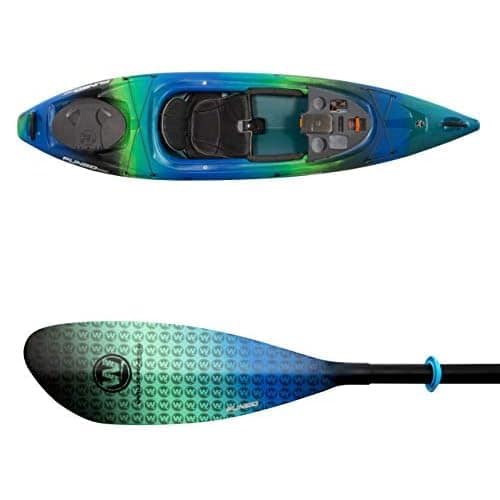


Is Wilderness Systems Pungo 105 Good?
Yes, if you want a compact recreational kayak that is easy to manage on land. The Pungo 105 measures 10 feet 6 inches long and 30 inches wide. It has a 300 pound maximum capacity. Its 47 pound listed boat weight also makes it much less intimidating when you are moving it from a garage to a roof rack or launch point. In the wilderness systems pungo 105 vs 120 debate, that smaller footprint is the main reason to choose the 105.
I like the 105 for short lake sessions and calm river trips where I do not need a lot of cargo. It feels like a practical daily driver. It is not the boat I would choose when covering long distances is the main goal, but it is easy to live with. The Phase 3 AirPro seat, dashboard storage, dry box, cup holders, and accessory mounts also make day trips feel well organized.
What Makes It Stand Out / Key Features
- Compact HullThe 10 foot 6 inch length is easier to store, transport, and handle around smaller launch areas.
- 30 Inch WidthThe wider beam gives the boat a stable feel for relaxed recreational paddling.
- 47 Pound WeightThe listed boat weight makes solo handling easier than many larger recreational kayaks.
- 300 Pound CapacityThe rated capacity is suitable for a paddler plus a sensible amount of day-trip gear.
- Phase 3 AirPro SeatThe adjustable seat is designed for comfort during longer paddling sessions.
- Integrated DashboardThe dashboard provides a dry box, cup holders, accessory mounts, and space for useful gear.
- DryTec StorageThe removable dry box gives small valuables a more protected place to ride.
My Recommendation
Consider the Pungo 105 if you value easy transport, simple storage, and relaxed day trips more than maximum glide or cargo room.
| Best For | Why |
|---|---|
| Casual lake paddlers | Compact size and stable handling suit relaxed outings. |
| Solo owners | The shorter hull is easier to move and store. |
| Smaller storage spaces | The 10 foot 6 inch hull needs less storage length. |
Is Wilderness Systems Pungo 120 Good?
Yes, if you want a recreational kayak that feels more at home covering distance. The Pungo 120 is 12 feet 2 inches long and 29 inches wide. Its listed boat weight is 49 pounds, just two pounds more than the current 105 specification. It also raises the maximum capacity to 325 pounds. That is the key surprise in the wilderness systems pungo 105 vs 120 comparison: the 120 is much longer without adding much weight.
On open lakes, the longer hull is the reason I would reach for the 120. It holds a line well and makes steady paddling feel less like pushing a box through water. The extra two feet of hull also help when a trip includes more gear or longer stretches of open water. If your typical U.S. weekend trip means several hours on the water, the 120 makes a strong case.
What Makes It Stand Out / Key Features
- 12 Foot 2 Inch HullThe longer hull supports efficient straight-line paddling and better glide.
- 29 Inch WidthThe narrower beam compared with the 105 favors efficient movement through the water.
- 49 Pound WeightDespite its longer hull, the listed weight is only slightly above the 105.
- 325 Pound CapacityThe higher capacity gives more room for paddler weight and day-trip equipment.
- Phase 3 AirPro SeatThe adjustable seat provides support and comfort for longer outings.
- Integrated DashboardThe dashboard keeps small items, drinks, and accessories close to the paddler.
- Deck Bungee StorageConfigurable deck rigging provides extra space for accessible gear.
My Recommendation
Choose the Pungo 120 if you expect longer trips, want better glide, or often carry extra gear.
| Best For | Why |
|---|---|
| Longer lake trips | The longer hull offers better glide and tracking. |
| Gear-heavy day trips | The 325 pound capacity gives more useful load room. |
| Distance paddlers | The longer and narrower hull favors efficient cruising. |
wilderness systems pungo 105 vs 120: Side-by-Side Test
The biggest lesson from the wilderness systems pungo 105 vs 120 comparison is that the size gap looks larger on paper than the weight gap. The 120 adds nearly two feet of length but only about two pounds of listed boat weight.
That changes the buying decision. The 105 focuses on compact handling. The 120 focuses on glide and distance. Neither is simply a larger version of the other in day-to-day use.
Size and Weight: Which Is Easier?
A kayak can be light on paper and still feel awkward. Hull length matters when you carry and store it.
| Feature | Pungo 105 | Pungo 120 |
|---|---|---|
| Length | 10 ft 6 in | 12 ft 2 in |
| Width | 30 in | 29 in |
| Listed boat weight | 47 lb | 49 lb |
| Storage footprint | Smaller | Larger |
⭐ Pungo 105 – 9/10 | Pungo 120 – 8/10
The Pungo 105 has the edge when easy carrying and compact storage matter most.
Speed and Glide: Which Moves Better?
Longer kayaks usually move more efficiently in a straight line. That difference becomes easier to notice on open water.
| Feature | Pungo 105 | Pungo 120 |
|---|---|---|
| Hull length | 10 ft 6 in | 12 ft 2 in |
| Beam | 30 in | 29 in |
| Open-water glide | Good | Better |
| Distance paddling | Good | Very good |
⭐ Pungo 105 – 8/10 | Pungo 120 – 9/10
The Pungo 120 has the edge for glide and longer straight runs.
Stability: Which Feels More Relaxed?
Both boats use a recreational sit-inside design, so stability is a major part of their appeal.
| Feature | Pungo 105 | Pungo 120 |
|---|---|---|
| Beam | 30 in | 29 in |
| Recreational stability | Excellent | Excellent |
| Beginner use | Very suitable | Very suitable |
| Relaxed lake paddling | Excellent | Excellent |
⭐ Pungo 105 – 9/10 | Pungo 120 – 9/10
Both are strong recreational choices, with the 105 offering a slightly wider platform.
Capacity: Which Carries More?
Capacity matters because the paddler is only part of the load. Water, food, safety gear, and dry bags add up fast.
| Feature | Pungo 105 | Pungo 120 |
|---|---|---|
| Maximum capacity | 300 lb | 325 lb |
| Extra rated capacity | Baseline | 25 lb more |
| Day-trip gear | Suitable | More flexible |
⭐ Pungo 105 – 8/10 | Pungo 120 – 9/10
The Pungo 120 has the edge because its rated capacity is 25 pounds higher.
Comfort: Which Is Better?
A comfortable seat can turn a short paddle into a half-day trip. Both Pungo models use the Phase 3 AirPro seating system.
| Feature | Pungo 105 | Pungo 120 |
|---|---|---|
| Phase 3 AirPro seat | Yes | Yes |
| Adjustability | High | High |
| Long-session comfort | Very good | Very good |
⭐ Pungo 105 – 9/10 | Pungo 120 – 9/10
Comfort is essentially a tie because both share the same core seating system.
Storage and Gear: Which Wins?
The dashboard is one of the Pungo line’s most useful touches. It keeps small gear close without turning the cockpit into a junk drawer.
| Feature | Pungo 105 | Pungo 120 |
|---|---|---|
| DryTec dry box | Yes | Yes |
| Cup holders | Yes | Yes |
| SlideTrax mounts | Yes | Yes |
| Deck bungee rigging | Yes | Yes |
⭐ Pungo 105 – 9/10 | Pungo 120 – 9/10
This category is a tie because both models provide a similarly useful outfitting package.
Transport: Which Is Easier?
Transport is easy to ignore before buying a kayak. After a long day, it becomes one of the first things you notice.
| Feature | Pungo 105 | Pungo 120 |
|---|---|---|
| Listed weight | 47 lb | 49 lb |
| Hull length | 10 ft 6 in | 12 ft 2 in |
| Garage storage | Easier | Needs more room |
| Tight launch areas | Easier | Less convenient |
⭐ Pungo 105 – 9/10 | Pungo 120 – 8/10
The Pungo 105 has the clear edge when the kayak must fit into a tight home or transport setup.
Final Verdict: Which Should You Buy?
The wilderness systems pungo 105 vs 120 choice is really about how you plan to paddle. The Pungo 105 is the compact, easy-to-manage choice. It makes sense for casual lake trips, smaller storage spaces, and paddlers who value simple transport. The Pungo 120 is the longer-distance choice. Its 12 foot 2 inch hull, 29 inch beam, 325 pound capacity, and low 49 pound listed weight make it attractive for open water and longer outings.
If I were choosing purely for portability, I would take the 105. If I expected regular longer trips, I would take the 120. For many paddlers, the extra length of the 120 is worth it because the weight difference is small. In the wilderness systems pungo 105 vs 120 comparison, your storage space and usual trip length should drive the final choice.