
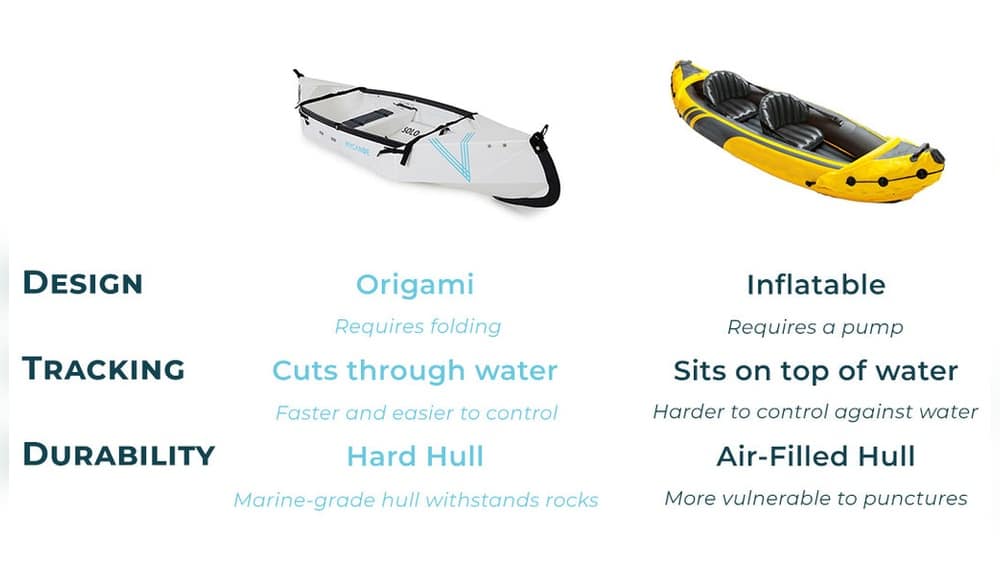
Kayaking is one of those rare activities that gives you adventure, exercise, and relaxation all in one. Whether you want to paddle on a peaceful lake, explore winding rivers, or take on the waves at the coast, the right kayak can make all the difference. But with so many types on the market, the choice between inflatable kayaks and folding kayaks often confuses even experienced paddlers. Both designs promise portability and convenience, but they deliver it in very different ways.
This guide is for anyone who wants to understand the real differences between inflatable and folding kayaks. Maybe you’re a city dweller with little storage space. Maybe you travel often and want a kayak you can take with you. Or maybe you’re just tired of struggling with roof racks and heavy boats. By the end of this article, you’ll know which type is right for your needs—and you’ll have insights that most beginners miss. Let’s dive in.
What Is An Inflatable Kayak?
An inflatable kayak is made from strong, air-tight materials such as PVC, Hypalon, or Nitrylon. Instead of a solid shell, it uses air chambers for its main structure. You inflate the kayak using a manual or electric pump, and when you’re done, you deflate it and pack it into a bag. This makes them extremely portable.
Most inflatable kayaks have multiple chambers, which means if one gets punctured, the rest can keep you afloat. Modern inflatables can be surprisingly rigid and stable, thanks to drop-stitch technology (borrowed from inflatable paddleboards) that lets them hold high pressure and keep their shape.
Key Features
- Lightweight and portable
- Quick to set up and pack away
- Usually made from tough synthetic materials
- Available in solo and tandem sizes
What Is A Folding Kayak?
A folding kayak uses a collapsible frame (often aluminum or plastic) that gives the boat its shape, with a fabric skin stretched over the frame. The skin is usually made of strong, waterproof material like coated nylon or polyurethane. When you’re ready to paddle, you assemble the frame and stretch the skin over it. After your trip, you take it apart and pack everything into a bag.
Folding kayaks are sometimes called “origami kayaks” because of how they fold, but not all use the same method. Some have a classic frame and skin design (like the famous Klepper and Oru brands); others use modern folding panels.
Key Features
- Solid frame for better shape and tracking
- Packs down small for transport
- Often closer to the feel of a hard-shell kayak
- Can last many years with care

Credit: www.youtube.com
Why Portability Matters
Choosing between an inflatable and a folding kayak usually starts with one question: how portable do you need your kayak to be? If you live in a small apartment, have a compact car, or want to travel, a portable kayak opens up possibilities. Both types let you explore more places without the hassle of storing or transporting a hard-shell boat.
But not all “portable” kayaks are equal. Some pack into a backpack you can carry on a bus; others need a large duffel bag. Understanding the differences will help you avoid buying a kayak that’s difficult to use in real life.
Inflatable Vs Folding Kayak: Core Differences
Let’s break down the most important differences between inflatable and folding kayaks so you can see which matches your lifestyle.
| Feature | Inflatable Kayak | Folding Kayak |
|---|---|---|
| Setup Time | 5–15 minutes (inflation) | 10–20 minutes (assembly) |
| Packed Size | Medium (backpack/duffel bag) | Small to medium (flat case) |
| Weight | 20–40 lbs (9–18 kg) | 25–40 lbs (11–18 kg) |
| Durability | Good (puncture-resistant, but can be damaged by sharp objects) | Excellent (frame and skin can last many years) |
| Performance | Stable, but less speed and tracking | Better tracking and speed, more like a hard-shell kayak |
| Price Range | $100–$1500 | $600–$3000 |

Credit: www.outdoorplay.com
Performance On The Water
How a kayak feels on the water is often the deciding factor for buyers. Here’s how inflatable and folding kayaks compare in real paddling conditions.
Stability
Inflatable kayaks have wide, air-filled sides that make them very stable. This is a big plus for beginners, families, or anyone nervous about tipping over. You can even stand up in some models. Folding kayaks, with their slimmer shape, may feel a little less steady at first but offer a more natural kayak experience once you get used to them.
Speed And Tracking
Speed and tracking (how well a kayak goes straight) matter for longer trips or open water. Folding kayaks usually win here. Their rigid frame and narrow hull cut through the water better, letting you paddle faster and keep your course.
Inflatables can feel slow and drift off course, especially in wind or currents, unless they have a tracking fin.
Handling Waves And Wind
Both types can handle calm lakes, slow rivers, and even some mild sea conditions. However, folding kayaks are generally better for choppy water. Their shape and rigidity help them slice through small waves, while inflatables can bounce and feel sluggish.
If you want to paddle on the sea or windy lakes, a folding kayak has the edge.
Example
Imagine paddling into a strong headwind. With a folding kayak, your boat stays on course and cuts into the wind. With an inflatable, you may find yourself blown sideways or working harder to keep straight.
Durability And Longevity
Both inflatable and folding kayaks are built to last, but their weak points are different.
Inflatable Kayaks
Inflatables use tough materials, sometimes with multiple layers. Good brands can survive bumps with rocks, sticks, and even dog claws. But sharp objects like fishing hooks, broken glass, or thorns can puncture them. Most come with a repair kit, and small holes are easy to patch.
Sun, salt, and sand can slowly break down the material, so rinsing and drying after use is a must.
Folding Kayaks
Folding models use a frame (aluminum, plastic, or carbon) and a tough outer skin. With care, the skin can last for years. The frame parts are less likely to fail unless you bend or break them by force. The biggest risk is sand or grit in the folding joints, which can wear them out if not cleaned.
If a part breaks, many brands sell replacements.
Non-obvious Insight
A common mistake is to store inflatables or folding kayaks wet. Trapped moisture can cause mold, odors, or even weaken the material over time. Always dry your kayak fully before packing it away.

Credit: www.youtube.com
Setup And Pack-down
For many buyers, setup time is the biggest factor after performance. Here’s how both types compare.
Inflatable Kayaks
Most inflatables take 5–15 minutes to inflate, depending on size and your pump. Electric pumps are faster, but you’ll still need to finish with a hand pump to reach the correct pressure. Deflating takes a few minutes, but rolling up the kayak and fitting it back in the bag can be tricky, especially if it’s damp or sandy.
Folding Kayaks
Folding kayaks involve more steps. You’ll unfold the frame, connect pieces, stretch the skin, and secure everything. This can take 10–20 minutes or longer the first few times. Some “origami” models are faster, but classic frame-and-skin designs take practice. Packing down is the reverse, and you need to be careful not to lose small parts.
Real-world Tip
Try assembling your folding kayak at home several times before your first trip. The process gets much faster with practice, and you’re less likely to forget a part or make mistakes.
Storage And Transport
One of the main reasons people buy these kayaks is their storage advantage. Here’s what to expect.
Inflatable Kayaks
Inflatables usually pack into a large backpack or duffel bag. Most fit easily in a small apartment, car trunk, or closet. You can check them as regular luggage on most airlines. The weight (20–40 lbs) is manageable for one person, but the bag can be bulky.
Folding Kayaks
Folding kayaks pack into a flat or rectangular case, often smaller than an inflatable bag. Some models are designed to be carried like a suitcase or backpack. They can be stored under a bed, in a closet, or in your office.
For travel, the hard case protects the kayak better, but some cases can be heavy.
Useful Data
Oru Kayak’s popular “Bay ST” model folds down to 33 x 12 x 29 inches (84 x 30 x 74 cm) and weighs 26 lbs (12 kg). An Advanced Elements inflatable kayak (AdvancedFrame) packs to 30 x 17 x 10 inches (76 x 43 x 25 cm) and weighs about 36 lbs (16 kg).
Maintenance And Repairs
Caring for your kayak will keep it paddling for years. But the needs are different for each type.
Inflatable Kayaks
- Rinse after saltwater use to avoid material breakdown.
- Dry completely to prevent mold or mildew.
- Store out of direct sunlight.
- Patch holes using included repair kit (easy for small punctures).
- Check valves and seams for leaks.
Folding Kayaks
- Rinse the skin and frame after use, especially in saltwater.
- Let all parts dry fully before packing.
- Check joints and hinges for sand or grit.
- Apply lubricant to moving parts as recommended.
- Inspect for wear on the skin, especially at folds.
Non-obvious Insight
Replacement parts (like valves for inflatables or frame sections for folding kayaks) can be hard to find, especially for older models. Check if the brand you choose offers spares or a repair service before buying.
Price And Value For Money
The price range for both types is wide, but there are patterns.
Inflatable Kayaks
You can find basic models for as little as $100–$200, but these are usually thin and not suitable for serious use. Good-quality inflatables for day trips or light touring start around $400–$700. High-performance or expedition models can reach $1,500.
Folding Kayaks
Folding models are rarely cheap. Entry-level “origami” kayaks start near $600–$900. Classic frame-and-skin designs are $1,200–$3,000. The higher price reflects the materials, design, and labor. But folding kayaks can last 10–20 years with care, making them a good long-term investment for serious paddlers.
Value Tip
If you’re new to kayaking and want a budget-friendly way to try the sport, start with a quality inflatable from a known brand. Upgrade to a folding kayak if you fall in love with paddling and want more speed or performance.
When To Choose An Inflatable Kayak
Inflatable kayaks are a great choice if you:
- Want maximum stability
- Need a kayak that fits in a car trunk or closet
- Plan to paddle calm lakes, gentle rivers, or sheltered bays
- Are on a budget
- Need a lightweight boat for travel or carrying to the water
- Want easy setup and pack-down
- Paddle with kids or pets
Example: A family of four who wants to paddle local lakes on weekends will find inflatables perfect. They’re safe, easy to use, and affordable.
When To Choose A Folding Kayak
Folding kayaks are ideal if you:
- Want better speed, tracking, and performance
- Plan to paddle longer distances, open water, or sea conditions
- Value durability and a long lifespan
- Don’t mind a longer setup/pack-down time
- Want a boat that feels closer to a hard-shell kayak
- Are willing to pay more for quality
Example: An adventurous solo paddler who travels and wants to explore coastal waters or do multi-day trips will appreciate the performance and reliability of a folding kayak.
Pros And Cons At A Glance
Here’s a quick summary to help compare both types.
| Inflatable Kayak | Folding Kayak | |
|---|---|---|
| Pros |
|
|
| Cons |
|
|
Common Mistakes Beginners Make
- Not drying the kayak before storage. This causes mold, odors, and material damage.
- Ignoring setup practice. First-time assembly can take much longer than expected.
- Choosing the cheapest model. Low-cost inflatables often perform poorly and don’t last.
- Not checking for replacement parts. If something breaks, it may be hard to fix.
- Forgetting about weight. Even portable kayaks can be heavy once packed with gear.
How To Decide: Key Questions To Ask Yourself
To pick the right kayak, ask:
- Where will I paddle most often? (Lake, river, sea?)
- Do I have space to store a kayak at home?
- How important is speed or performance to me?
- Am I okay with a longer setup time?
- What is my budget?
- Do I need to carry the kayak on public transport, planes, or long distances?
If you want a fast, high-performance kayak and don’t mind extra setup, go for a folding model. If you want simplicity and value, pick an inflatable.
Real-world Example: City Dwellers
Many people in cities don’t have garages or cars. For them, both inflatable and folding kayaks are game changers. You can keep your kayak under your bed, take it on the subway, and paddle whenever you like. Some city paddlers even store their kayak at the office for after-work trips.
Folding kayaks may be easier to carry on public transport because of their shape, but inflatables are often lighter.
Environmental Impact
There’s an environmental angle too. Both types use synthetic materials, but folding kayaks, with their longer lifespan, can be less wasteful over decades. Some brands use recyclable or eco-friendly materials. Always check the company’s environmental policy if this matters to you.
Brands To Consider
Some of the most trusted brands:
- Inflatable Kayaks: Advanced Elements, Sea Eagle, Aquaglide, Intex (budget)
- Folding Kayaks: Oru Kayak, Tucktec, TRAK Kayaks, Klepper
Check out Wikipedia’s kayak page for more on kayak history and designs.
Frequently Asked Questions
What’s The Main Difference Between An Inflatable And A Folding Kayak?
The main difference is how they are built and packed. Inflatable kayaks use air chambers for structure and need to be pumped up before use. Folding kayaks have a solid frame covered by a fabric skin and are assembled like a puzzle.
Are Inflatable Kayaks Safe?
Yes, modern inflatable kayaks are very safe for lakes, rivers, and mild sea conditions. They are hard to tip and usually have multiple air chambers for safety. Just avoid sharp objects and always use a life jacket.
How Long Does It Take To Set Up Each Type?
Most inflatable kayaks take 5–15 minutes to inflate and assemble. Folding kayaks usually take 10–20 minutes, but some models are faster once you get used to the process.
Which Kayak Is Better For Travel?
Both are great for travel, but inflatable kayaks are usually lighter and easier to check as luggage. Folding kayaks can be more compact and offer better protection in a hard case but may be heavier.
How Do I Repair A Puncture Or Damaged Part?
For inflatable kayaks, use the included patch kit for small punctures. For folding kayaks, check the brand’s website for replacement skins or frame parts. Always carry a basic repair kit and learn how to use it before your first trip.
Both inflatable and folding kayaks have made kayaking more accessible than ever. The right choice depends on your paddling style, budget, and lifestyle. With the information above, you’re well equipped to choose the kayak that will open up a world of adventure. Happy paddling!