
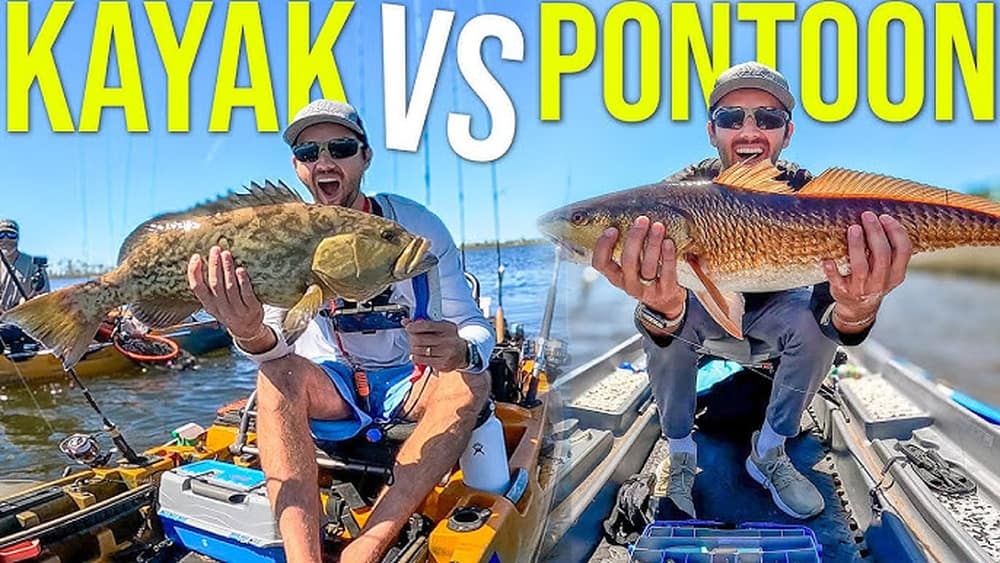
Fishing from the water opens a whole new world for anglers. You can reach hidden spots, get closer to fish, and enjoy a peaceful day away from crowded banks. But when you decide to leave the shore, a big question comes up: should you choose a fishing kayak or a pontoon boat? Both have loyal fans, but they are very different in design, handling, and the kind of experience they offer. Making the right choice can mean the difference between a relaxing day and a frustrating one.
This guide dives deep into the real-world differences, strengths, and trade-offs between fishing kayaks and pontoons. You’ll discover which fits your fishing style, skill level, and local waters best. Whether you are just starting out or have fished for years, understanding these boats can save you time, money, and disappointment.
What Is A Fishing Kayak?
A fishing kayak is a narrow, lightweight boat designed for one or two people. It sits low in the water and is often powered by a paddle, though some models use pedals or small motors. Fishing kayaks have become popular for their portability, stealth, and the ability to reach places larger boats can’t go.
Modern fishing kayaks often include:
- Rod holders
- Storage compartments for tackle and gear
- Comfortable seats
- Mounts for fish finders
- Anchor systems
There are two main types: sit-on-top and sit-inside. Most anglers prefer the sit-on-top design for fishing, because it is easier to get in and out, and you can move around more freely.
What Is A Pontoon Boat?
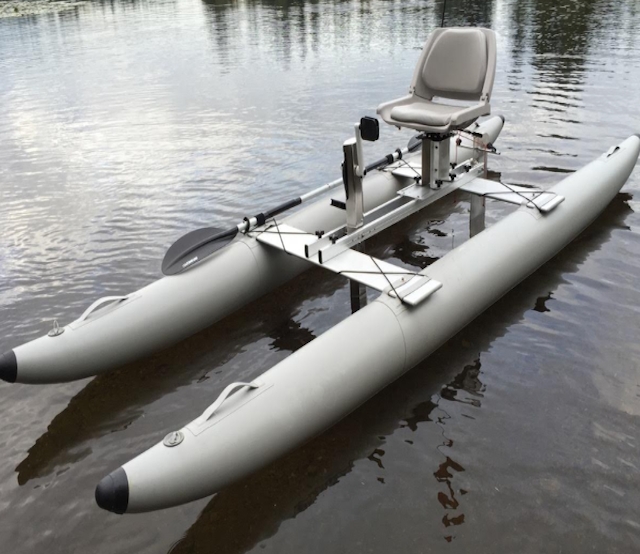
A pontoon boat for fishing is quite different. It’s not the big party boat you might see on a lake. Instead, fishing pontoons are often small, lightweight boats made for one or two people. They float on two air-filled tubes (pontoons) and have a seat or small platform between them. Some are called “kick boats,” others “catarafts,” but the basic idea is the same: stability and comfort.
Pontoon boats for fishing are usually powered with oars, fins (you kick with your feet while sitting), or small electric motors. They are known for being stable, easy to turn, and able to carry a lot of gear.
Popular features include:
- Swivel seats
- Storage bags and baskets
- Motor mounts
- Anchor systems
- Rod holders
Comparing Kayaks And Pontoons: The Basics
At first glance, both options let you fish on the water without a big, expensive boat. But the similarities end there. Let’s break down the key differences.
| Feature | Fishing Kayak | Pontoon Boat |
|---|---|---|
| Seating Position | Sits low, legs extended | High seat, feet in water or on footrests |
| Stability | Good, but can tip if standing | Very stable, hard to tip |
| Portability | Can be carried by one person | Often needs assembly, bulkier |
| Speed | Faster, tracks straight | Slower, easier to turn |
| Water Types | Lakes, rivers, even ocean | Lakes, slow rivers |
Comfort And Ergonomics
Fishing Kayak Comfort
Most fishing kayaks now come with adjustable seats, padded backs, and even standing platforms. For trips lasting several hours, seat comfort matters—a lot. Kayaks keep you low to the water, which can be great for stability and stealth, but some people find it hard to sit with legs straight for long periods.
Some kayaks let you stand and stretch. However, standing is only safe in wider, more stable models. If back pain is an issue, test the seat before buying. Seat upgrades are possible, but they add cost.
Pontoon Boat Comfort
A key strength of pontoon boats is comfort. You usually sit in a high, padded seat with a backrest, almost like a lawn chair. Many pontoons let you swivel to cast in any direction. Because your feet may be in the water (with fins) or on footrests, you can shift positions easily.
This makes pontoons popular with older anglers or anyone who wants more support. If you fish for hours and like to relax, pontoons have a clear edge.
Non-obvious insight: On windy days, a pontoon’s higher seating can make it harder to control position, especially without an anchor. Kayaks, sitting lower, catch less wind.
Stability And Safety
Kayak Stability
Most fishing kayaks are designed to be stable enough for casting, fighting fish, and sometimes standing. Wider kayaks (over 30 inches) are more stable but slower. Narrower kayaks are faster but can feel tippy.
For beginners, the fear of tipping over is real. While modern kayaks rarely flip easily, climbing back in from deep water is challenging. Practice re-entry before heading out alone.
Pontoon Stability
Pontoon boats are known for being incredibly hard to tip over. The two pontoons create a wide base, making them almost impossible to flip in calm water. This gives confidence for new anglers, people with balance issues, or those who want to move around a lot.
However, pontoons can be hard to control in strong currents or waves. They are not ideal for rough water or the ocean.
Practical tip: If you fish with kids or pets, a pontoon’s open platform and stability are a safer choice.
Portability And Storage
Moving And Storing A Fishing Kayak
Fishing kayaks range from 9 to 14 feet long and can weigh 40 to 120 pounds. Most can be carried by one person, but lifting a kayak onto a car roof or dragging it to the water may take effort.
Some kayaks have wheels or carts to help.
Storage at home is simple: hang it in the garage, stand it in a corner, or store outside with a cover. Kayaks are ready to launch in just a few minutes.
Moving And Storing A Pontoon Boat
Most fishing pontoon boats are inflatable. They break down into a bag that fits in most car trunks. This is a huge advantage for people with small cars or little storage space. However, you must inflate and assemble them at the water, which takes 10 to 30 minutes.
After fishing, pontoons need to dry before packing. Wet pontoons stored in a bag can develop mold or mildew. Also, they are bulkier to carry to the water, especially if assembled.
Non-obvious insight: Inflatable pontoons are great for travel or hiking into remote lakes, but you need a pump and practice with assembly.
Performance On The Water
Speed And Handling: Kayaks
Fishing kayaks are faster and track (go straight) much better than pontoons. This matters on large lakes or when you want to cover miles in a day. Kayaks cut through wind better and are more efficient with each paddle stroke.
Pedal-drive kayaks are even faster and let you fish while moving. Some high-end models reach speeds of 5 mph or more.
Speed And Handling: Pontoons
Pontoons are slower and less efficient. Because they sit high and have two tubes, they catch more wind. Turning is easy, though—you can spin a pontoon almost in place, which is great for staying on fish or positioning for a cast.
Fin-powered pontoons (using swim fins) are slowest but offer hands-free movement, which is handy for fly fishing.
Real-world example: If you want to troll lures or reach distant fishing spots, a kayak is much better. If you like to stay in one area or fish small waters, a pontoon works well.
Fishing Features And Customization
Kayak Customization
Fishing kayaks are famous for customization. You can add:
- Extra rod holders
- Fish finders
- GPS units
- Camera mounts
- Milk crates for tackle storage
Many kayaks come “ready to fish” with mounts and tracks for adding gear. You can even install a trolling motor or anchor system.
Pontoon Customization
Pontoons also offer good customization. Most have:
- Rod holders
- Gear bags
- Anchor mounts
- Motor mounts (for small electric motors)
However, options are more limited compared to kayaks. You can’t easily mount electronics or drill into pontoons. But you can add baskets, cup holders, and other accessories.
Non-obvious insight: If you like to tinker and build the perfect fishing setup, kayaks offer more options. Pontoon mods are usually limited by the inflatable design.

Credit: www.youtube.com
Cost And Value
Fishing Kayak Pricing
Entry-level fishing kayaks start around $350. Mid-range models run from $700 to $1,300. High-end pedal or motorized kayaks can cost $2,000 to $5,000. Used kayaks are widely available and often a good deal.
What you get for your money:
- Cheaper kayaks: Basic, fewer features, less stable
- Mid-range: Better seats, rod holders, more storage
- High-end: Pedal drive, high-tech features, extreme stability
Pontoon Boat Pricing
Fishing pontoons start around $250 for simple models. Most range from $400 to $1,000. Deluxe versions with frames, swivel seats, and motors can reach $1,500.
What you get for your money:
- Cheap pontoons: Smaller, fewer features
- Mid-range: Better seats, storage, bigger tubes
- High-end: Motors, advanced frames, heavy-duty materials
Practical tip: Don’t forget extra costs: paddles, life jackets, pumps, and storage racks add up for both kayaks and pontoons.
Where Each Boat Excels
When To Choose A Fishing Kayak
- You want to cover long distances
- You fish in big lakes, coastal waters, or rivers with current
- You like customizing your setup
- You need to move quickly between spots
- You want an all-in-one boat, ready in minutes
When To Choose A Pontoon Boat
- You fish small lakes, ponds, or calm rivers
- You prefer comfort and stability over speed
- You travel and need compact storage
- You want to stand and cast or move around safely
- You like hands-free movement (with fins)
Credit: kayakanglermag.com
Weather And Water Conditions
Kayak In Different Conditions
Kayaks handle wind, waves, and current better than pontoons. Ocean fishing, big lakes, and fast rivers are all possible (with the right kayak and skills). However, kayaks can fill with water if not handled properly, so always wear a life jacket.
Pontoon In Different Conditions
Pontoons are best in calm, protected waters. Waves and wind can make them hard to control. On rivers with obstacles, pontoons can get stuck or drift quickly.
Practical tip: Always check the weather before heading out, especially if you choose a pontoon. Safety should come first.
Maintenance And Durability
Kayak Maintenance
Kayaks are tough. Hard-shell models need little care—just rinse after use, especially in saltwater. Pedal and motor drives need extra attention, like oiling parts and checking for damage. UV rays can fade plastic, so cover or store inside.
Pontoon Maintenance
Pontoons need more care. Check for leaks or punctures after every trip. Dry fully before storing. Sun and sharp objects can damage inflatable tubes. Frame parts should be checked for rust or wear.
Non-obvious insight: Cold weather can make pontoon material stiff or brittle. Store inside in winter if possible.

Credit: www.reddit.com
Ease Of Use For Beginners
Kayak Learning Curve
Kayaks are easy to paddle but take practice to master. Steering, balancing, and getting in and out can be tricky for first-timers. Start in shallow water and always practice safety drills.
Pontoon Learning Curve
Pontoons are very beginner-friendly. Most people feel comfortable right away. Kicking or rowing is simple. However, learning to assemble and inflate the boat takes practice. Reading the manual and doing a dry run at home helps.
Practical tip: If you have physical limitations, try both at a rental shop before buying. Comfort and confidence matter more than specs.
Real-world Use Cases
Fly Fishing
Pontoons are very popular with fly anglers. The high seat gives a great view, and you can cast in any direction. Many fly fishers use fins to slowly move while keeping both hands free.
Bass And Lake Fishing
Kayaks dominate for bass fishing and general lake fishing. You can sneak into weedy coves, stand to cast, and cover water quickly. Kayak tournaments are growing every year.
River Fishing
Both can work, but kayaks are better in fast water. You can paddle against current or float downstream. Pontoons need more care—avoid strong current and obstacles.
Travel And Remote Waters
Inflatable pontoons are a great choice if you hike to mountain lakes or travel by plane. They fit in a suitcase and set up almost anywhere.
Common Mistakes When Choosing
- Ignoring your local water: Don’t buy a kayak for tiny ponds, or a pontoon for big windy lakes.
- Overestimating skill level: If you are new, choose stability and comfort over speed and features.
- Forgetting about storage and transport: A 14-foot kayak may not fit in your garage or on your car.
- Skipping test rides: Always try before you buy. Comfort can’t be judged online.
- Not budgeting for accessories: Paddles, pumps, life jackets, and anchors cost extra.
Environmental Impact
Both kayaks and pontoons have a low environmental footprint. No gas engines, little noise, and minimal disturbance to fish and wildlife. Inflatable pontoons use more plastic and may have a shorter lifespan, but both options are considered eco-friendly.
Practical tip: Always clean your boat before moving between lakes to prevent spreading invasive species.
Summary Table: Fishing Kayak Vs Pontoon Boat
To make the decision easier, here’s a quick reference:
| Best For | Fishing Kayak | Pontoon Boat |
|---|---|---|
| Speed & Distance | ✔ | |
| Stability & Comfort | ✔ | |
| Big Water | ✔ | |
| Small Lakes/Ponds | ✔ | ✔ |
| Customization | ✔ | |
| Easy Setup | ✔ | |
| Portability | ✔ (hard shell) | ✔ (inflatable) |
Choosing The Right Boat For You
The best fishing boat is the one that fits your waters, style, and budget. Kayaks are fast, flexible, and great for covering water. Pontoons are stable, comfortable, and perfect for relaxing days on small lakes. Think about your main fishing spots, how much gear you carry, and how you’ll transport and store your boat.
If possible, borrow or rent both before you buy. What looks good on paper can feel very different on the water. Don’t rush—your boat is an investment in years of fishing fun.
If you want more data and user experiences, the Wikipedia page on fishing kayaks gives a deeper look into design and history.
Frequently Asked Questions
What Is Safer For Beginners: A Fishing Kayak Or A Pontoon?
Both are safe with proper use, but pontoons are usually more stable and forgiving for beginners. It’s harder to tip a pontoon by accident, and getting in and out is often easier. Kayaks require more balance and practice, especially when entering from a dock or deep water.
Can I Stand And Fish From Both Boats?
You can stand in some wide, stable fishing kayaks, but most people do not stand in pontoons. Pontoons are designed for sitting and sometimes allow kneeling or shifting positions, but not standing. If standing is important, try out several kayak models first.
How Much Weight Can Each Type Carry?
Fishing kayaks usually hold 250 to 500 pounds, depending on size and design. Pontoons can hold 300 to 500 pounds or more, especially double-tube models. Always check the manufacturer’s specifications for maximum safe weight.
Which Is Easier To Transport And Store?
Inflatable pontoons are easiest to store and transport because they pack into a bag. Hard-shell kayaks need more space and a roof rack or trailer, but they are quicker to launch and pack up at the lake. Consider your car size and storage space at home.
Are Fishing Kayaks Or Pontoons Better For Fly Fishing?
Most fly anglers prefer pontoons because of the high seat, stability, and hands-free movement using fins. However, some wide fishing kayaks also work well for fly fishing, especially if you want to stand and cast in shallow water.
Choosing between a fishing kayak and a pontoon boat means understanding your needs, your local waters, and how you like to fish. Both can bring years of enjoyment, but the right choice makes every trip smoother and more fun. Take your time, ask questions, and enjoy your adventures on the water.