
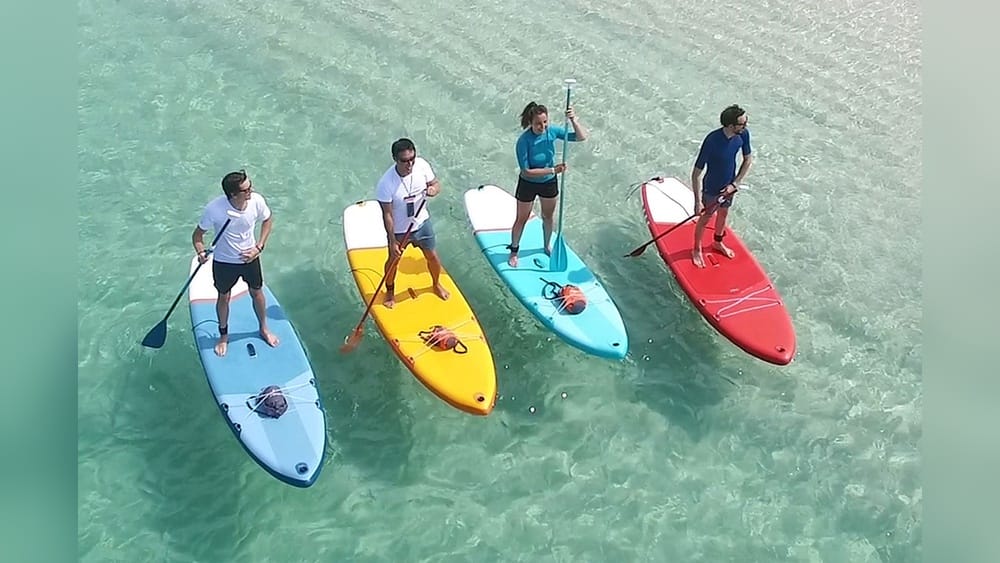
Kayak Vs Paddleboard: Which One Is Right For You?
Many people dream of getting out on the water to relax, exercise, or explore. Two of the most popular ways to do this are kayaking and paddleboarding. Both activities are fun and accessible, but they offer very different experiences. Choosing between a kayak and a paddleboard is not always easy, especially for beginners. This guide will help you understand the main differences, benefits, and challenges of each, so you can decide which fits your style, body, and goals.
What Are Kayaks And Paddleboards?
Before comparing, it’s important to know what makes these watercraft unique.
A kayak is a small, narrow boat with a closed or open cockpit. You sit inside or on top and use a double-bladed paddle to move. Kayaks come in many types, from short recreational boats to long sea kayaks.
A paddleboard (usually a Stand-Up Paddleboard, or SUP) is a long, wide board you stand on, using a single-bladed paddle. It looks a bit like a large surfboard but is built for flat water or small waves. SUPs can be rigid or inflatable.
Both are powered by your body, give a close-to-nature feel, and can be enjoyed on lakes, rivers, or the sea.
Main Differences Between Kayaks And Paddleboards
Let’s look at how these two watercraft compare in key areas.
| Feature | Kayak | Paddleboard |
|---|---|---|
| Riding Position | Sitting (or sometimes kneeling) | Standing (or kneeling, sitting possible) |
| Paddle Type | Double-bladed | Single-bladed |
| Stability | Generally more stable, especially for beginners | Can be less stable, but improves with practice |
| Speed | Usually faster, especially over long distances | Slower, more relaxed pace |
| Learning Curve | Easier to start paddling straight | Harder to balance at first |
| Exercise Focus | Arms, shoulders, core | Full body, especially legs and core |
Non-obvious insight: Many beginners don’t realize that balance is much more important in paddleboarding, while kayaking requires more upper body strength.
Pros And Cons Of Kayaks
Kayaks are a classic choice for water lovers. But like any tool, they have their strengths and weaknesses.
Advantages
- Protection from water: Sit-in kayaks keep your lower body dry and warm, which is helpful in cold or rough conditions.
- Speed and tracking: Kayaks slice through water efficiently. Longer models can go straight and cover distance fast.
- Carrying gear: Kayaks often have storage hatches for food, cameras, or camping gear. This makes them great for longer trips.
- Stability for beginners: Most recreational kayaks are stable, especially on calm water.
- More comfortable in wind: Sitting low makes you less affected by wind compared to standing on a paddleboard.
- Variety of types: There are kayaks for whitewater, touring, fishing, and more. You can pick a boat for your adventure style.
Disadvantages
- Harder to get back in: If you fall out, getting back into a sit-in kayak can be difficult, especially in deep water.
- Heavier and bulkier: Many kayaks are heavy and need two people to carry. Transport and storage can be a challenge.
- Limited view: Sitting low means you see less of the water and surroundings compared to standing on a paddleboard.
- Less freedom of movement: You’re mostly stuck in one position.
- Wet exits: In case of a capsize, you might have to do a “wet exit,” which can be scary for some.
Practical tip: If you plan to paddle in cold water or want to carry a lot of gear, a kayak is usually the better choice.
Pros And Cons Of Paddleboards
Stand-up paddleboarding has exploded in popularity in the last decade. Why do so many people love it?
Advantages
- Full-body workout: Standing up engages your legs, core, arms, and even your balance muscles.
- Easier to get back on: If you fall, just climb back on. There’s no cockpit to squeeze into.
- Great for sight-seeing: Standing gives you a high vantage point. You can spot fish, rocks, or scenery easily.
- Versatile activities: You can paddle, do yoga, fish, or even surf small waves.
- Lightweight and portable: Many SUPs are inflatable and fit in a backpack. Even rigid boards are lighter than most kayaks.
- Social and fun: It’s easy to paddle with friends, talk, or swap boards.
- Beginner-friendly in calm water: On flat water, many people can stand and paddle within 10 minutes.
Disadvantages
- Wind is a bigger problem: Standing up makes you a “sail” for the wind. Strong breeze can push you off course.
- You will get wet: Falling is normal, especially when learning.
- Less efficient for long distances: SUPs are slower and harder to paddle straight over long trips.
- Limited gear storage: Most boards have small bungee cords, not closed hatches.
- Requires balance: Some people, especially those with poor balance or mobility, may find it challenging.
Non-obvious insight: Many paddleboards are wide and stable enough for children or dogs, making them a family-friendly option.
Choosing Based On Your Goals
What do you want from your time on the water? Here’s how to decide:
For Relaxation
If you want to float and enjoy the sun, both options work. However, paddleboards let you lie down, do yoga, or even picnic on the water. Kayaks are better if you want to stay dry and warm.
For Exercise
Both give a workout, but in different ways. Kayaking is great for your upper body and core. Paddleboarding is a full-body workout, improving balance and leg strength as well.
For Adventure And Exploration
Kayaks are usually better for long journeys, rough water, or exploring coastlines and rivers. You can carry camping gear, stay dry, and travel farther.
For Social Fun
Paddleboards are more social. You can talk easily, swap boards, or paddle side by side. Many people enjoy group SUP sessions, yoga, or races.
For Fishing
Both work, but kayaks offer more storage for gear and a stable platform for casting. There are special fishing kayaks designed for this purpose. Some paddleboards now include fishing mounts, but space is limited.
For Wildlife Watching
Standing on a SUP gives you a better view of fish, turtles, or birds. Kayaks, however, let you sneak up quietly and often have less disturbance in the water.
Beginner Considerations: Which Is Easier To Learn?
Most beginners wonder, “Which one will I fall from less? ” The answer depends on water conditions, your balance, and which skill you want to develop.
Kayaking is easier for those who want to paddle straight from the start. Sitting down, you are closer to the water, which makes it harder to fall. You can quickly learn basic strokes in a short lesson.
Paddleboarding is easier to remount after a fall, but standing and balancing takes practice. Young people or those with good balance often learn SUP quickly, but older adults or those with knee problems may struggle.
Surprising fact: Studies show most people can paddle a kayak in a straight line after 10 minutes, but it takes 30–60 minutes for most to feel comfortable standing and paddling on a SUP.
Tip: Try both on calm water before you buy. Rental shops often allow you to test different types for a small fee.

Credit: www.youtube.com
Cost Comparison
Price can be a big factor. Here’s how kayaks and paddleboards stack up.
| Type | Entry-Level Price Range (USD) | Average Accessories Needed |
|---|---|---|
| Kayak (Recreational) | $300 – $800 | Paddle, PFD (life vest), car rack, spray skirt (optional) |
| Paddleboard (Inflatable) | $250 – $700 | Paddle, leash, PFD, pump, bag |
| Kayak (Touring or Fishing) | $800 – $2,000+ | More accessories, roof rack, dry bags |
| Paddleboard (Rigid) | $700 – $1,500+ | Similar to inflatable, but harder to transport |
SUPs can be a little cheaper, especially if you choose an inflatable model. Kayaks can get expensive if you want advanced features or specialized designs.
Hidden cost: Many people forget about car racks or storage space at home. Inflatable SUPs are easier to store in small apartments.
Transport And Storage
Getting your kayak or paddleboard to the water can be a challenge. Here’s what you should know:
- Kayaks are often heavier and longer. You might need a car with roof racks or a trailer. Carrying them alone is tough.
- Paddleboards (especially inflatables) can fit in the trunk of a small car or even be carried on a bike with a special cart.
- Both need to be rinsed after saltwater use and stored out of the sun to last longer.
- Inflatable SUPs are a huge advantage if you live in a city or don’t have a garage.
Pro tip: Always check the weight and dimensions before buying. Some kayaks are too heavy for one person to manage.
Credit: mdqwatersports.com
Safety Considerations
Water sports are fun, but safety matters.
- Wear a PFD (personal flotation device): This is important for both kayaks and paddleboards.
- Check weather and wind: Paddleboards are much harder to control in strong wind.
- Know how to self-rescue: Learn how to get back on a SUP or into a kayak before you paddle far from shore.
- Tell someone your plan: Always let a friend or family member know where you are going and when you’ll return.
- Sun protection: Standing on a SUP exposes you more to sun. Wear sunscreen, a hat, and sunglasses.
Key insight: Many accidents happen close to shore and involve people without a life jacket.
Which One Is Best For Kids And Families?
Families often ask which is safer and more fun for children.
- Kayaks: Tandem kayaks let an adult and child paddle together. Sit-on-top models are safer for kids, as they’re easy to get in and out of.
- Paddleboards: Kids love sitting, kneeling, or standing on wide SUPs. Falling is safe in warm, shallow water. Some boards are big enough for a parent and child together.
Warning: Always supervise children, and make sure everyone wears a life vest.

Credit: www.discountramps.com
Environmental Impact
Both kayaks and paddleboards are non-motorized and eco-friendly. But there are things to consider:
- Plastic kayaks can last for decades but are hard to recycle.
- Inflatable SUPs use PVC, which is not biodegradable, but some brands now use recycled materials.
- No fuel or pollution: Both are quiet and don’t harm wildlife if you follow local rules.
Tip: Rinse your gear after use to prevent spreading invasive plants or animals.
Common Mistakes To Avoid
Choosing and using a kayak or paddleboard is not always simple. Here are mistakes beginners often make:
- Ignoring water conditions: Wind and waves can make SUPs nearly impossible for beginners.
- Overestimating skill: Don’t paddle far from shore until you’re confident.
- Choosing the wrong size: A board or kayak that’s too small or unstable is frustrating.
- Skipping safety gear: PFDs save lives, even for strong swimmers.
- Not learning proper technique: Poor paddling form can lead to sore muscles or injury.
Uncommon tip: When trying a SUP for the first time, start on your knees. Stand up only when you feel balanced.
Advanced Uses: Touring, Surfing, And Racing
Once you’re comfortable, both kayaks and paddleboards can offer advanced adventures.
- Touring: Kayaks are superior for multi-day trips or long-distance touring. Paddleboards can do short tours, but wind and waves make long trips harder.
- Surfing: SUPs can catch small waves easily, while special surf kayaks can handle bigger surf but need more skill.
- Racing: Both have competitive events. Kayak races are popular in many countries. SUP racing is growing, with sprint and long-distance events.
Not obvious: Some experienced paddlers use both—a kayak for big trips and a SUP for fun or exercise.
Kayak Vs Paddleboard: Which One Should You Choose?
The choice depends on you. Here are some final points to consider:
- Pick a kayak if:
- You want to stay dry or paddle in cold water
- You plan to cover long distances or carry gear
- You prefer sitting
- You want to fish with lots of equipment
- Pick a paddleboard if:
- You want a full-body workout and enjoy balancing
- You like to swim, do yoga, or sunbathe
- You want something light and easy to store
- You enjoy a more social, open experience
Try before you buy is always the best advice. Many rental shops offer lessons and let you experiment.
Real-world Examples
- City dweller: Maria lives in an apartment and owns an inflatable SUP. She can walk to the river with her board in a backpack and paddles after work for exercise.
- Adventurer: Dan loves camping on islands. He uses a touring kayak to carry a tent, food, and supplies for overnight trips.
- Family: The Smiths have a sit-on-top tandem kayak and a wide paddleboard. Their kids swap between them, enjoying both.
Comparing Performance In Different Environments
| Environment | Kayak Performance | Paddleboard Performance |
|---|---|---|
| Calm lake | Excellent stability and speed | Very stable, easy for beginners |
| River (gentle) | Good maneuverability, safe for most | Possible, but watch for rocks/shallow spots |
| River (whitewater) | Special whitewater kayaks needed, exciting | For experts only; risk of falling is high |
| Sea/ocean | Touring/sea kayaks work well, handle waves | Challenging in wind and waves, but fun in small surf |
Where To Learn More
If you want to dive even deeper into the technical differences, safety, and community resources for kayaking and paddleboarding, the Wikipedia page on paddleboarding is a solid starting point.
Frequently Asked Questions
What Is Easier For Beginners, Kayaking Or Paddleboarding?
Kayaking is usually easier for beginners because you sit close to the water, so balance is less of a challenge. Paddleboarding requires practice to stand up and balance, but it’s easier to get back on if you fall.
Can You Fish From A Paddleboard?
Yes, you can fish from a paddleboard, especially from wide and stable models. Some boards have mounts for fishing gear. However, kayaks are usually better for fishing trips because they offer more stability and space for equipment.
Is A Kayak Faster Than A Paddleboard?
In most cases, a kayak is faster. The sitting position and double-bladed paddle make it easier to cover long distances efficiently. Paddleboards are slower and are better for a relaxed pace.
Which Is Safer, Kayak Or Paddleboard?
Both are safe if you wear a life vest and know basic safety rules. Kayaks may be safer in cold or rough water because you are more protected. Paddleboards are safer if you fall, as you can climb back on easily.
How Do I Choose The Right Size Kayak Or Paddleboard?
For kayaks, match the length and width to your height, weight, and use (recreation, touring, fishing). For paddleboards, a wider, longer board is more stable for beginners. Always check the manufacturer’s weight limit and try before you buy if possible.
Kayaks and paddleboards each offer unique joys on the water. Take your time, think about your goals, and enjoy exploring the world from a new perspective. Whether you choose a kayak or a paddleboard, you’ll find adventure, exercise, and peace—one paddle stroke at a time.