
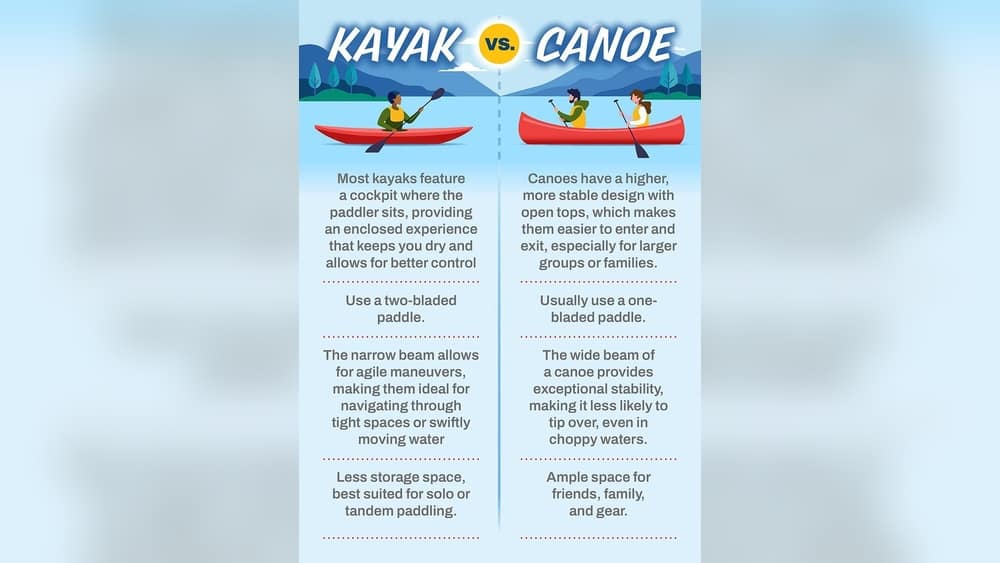
Canoe Vs Kayak For Beginners
Many people love the idea of paddling on a calm lake or down a gentle river. But when you’re just starting out, you may wonder: should I choose a canoe or a kayak? They look similar, but they feel very different on the water. Making the right choice can affect how much fun you have, how safe you feel, and even how easy it is to learn.
Let’s break down everything you need to know about canoes and kayaks as a beginner. We’ll look at the main differences, which one is easier to start with, what gear you’ll need, and some common mistakes new paddlers make. By the end, you’ll have a clear idea of which boat is right for your first adventure.
Understanding Canoes And Kayaks
Before comparing, it helps to know what makes a canoe a canoe, and a kayak a kayak. The main differences come from their design and how you paddle them.
What Is A Canoe?
A canoe is a long, open boat. The sides are high, and the top is open. You usually sit or kneel inside and use a single-bladed paddle. Canoes can carry one person or a group, depending on size.
Canoes are often used for:
- Calm lakes and slow rivers
- Family trips and fishing
- Carrying camping gear
What Is A Kayak?
A kayak is usually lower to the water, with a closed deck and a small opening (cockpit) where you sit. You use a double-bladed paddle. Your legs stretch out in front of you, and you sit lower than in a canoe.
Kayaks are often used for:
- Faster-moving rivers and open water
- Solo paddling or with a partner
- Sports like whitewater or sea kayaking
Key Differences Between Canoes And Kayaks
It’s easy to confuse canoes and kayaks at first glance. Here are the main features that set them apart:
| Feature | Canoe | Kayak |
|---|---|---|
| Seating position | Sit on a bench or kneel | Sit with legs extended inside |
| Paddle type | Single-bladed | Double-bladed |
| Deck design | Open | Closed with cockpit |
| Stability | More stable at rest | Stable while moving |
| Storage space | More open space | Enclosed hatches |
| Ease of entry/exit | Easier to get in/out | Can be harder for beginners |
Which Is Easier For Beginners?
This is the big question. The answer depends on your goals, where you’ll paddle, and your comfort level.
Learning To Paddle
For most new paddlers, the canoe feels more stable at first. The open design makes it easy to get in and out. You can move around a bit inside, which is good if you’re nervous about tipping.
A kayak can feel less stable when you first sit down, because you’re lower in the water. But once you start paddling, many people feel more secure. The double-bladed paddle also lets you move straight more easily.
Confidence And Safety
Most beginners feel less afraid of falling in when starting with a canoe. If you have kids or want to bring a dog, a canoe usually offers more space and feels safer.
However, kayaks are built to handle waves and rougher water, especially sit-in models. Some recreational kayaks (like sit-on-top types) are wide and steady, and easy to climb back onto if you tip.
Tip: Try both types at a local rental shop before you buy. Nothing beats real experience for building confidence.
Comparing Canoe And Kayak Types
Not all canoes or kayaks are the same. Let’s look at the main types you’ll see as a beginner.
Common Canoe Types
- Recreational Canoes: Wide, stable, good for flat water. Best for families and beginners.
- Touring Canoes: Longer, built for covering more distance. Hold more gear.
- Whitewater Canoes: Shorter, tougher, and made for rapids. Not for most beginners.
Common Kayak Types
- Recreational Kayaks: Wide, short, and steady. Great for calm water.
- Touring/Sea Kayaks: Long, narrow, fast. Made for big lakes or ocean.
- Sit-on-Top Kayaks: Open seat, easy to get on and off. Good for warm water, fishing, and fun.
- Inflatable Kayaks: Portable, lightweight, and easy to store. Some are surprisingly strong.
Stability And Comfort
Feeling safe and comfortable is important for beginners.
Canoe Stability
Canoes are known for primary stability. This means they feel steady when you’re sitting still. If you want to relax, fish, or picnic on the water, a canoe is a good choice.
But canoes can feel “tippy” if you lean too far to one side. In rough water, they are more likely to take on water.
Kayak Stability
Kayaks have secondary stability. They can wobble a little when still, but resist flipping as they lean. This is useful for rougher water or if you want to practice turning.
Sit-on-top kayaks are often the most stable option for nervous beginners. They’re also easy to climb back onto if you fall off.
Hidden Insight: New paddlers often focus too much on not tipping. In reality, most beginner accidents happen from standing up or making sudden movements. Stay relaxed and centered, and both canoes and kayaks are safe.
Speed And Efficiency
If you plan to cover longer distances, speed may matter.
- Kayaks are usually faster and require less effort to go straight. The double-bladed paddle lets you keep moving without switching sides.
- Canoes are slower, especially if paddled alone. With two people working together, they can keep up.
Fact: In a race, a trained kayaker will almost always beat a canoeist over the same distance.

Credit: www.youtube.com
Portability And Transport
You need to get your boat to the water. How easy is this?
Carrying And Loading
- Canoes are often larger and heavier. Some canoes are over 16 feet long and need two people to carry.
- Kayaks come in many sizes. Short recreational kayaks can be carried by one person. Inflatable kayaks are light and fit in a car trunk.
Car Roof Racks
Both boats can go on a roof rack, but kayaks are easier to tie down. Canoes may need more straps or special holders.
Practical Tip: If you live in an apartment or have a small car, look at inflatable or shorter kayaks. They’re easy to store and transport.
Storage And Maintenance
After your trip, you’ll need to store and care for your boat.
Canoe Storage
Canoes take up more space. You’ll need a garage, shed, or outdoor storage with a cover. They are tough, but should be kept out of sun and rain to last longer.
Kayak Storage
Kayaks are smaller, especially short or inflatable ones. Hard-shell kayaks can be hung on a wall or put on a rack. Inflatable kayaks can be dried and packed away.
Both types need to be rinsed with fresh water if used in saltwater.
Beginner Mistake: Forgetting to dry the inside of your boat can cause mold and bad smells. Always wipe out and air dry after use.
Cost And Buying Options
Your budget will affect your choice.
Canoe Prices
- New recreational canoes: $400–$1,000
- Used canoes: $200–$600
- High-end touring canoes: $1,000+
Kayak Prices
- New recreational kayaks: $250–$800
- Sit-on-top kayaks: $300–$600
- Inflatable kayaks: $100–$500
- Touring/sea kayaks: $900+
Fact: Paddles, life jackets, and other gear are extra. Plan to spend $100–$200 more.
Renting Before Buying
Many shops and parks offer canoe or kayak rentals. This is a smart way to learn what you like before investing.
Non-obvious Insight: Don’t buy the cheapest boat just to save money. Poor-quality boats are hard to paddle and less fun. You’ll probably outgrow them quickly.
Gear You’ll Need
No matter which you choose, some basic gear is essential:
- Personal Flotation Device (PFD): Always wear a life jacket. It’s the law in many places.
- Paddle: Single-bladed for canoe, double-bladed for kayak. Size matters—ask for help choosing the right length.
- Dry bag: Keeps your phone, snacks, and keys dry.
- Water bottle and snacks: Paddling is work! Stay hydrated.
- Sun protection: Hat, sunglasses, sunscreen.
- Whistle: For safety, to signal if you need help.
- Proper clothing: Quick-dry clothes are best. Avoid cotton, which stays wet.
Extra Gear For Canoes
- Kneeling pad (if you like kneeling for stability)
- Rope/throw bag for tying up or emergencies
Extra Gear For Kayaks
- Spray skirt (for sit-in kayaks, keeps water out)
- Bilge pump (removes water from inside the kayak)
Safety For Beginners
Staying safe is the most important part of paddling.
Basic Safety Tips
- Always wear your PFD, even if you’re a good swimmer.
- Check weather and water conditions before you go.
- Tell someone your plan and when you’ll be back.
- Stay near shore if you’re new.
- Take a lesson, if possible. Learning proper paddling and rescue skills is smart.
Non-obvious Tip: Practice getting in and out of your boat from the water, not just the dock. If you do tip, you’ll be less scared and know what to do.
Best Uses For Canoes And Kayaks
Choosing the right boat depends on what you want to do.
Canoes Are Best For:
- Family trips or outings with friends
- Fishing—more room for gear and moving around
- Calm lakes and slow rivers
- Carrying camping supplies for overnight trips
Kayaks Are Best For:
- Solo adventures
- Exploring narrow streams or twisty rivers
- Choppy water or windy lakes (especially sit-in kayaks)
- Learning advanced paddling techniques
- Whitewater (special whitewater kayaks)
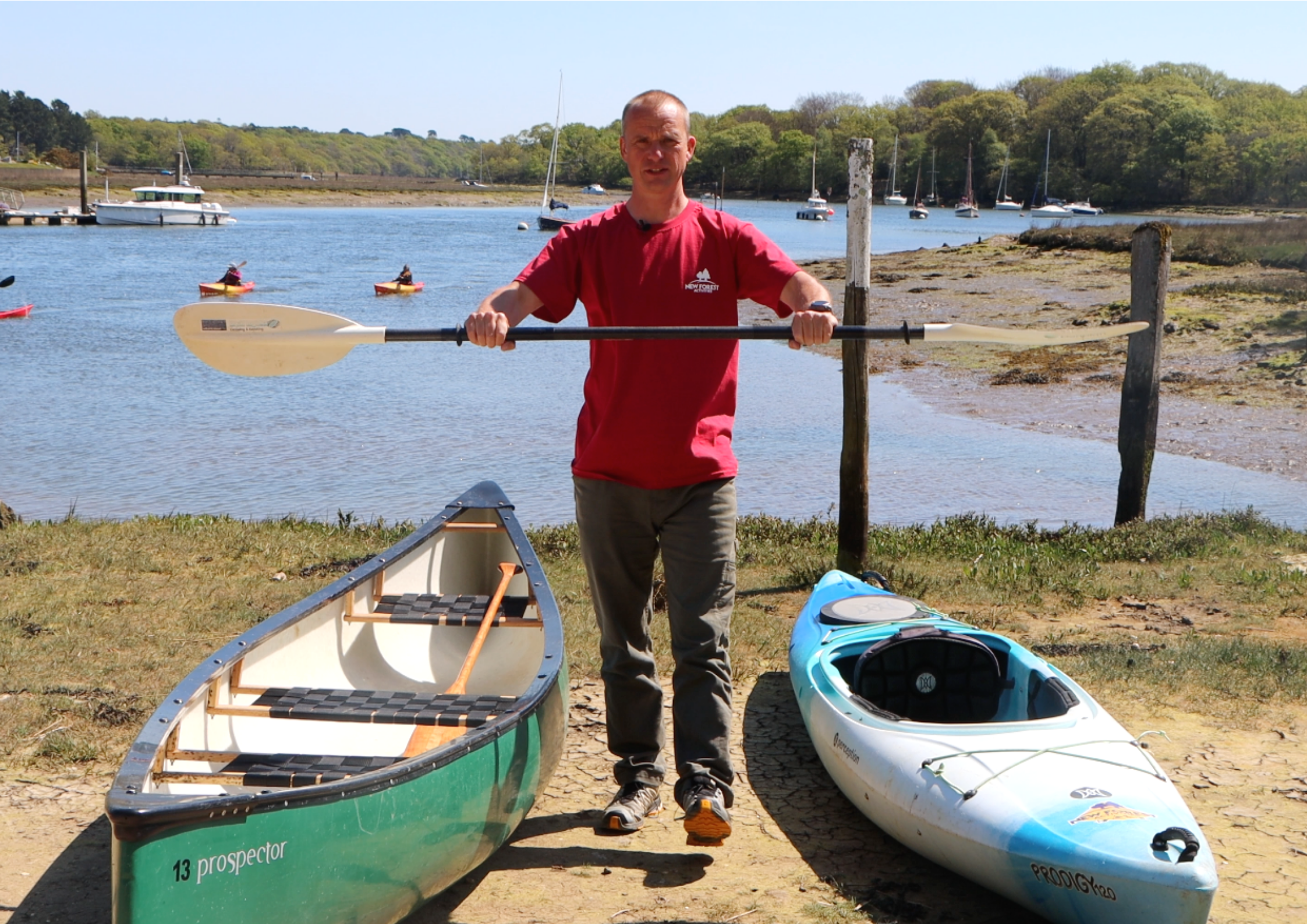
Credit: www.newforestactivities.co.uk
Common Beginner Mistakes
Everyone makes mistakes when starting something new. Here are some to avoid:
- Choosing the wrong boat: Trying a whitewater kayak on a calm lake, or a long canoe on a twisty stream, makes learning harder.
- Ignoring safety gear: Accidents can happen, even close to shore.
- Poor paddle technique: Paddling backward or with bent wrists can make you tired fast.
- Overloading the boat: Too much gear (or too many people) makes tipping more likely.
- Not checking the weather: Wind and waves make paddling much harder, especially in a canoe.
Environmental Impact
Canoes and kayaks are both eco-friendly ways to explore the water. They don’t use gas, and they’re quiet. But you should:
- Avoid dragging your boat on shorelines (damages plants and soil)
- Pack out all your trash
- Be careful not to disturb wildlife
Hidden Insight: Kayaks allow you to reach smaller, shallow areas with less impact. But the open space of a canoe can mean you bring more gear—so be careful not to lose anything overboard.
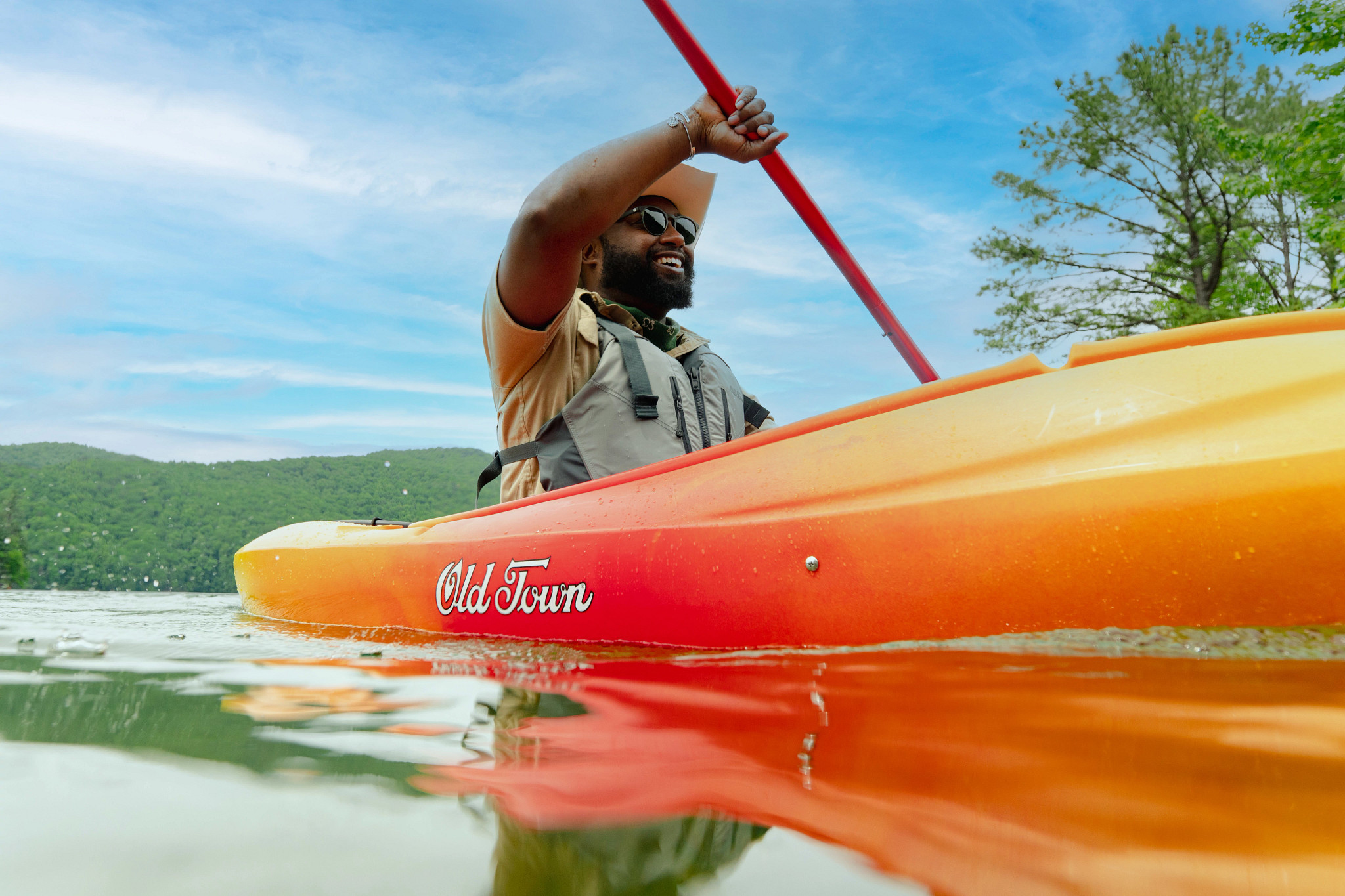
Credit: oldtownwatercraft.johnsonoutdoors.com
How To Decide: Canoe Or Kayak?
If you still aren’t sure, ask yourself these questions:
- Will I usually paddle alone or with others?
- Do I need to carry a lot of gear?
- Am I more interested in relaxing or getting exercise?
- How will I transport and store my boat?
- Am I planning to paddle on calm lakes or rougher water?
Quick Decision Guide
| Situation | Better Choice |
|---|---|
| Paddling with kids or pets | Canoe |
| Solo paddling | Kayak |
| Fishing trips | Canoe or Sit-on-Top Kayak |
| Easy storage/transport | Inflatable Kayak |
| Whitewater fun | Special Kayak |
| Camping with lots of gear | Canoe |
| Exploring narrow streams | Short Kayak |
Real-world Examples
Let’s look at how beginners have chosen and enjoyed each type.
Anna’s Family Trip: Anna wanted to paddle with her two children on a calm lake. She chose a wide recreational canoe. The kids could sit safely, and there was space for a picnic. They felt safe and had fun, even though they were new to paddling.
Ben’s Solo Adventures: Ben lives near a winding river and likes exploring alone. He started with a short sit-on-top kayak. It was easy to carry, and he could quickly get in and out if he tipped over. Now, he’s learned to use a touring kayak for longer trips.
Sara’s Fishing Fun: Sara wanted to fish small ponds. She picked an inflatable sit-on-top kayak. It fit in her car and was easy to set up. She loved being close to the water, and the kayak’s stability let her focus on fishing, not balancing.
Practical Advice: Your first boat doesn’t need to be perfect. Many people start with used or rental boats. As you gain experience, you’ll know exactly what features matter most to you.
Frequently Asked Questions
What’s Safer For Beginners: Canoe Or Kayak?
Both can be safe if used in the right conditions and with a life jacket. Canoes feel more stable when sitting still, which helps nervous beginners. Kayaks, especially sit-on-top types, are easy to climb back onto if you fall out.
Always choose calm water for your first trips.
Do I Need Lessons To Start Canoeing Or Kayaking?
Lessons are not required, but they help a lot. A certified instructor can teach you how to paddle efficiently, steer, and recover from a tip-over. Many paddling clubs and outdoor shops offer beginner classes.
Can I Take My Dog In A Kayak Or Canoe?
Most people find it easier to bring a dog in a canoe. There’s more space for your pet to move and lie down. Some wide, stable kayaks can handle a small dog, but it’s less common. Always use a pet life jacket.
Which Is Better For Fishing: Canoe Or Kayak?
Both can work well. Canoes offer space and comfort for gear and tackle, making them great for fishing trips. Sit-on-top kayaks are also popular among anglers because you sit close to the water and can reach over the side easily.
Where Can I Learn More About Paddling Safety And Skills?
Check out resources from the American Canoe Association for lessons, safety tips, and local clubs. They offer trusted guidance for all skill levels.
Whether you choose a canoe or a kayak, the most important thing is to get out on the water and enjoy yourself. With the right boat and a little practice, you’ll discover a new world of adventure and relaxation. Paddle smart, stay safe, and have fun!