

Kayaking is a fantastic way to explore rivers, lakes, and even coastal waters. If you are thinking about buying a kayak, you will quickly notice two main types: inflatable kayaks and hard kayaks. Each has its own strengths and weaknesses, and choosing the right one depends on your needs, where you paddle, and how you plan to use it. Many beginners wonder which kayak will suit them best, but the answer is not always simple. This article will guide you through everything you need to know about inflatable vs hard kayaks, including performance, durability, storage, and much more. You will learn key differences, practical tips, and even some insights that many first-time buyers often miss.
What Is An Inflatable Kayak?
An inflatable kayak is made from tough, flexible materials like PVC or rubber. You inflate it with a pump before use, and deflate it for easy storage. Inflatable kayaks are light and compact, making them great for people who don’t have much space. They usually come with carrying bags, repair kits, and sometimes paddles.
Most inflatables are designed for calm water, but some advanced models can handle mild rapids or even sea conditions. Their popularity has grown fast in recent years, especially among travelers and apartment dwellers.
Key Features Of Inflatable Kayaks
- Lightweight (often under 30 lbs)
- Folds into a small bag
- Needs a pump to inflate
- Made of thick, durable material
- Can be stored in small spaces
- Often cheaper than hard kayaks
Types Of Inflatable Kayaks
There are several types, including:
- Recreational inflatables – For calm lakes and slow rivers.
- Whitewater inflatables – Tougher build for rapids.
- Fishing inflatables – Wider, stable designs with rod holders.
- Touring inflatables – Longer, faster models for bigger water.
Most beginners start with recreational inflatables because they are easy to handle and affordable.
What Is A Hard Kayak?
A hard kayak (sometimes called rigid kayak) is made from solid materials like plastic, fiberglass, or wood. These kayaks do not need to be inflated; they are ready to use anytime. Hard kayaks are known for their strength, speed, and performance in challenging water.
You will see hard kayaks everywhere, from local lakes to Olympic competitions. They have a long history, tracing back to the original Inuit designs. Today, modern hard kayaks come in many shapes and sizes.
Key Features Of Hard Kayaks
- Solid, rigid body
- Heavier (usually 35–80 lbs)
- Needs a car rack or trailer for transport
- Made from plastic, fiberglass, or composite
- Stronger and more durable
- Often more expensive
Types Of Hard Kayaks
Some main types include:
- Sit-on-top kayaks – Easy to use, good for beginners.
- Sit-inside kayaks – Better for cold water or longer trips.
- Sea kayaks – Built for speed and ocean stability.
- Whitewater kayaks – Short, agile designs for rapids.
- Fishing kayaks – Wider, with special features.
Hard kayaks offer the best performance, but require more storage and transport planning.

Credit: www.splashymcfun.com
Comparing Performance: Inflatable Vs Hard Kayak
Performance is a key factor for most paddlers. Let’s look at how inflatables and hard kayaks differ when you are on the water.
Speed And Tracking
Hard kayaks are generally faster. Their smooth, solid shape cuts through water easily. They also track better, meaning they go straight with less effort. If you want to cover long distances or compete, hard kayaks are best.
Inflatable kayaks can be slower and sometimes drift off course, especially in wind. Newer models have improved tracking with built-in fins, but they still lag behind hard kayaks.
Stability
Most inflatable kayaks are very stable. Their wide, flat bottoms make them unlikely to tip over. This is perfect for beginners, families, or fishing.
Hard kayaks can be less stable, especially narrow ones. However, wider hard kayaks are stable, and experienced paddlers often prefer them for challenging water.
Maneuverability
Inflatables turn easily, but can be affected by strong wind or waves. Hard kayaks, especially short ones, are highly maneuverable and respond quickly to paddle strokes.
Capacity
Inflatables often have higher weight limits. Some can carry 400–600 lbs, making them ideal for carrying extra gear or even pets. Hard kayaks vary, but usually have lower capacity.
Real-world Example
A family on vacation may choose an inflatable kayak because it is easy to pack and stable for kids. An experienced paddler aiming for a race or rough water will likely choose a hard kayak for speed and control.
Durability And Lifespan
Durability is important, especially if you plan to use your kayak often or in tough conditions.
Inflatable Kayak Durability
Modern inflatables use thick PVC, hypalon, or nitrylon. These materials resist punctures, UV rays, and abrasion. Some inflatables have multiple air chambers, so if one leaks, the kayak stays afloat.
Still, inflatables are more vulnerable to sharp rocks, fishing hooks, or dog claws. Repairs are possible with patches, but repeated damage can reduce lifespan. With proper care, a good inflatable kayak lasts 5–10 years.
Hard Kayak Durability
Hard kayaks made from rotomolded plastic are nearly indestructible. Fiberglass or composite kayaks are lighter but can crack if dropped. With normal use and storage, a hard kayak can last 10–20 years or more.
Common Mistakes
Many beginners believe inflatables are fragile, but modern designs are very tough. On the other hand, hard kayaks are not immune to damage—they can crack or fade if left in the sun for months.
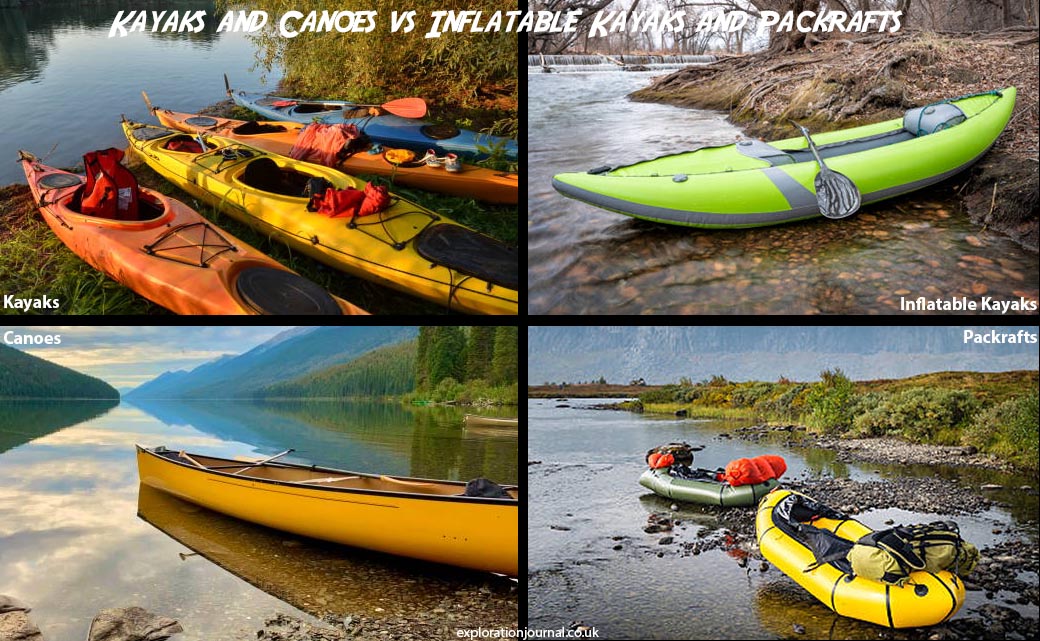
Credit: www.explorationjournal.co.uk
Storage And Transport
How you store and move your kayak is crucial, especially for city dwellers or people with small cars.
Inflatable Kayak Storage
You can deflate and fold an inflatable kayak to the size of a suitcase. It fits in closets, garages, or even under a bed. You don’t need a roof rack or large space.
Inflatable Kayak Transport
Inflatables are easy to carry, even on public transport or a bike. This makes them popular for travelers. You can check them as luggage on flights.
Hard Kayak Storage
Hard kayaks need space—usually a garage, shed, or outdoor rack. They should be kept off the ground and protected from sun and rain.
Hard Kayak Transport
You need a roof rack, truck, or trailer for most hard kayaks. They are heavy and can be awkward to carry alone. Some people struggle with loading them onto cars.
Example Data
Most inflatables weigh 20–35 lbs and fold into a bag about 3 feet long. Hard kayaks weigh 35–80 lbs and are 8–14 feet long.
Setup And Maintenance
Ease of setup and care can make a big difference in your kayaking experience.
Inflatable Kayak Setup
You must inflate your kayak before each trip. This takes 5–15 minutes with a manual or electric pump. After paddling, you need to dry and deflate it.
Maintenance Tips For Inflatables
- Rinse after use, especially in salt water
- Dry before storing to prevent mold
- Patch leaks quickly with repair kit
- Avoid dragging across sharp rocks
Hard Kayak Setup
Hard kayaks need no setup—just launch and paddle. After use, rinse and wipe down.
Maintenance Tips For Hard Kayaks
- Store out of direct sunlight
- Check for cracks or deep scratches
- Clean regularly to prevent algae
Practical Insight
Inflatables are easier to maintain overall, but drying them fully is important. Many new owners forget this and end up with mold.
Cost And Value
Price matters for most buyers. Let’s look at what you get for your money.
Inflatable Kayak Cost
Basic inflatables start at $100–$300. Mid-range models cost $400–$800, while advanced inflatables can reach $1,200 or more. Most include paddles and pumps.
Hard Kayak Cost
Entry-level hard kayaks cost $300–$600. Better models are $800–$2,000+. You may need to buy paddles, seats, or roof racks separately.
Value Comparison
Inflatables offer great value for beginners and casual paddlers. Hard kayaks are a bigger investment, but deliver higher performance and last longer.
Non-obvious Insight
Some people spend more on accessories than on the kayak itself. Always include the cost of paddles, life jackets, and storage solutions in your budget.
Safety Considerations
Safety is critical for any water sport. Both types have unique risks.
Inflatable Kayak Safety
Inflatables are stable and easy to re-enter if you fall out. Their soft material is less likely to hurt you. However, if a puncture happens, you must act fast.
Hard Kayak Safety
Hard kayaks are safer in rough water—they don’t rely on air chambers. But they can tip more easily and are harder to climb back into.
Common Safety Mistakes
Some beginners forget to check for leaks before launching an inflatable. With hard kayaks, not wearing a life jacket is a frequent mistake.
Environmental Impact
Kayaks have a footprint on the environment, from manufacturing to disposal.
Inflatable Kayak Impact
Most inflatables are made from PVC, which is not eco-friendly. Some brands use nitrylon or recycled materials, but these are rare.
Hard Kayak Impact
Plastic hard kayaks are durable but difficult to recycle. Fiberglass models require energy to produce. Wooden kayaks are more sustainable but expensive.
Practical Tip
Choose brands that offer repair kits and encourage long-term use. A longer-lasting kayak means less waste.
Real-life Scenarios: Which Kayak Fits Your Lifestyle?
Choosing between inflatable and hard kayak depends on your situation. Here are some examples:
Urban Apartment Owner
If you live in a small apartment, an inflatable kayak is ideal. You can store it easily and carry it to the water by bus or bike.
Weekend Traveler
Inflatables fit in car trunks and make spontaneous trips possible. No roof rack needed.
Competitive Paddler
If you race or paddle in rough seas, a hard kayak is best. It delivers speed, precision, and durability.
Family With Kids
Inflatables offer safety and stability for children. They are forgiving and fun for family outings.
Fishing Enthusiast
Both types offer fishing models, but inflatables are easier to transport. Hard kayaks have more options for accessories.
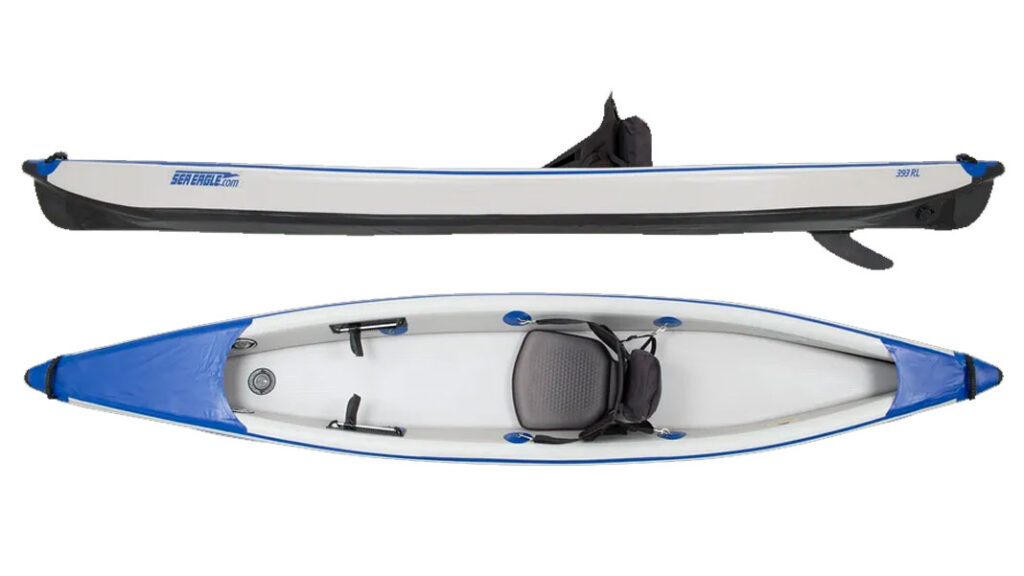
Credit: in4adventure.com
Key Comparison Table: Inflatable Vs Hard Kayak
Here’s a simple comparison that highlights the main differences:
| Feature | Inflatable Kayak | Hard Kayak |
|---|---|---|
| Weight | 20–35 lbs | 35–80 lbs |
| Storage | Compact, folds into bag | Needs garage/shed |
| Setup Time | 5–15 minutes | Ready to use |
| Durability | 5–10 years | 10–20 years |
| Performance | Good for beginners | Best for experts |
| Cost | $100–$1,200+ | $300–$2,000+ |
Pros And Cons Of Inflatable Kayaks
Let’s break down the main advantages and disadvantages:
Advantages
- Easy storage
- Lightweight
- Affordable
- Stable
- Portable
Disadvantages
- Slower speed
- Less durable
- Needs inflation
- Sensitive to punctures
- Can drift in wind
Pros And Cons Of Hard Kayaks
Now, the main points for hard kayaks:
Advantages
- High performance
- Strong durability
- Ready to use
- Better tracking
- Long lifespan
Disadvantages
- Heavy
- Hard to store
- More expensive
- Needs transport gear
- Less stable for beginners
Detailed Comparison Table: Usage Scenarios
This table helps you see which kayak fits different activities:
| Activity | Inflatable Kayak | Hard Kayak |
|---|---|---|
| Day trips | Excellent | Excellent |
| Long expeditions | Fair | Excellent |
| Whitewater | Good (special models) | Excellent |
| Fishing | Good | Excellent |
| Family outings | Excellent | Good |
| Racing | Poor | Excellent |
| Travel | Excellent | Poor |
User Experience: What Beginners Often Miss
Many first-time buyers focus only on price or appearance, but real usage brings surprises:
- Inflation time matters. If you are eager to paddle, spending 10–15 minutes pumping can feel annoying.
- Drying an inflatable is essential. Storing it wet leads to mold and smells.
- Transporting a hard kayak is harder than it looks. Lifting 50 lbs onto a car roof can be challenging.
- Inflatables can feel bouncy on the water, which some people dislike.
- Hard kayaks can be cold if you paddle in early spring or late autumn.
- Accessories add up. Budget for paddles, pump, and life jackets.
Making Your Choice: What Really Matters
Here’s how to decide:
- Storage space – If you have limited space, go inflatable.
- Performance needs – For speed and tracking, choose hard kayak.
- Budget – Inflatables are cheaper.
- Type of water – Hard kayaks handle rough water better.
- Family and kids – Inflatables are safer and more forgiving.
- Travel plans – Inflatables are easy to bring anywhere.
If you are unsure, try renting both types before buying. This way you can see which fits your style.
Extra Insight: Looking Beyond Marketing
Many brands claim their inflatable kayaks are as good as hard kayaks. While technology has improved, the reality is still that hard kayaks win on performance. However, the gap is smaller than ever, and inflatables now offer real advantages for casual paddlers.
If you are not racing or paddling far, the convenience of an inflatable can easily outweigh its minor drawbacks.
Where To Find More Information
For more technical details about kayak materials and performance, you can visit Wikipedia. This source offers deep information for curious readers.
Frequently Asked Questions
What Is The Main Difference Between Inflatable And Hard Kayaks?
The main difference is in the build. Inflatable kayaks are made from air-filled chambers and soft materials; they fold up for easy storage. Hard kayaks are made from solid plastic, fiberglass, or wood; they are always ready to paddle but require more space.
Are Inflatable Kayaks Safe For Beginners?
Yes, inflatable kayaks are stable and easy to use. They are ideal for beginners, families, and people who want a forgiving boat. Just check for leaks and always wear a life jacket.
Can I Use A Hard Kayak For Fishing?
Absolutely. Many hard kayaks are designed for fishing, with built-in rod holders and storage. They are stable and can be customized with accessories.
How Long Does It Take To Set Up An Inflatable Kayak?
Setup takes about 5–15 minutes, depending on the model and pump type. Electric pumps are faster, but manual pumps give you more control.
Which Kayak Is Better For Travel?
Inflatable kayaks are much better for travel. They fit in a bag, can be checked as luggage, and carried on buses or bikes. Hard kayaks are difficult to transport without a car and special racks.
Kayaking is not just about the boat—it’s about the experience. Whether you choose inflatable or hard kayak, consider your needs, lifestyle, and goals. Both types offer unique advantages, and with the right choice, you’ll enjoy the water in ways you never imagined.