
Kayak Vs Canoe Vs Raft: Complete Guide For Beginners
Paddling on water brings a sense of freedom that’s hard to match. Maybe you want to explore calm lakes, rush down whitewater rivers, or just spend a sunny afternoon with friends. But before you start, you must answer a basic question: Should you choose a kayak, a canoe, or a raft? Each craft is unique, with its own strengths, weaknesses, and style. Choosing the right one can make your adventure safe, comfortable, and fun.
For many beginners, the differences can be confusing. All three float and use paddles, but their designs, uses, and skills needed are not the same. This guide will help you understand the core differences, practical uses, and what to consider before picking your watercraft.
You’ll also find real-world examples, expert tips, and answers to common questions. Whether you want solo adventures or group fun, you’ll finish this article knowing exactly which craft fits your needs.
What Is A Kayak?
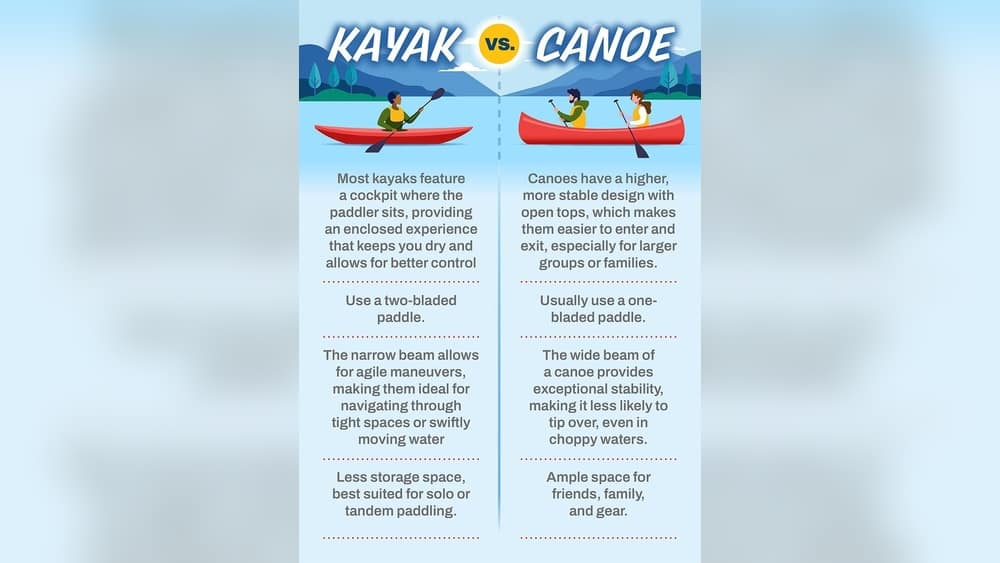
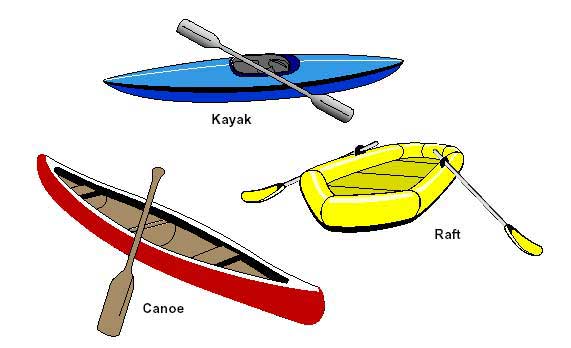
A kayak is a small, narrow boat that usually seats one or two people. It was first made by the Inuit, Aleut, and Yup’ik peoples in cold Arctic waters. Modern kayaks are built from plastic, fiberglass, or even inflatable materials. They have a closed deck, meaning the paddler sits inside with legs stretched forward.
Kayaks use a double-bladed paddle, which helps you move quickly and turn easily. You paddle on both sides, which keeps the boat straight and balanced. Most kayaks are designed to be light and fast. They come in different types, including:
- Recreational kayaks: Short, wide, stable, and easy for beginners.
- Touring kayaks: Longer, designed for speed and straight tracking over long distances.
- Whitewater kayaks: Short and rounded for quick turns in fast-moving rivers.
- Inflatable kayaks: Lightweight and easy to store, good for travel.
Kayaks sit low in the water. This design lets you go faster and makes it easier to paddle in windy or rough conditions. It also means you’re closer to the water, which some people find exciting, while others may feel less stable at first.
What Is A Canoe?
A canoe is an open boat, usually wider and larger than a kayak. You sit or kneel inside, often on a bench seat. Canoes have been used for thousands of years all over the world, from North America to Africa. Today, most canoes are made from aluminum, plastic, or wood.
Canoes use a single-bladed paddle, which means you paddle on one side and then switch to the other. This style requires a bit more skill to keep the boat straight, but it can be very relaxing and social. Canoes come in several types:
- Recreational canoes: Wide, stable, and good for families on calm water.
- Touring canoes: Longer and narrower for better speed on lakes and rivers.
- Whitewater canoes: Shorter and more durable for rough water, often with higher sides.
- Freight or expedition canoes: Large and deep, built to carry gear for long trips.
Canoes are often chosen for their carrying capacity. You can fit two or more people and lots of gear. The open design makes it easy to move around or stand up (if the water is calm). Because you sit higher, you get a better view and can reach over the sides easily to fish or take photos.
What Is A Raft?
A raft is a flat, inflatable boat made from strong rubber or synthetic materials. It is usually used for group adventures and can carry between 2 and 12 people, sometimes more. Modern rafts are tough and designed for safety in rough water.
Rafts use single-bladed paddles if each person paddles, or sometimes a guide uses oars from the center. The design is wide and stable, making rafts almost impossible to tip over in normal conditions. There are a few main types:
- Recreational rafts: For floating on calm rivers or lakes, easy to paddle and lightweight.
- Whitewater rafts: Reinforced for hitting rocks and strong currents, with safety features.
- Pack rafts: Small, light, and designed to fit in a backpack for hiking and paddling combos.
Rafts are chosen for group safety and fun. If you want to go down whitewater rivers with friends, a raft is much safer than a canoe or kayak. Rafts are also good for beginners, since you don’t need much skill to stay upright.
How Do They Compare? (design, Speed, And Stability)
Understanding the main differences in design, speed, and stability will help you choose the right craft for your adventure. Here is a quick comparison to help you see the contrasts:
| Feature | Kayak | Canoe | Raft |
|---|---|---|---|
| Seating Position | Low, legs stretched | High, sitting or kneeling | On inflatable seats or floor |
| Paddle Type | Double-bladed | Single-bladed | Single-bladed (or oars) |
| Deck Type | Closed | Open | Open |
| Stability | Medium to high | High (flat water) | Very high |
| Speed | Fastest | Medium | Slowest |
| Capacity | 1-2 people | 2-4 people | 2-12+ people |
| Best For | Solo/travel | Family/gear | Groups/whitewater |

Credit: southeasternexpeditions.com
Main Uses And Best Environments
Each craft works better in some situations than others. Here’s how to match your choice to the water and adventure you want.
Kayaks
Kayaks are best for:
- Solo or duo adventures: You can paddle alone or with a partner.
- Long distances: Touring kayaks track straight and go fast.
- Rough water: Whitewater kayaks are built for river rapids.
- Fishing: Special fishing kayaks are stable and have room for gear.
- Sea or coastal trips: Sea kayaks are long and cut through waves.
Kayaks are not ideal for large groups or if you want to bring lots of gear. Beginners may find the closed deck a bit hard to enter and exit, but most people adjust quickly.
Canoes
Canoes are best for:
- Families and groups: Most canoes seat two to four people.
- Carrying lots of gear: Camping trips, fishing, or long journeys.
- Calm lakes and slow rivers: Easy to paddle and enjoy the scenery.
- Photography or wildlife watching: Stable and open for movement.
Canoes struggle in strong winds or big waves, because the open sides catch the wind easily. They are less suited for solo use unless you have good paddling skills.
Rafts
Rafts are best for:
- Whitewater adventures: Most commercial river trips use rafts for safety.
- Team building or group fun: Great for friends, families, or work groups.
- Beginners or nervous paddlers: Hard to tip and very forgiving.
- Short, fun trips: Easy to jump in and float down a river.
Rafts are not very fast and are heavy to move without a group. They are not ideal for solo travel or long-distance exploring.
Key Advantages Of Each Craft
Let’s look at what makes each type special and why some people prefer one over the others.
Kayak Advantages
- Speed: Kayaks are the fastest paddle craft on flat water.
- Agility: Quick to turn, especially whitewater models.
- Weather Protection: The closed deck keeps you drier in waves and rain.
- Portability: Lighter and easier to carry, especially inflatable models.
- Access to Remote Areas: Can go where bigger boats can’t reach.
A non-obvious insight: Some kayaks have “skegs” or “rudders” you can lower for better tracking in wind, which helps beginners stay straight on open water.
Canoe Advantages
- Carrying Power: Canoes hold more people and gear than kayaks.
- Comfort: You can change positions, stretch, or stand up.
- Easy Entry/Exit: Open sides make it simple to get in and out.
- Versatility: Good for fishing, camping, or just relaxing.
- Stable Platform: Less likely to tip in calm conditions.
A detail many miss: Canoes are quieter than kayaks because of their shape, which can help you get closer to wildlife or fish without scaring them.
Raft Advantages
- Safety: Almost impossible to capsize in normal use.
- Social Experience: Paddling together is great for groups.
- Forgiving: Handles bumps, rocks, and mistakes easily.
- Comfort: Inflated floor is soft, and you don’t need to know much about paddling.
- Versatility: Can carry coolers, food, and even pets on some trips.
A subtle benefit: Rafts can be used as floating bases for swimming, sunbathing, or picnics. Their flat design is a plus for all-day fun.
Credit: shenandoahvalleyevents.wordpress.com
Main Disadvantages And Common Beginner Mistakes
Every craft has a downside. Understanding these can help you avoid frustration or even accidents.
Kayak Disadvantages And Mistakes
- Tipping: Beginners often feel unstable, especially in narrow kayaks.
- Getting In/Out: Closed cockpits can be tricky, especially from docks or steep banks.
- Limited Storage: Hard to carry lots of gear, unless you use special hatches.
- Spray Skirt Use: Many forget to wear or fit the spray skirt, leading to a wet cockpit.
Common beginner mistake: Not practicing a “wet exit” (getting out of a flipped kayak) before going into deep water. Always learn this skill first.
Canoe Disadvantages And Mistakes
- Wind Problems: Canoes catch the wind easily and can be hard to control.
- Solo Use: Harder to paddle alone without special strokes.
- Water Entry: Open sides mean waves or rain can fill the boat quickly.
Beginner mistake: Overloading the canoe with too much gear or people, which makes it unstable. Always check the weight capacity.
Raft Disadvantages And Mistakes
- Heavy and Bulky: Hard to carry or move alone. Needs a group for setup.
- Slow: Not good for covering long distances or racing.
- Poor Tracking: Rafts don’t go straight easily without a guide.
Beginner mistake: Not assigning a leader or guide. Without someone steering, the raft can spin or drift off course.
Skill Levels And Learning Curve
Your experience and confidence on the water matter a lot when choosing between kayak, canoe, and raft.
Kayak Learning Curve
Kayaking can be challenging at first, especially balancing and paddling straight. Most people master basic paddling in a few hours. Advanced skills, like rolling (righting yourself after a flip), take longer but are not needed for casual trips.
Canoe Learning Curve
Canoeing is easy with two people on calm water. Learning to paddle solo or in wind takes more practice. The main skills are steering with “J-stroke” and balancing when entering or exiting.
Raft Learning Curve
Rafts are the easiest for beginners. Almost anyone can paddle after a quick safety talk. Most whitewater trips have a professional guide who gives commands, so you just need to paddle and follow directions.
Credit: shenandoahvalleyevents.wordpress.com
Cost Comparison
Budget is a big part of choosing your craft. Here’s how average costs break down for each type:
| Type | Entry-Level Price | Mid-Range Price | High-End Price |
|---|---|---|---|
| Kayak | $300-$600 | $700-$1,200 | $1,500-$4,000 |
| Canoe | $500-$900 | $1,000-$2,000 | $2,500-$4,500 |
| Raft | $700-$1,200 | $1,500-$3,000 | $4,000-$8,000 |
Remember to budget for paddles, life jackets, and transport racks. Rentals are a good choice for beginners or one-time trips.
Safety Considerations
Water sports always have risks. The right equipment and planning keep you safe.
Safety Gear For All Types
- Life jacket (PFD): Always wear one, no matter how calm the water.
- Helmet: Needed for whitewater, especially in kayaks and rafts.
- Whistle: Useful for calling help.
- Dry bags: Keep clothes and gear dry.
- Rope or throw bag: Important for rescues.
Rafts often carry first aid kits and emergency supplies. Kayakers and canoeists should know self-rescue techniques.
Weather And Water Hazards
- Wind: Hard to paddle against, especially in canoes.
- Cold water: Hypothermia risk, even on warm days.
- Currents and obstacles: Watch for rocks, fallen trees, or dams.
- Changing conditions: Weather can change fast. Always check the forecast.
A little-known tip: In cold water, a wetsuit or drysuit can save your life if you capsize, especially in a kayak.
Transport And Storage
How you’ll get your craft to the water, and where you’ll store it, matters more than many realize.
Kayak Transport And Storage
- Lightweight: Easy for one person to carry.
- Fits on car roof racks.
- Inflatable models fit in a car trunk or closet.
Canoe Transport And Storage
- Heavier and longer: May need two people to lift.
- Fits on roof racks, but sticks out more.
- Takes more garage space.
Raft Transport And Storage
- Deflatable: Packs down small, but heavy.
- Needs a pump for inflation.
- Hard to move without a group if fully inflated.
A key detail: Inflatable kayaks and rafts are best for people with limited storage or no roof racks.
Environmental Impact
All three types are low-impact compared to motorboats, but a few things to remember:
- Plastic and rubber boats can last years but are hard to recycle.
- Dragging boats on shorelines damages plants; always lift and carry.
- Clean your boat after each trip to prevent spreading invasive species.
A positive note: Paddling is eco-friendly, quiet, and lets you see wildlife up close.
Choosing The Right Craft For You
Consider these questions before making your choice:
- Who will paddle? Solo, couple, or group?
- Where will you paddle? Lakes, rivers, sea, or whitewater?
- How much gear will you bring? Camping, fishing, or just yourself?
- Skill level and fitness: Do you want a challenge or an easy ride?
- Transport and storage: Do you have space at home and a way to move it?
If you want speed and adventure, choose a kayak. For family trips and carrying gear, pick a canoe. For group fun and safety, a raft is best.
Real-world Examples
- Sea kayaking in Alaska: Paddlers explore glaciers and wildlife, using closed-deck touring kayaks for long distances and cold water.
- Canadian canoe camping: Families load canoes with tents and food for weeklong trips on flat lakes.
- Whitewater rafting in Colorado: Groups ride rafts down Class III and IV rapids, guided by a professional.
- Urban river trips: Inflatable kayaks or rafts are popular for city dwellers with limited storage.
- Fishing tournaments: Canoes and fishing kayaks are used where motors are not allowed.
Tips For Beginners
- Try each type before buying—rentals or guided trips are best.
- Take a basic safety or paddling course.
- Start on calm water to build confidence.
- Always check local rules or permits for paddling.
- Join a club or group to meet other paddlers and learn faster.
If you want to read more about the history and types of paddle sports, visit the Wikipedia Paddle Sport page.
Frequently Asked Questions
What Is The Main Difference Between A Kayak And A Canoe?
The main difference is the seating position and paddle style. Kayakers sit low with legs forward and use a double-bladed paddle, while canoeists sit or kneel higher and use a single-bladed paddle. Kayaks have closed decks, canoes are open.
Is A Raft Safer Than A Kayak Or Canoe?
Rafts are the safest for groups and beginners, especially in whitewater. They are wide and hard to tip. However, safety always depends on following rules, wearing a life jacket, and knowing your limits.
Which Is Better For Fishing: Kayak, Canoe, Or Raft?
Canoes and fishing kayaks are best for fishing. Canoes have space and stability, while fishing kayaks are quiet and can access small spots. Rafts are used less for fishing, but can work on big rivers.
Do I Need Special Training To Use A Kayak, Canoe, Or Raft?
Basic paddling is easy to learn for all three. Kayaking and canoeing need more practice for balance and steering. Rafting with a guide is easy, but solo or advanced trips require training.
Can I Use An Inflatable Kayak Or Raft On Whitewater?
Yes, but only models rated for whitewater. They must have strong material, safety features, and you need to wear a helmet and life jacket. Check the craft’s rating before using it in rough water.
Finding the right craft means matching your goals, water, and group to the design. Kayaks, canoes, and rafts all offer adventure—just in their own way. Whether you want to paddle alone, with family, or with friends, there is a boat that fits your dream.
Remember, the best way to decide is to get on the water and try them yourself. Safe paddling!