
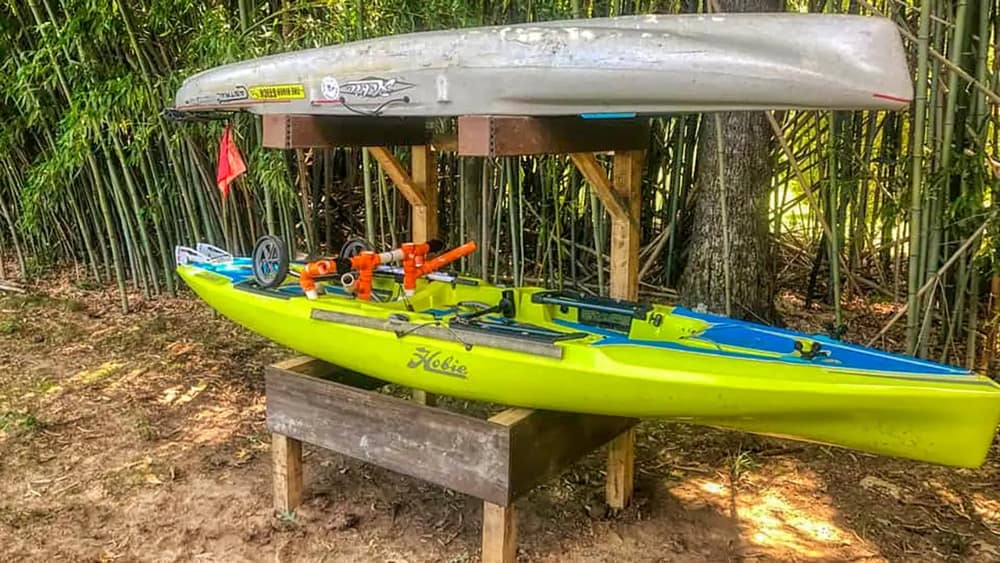
Storing your kayak outside can be tricky. Sun, rain, snow, and even animals can damage your boat if you are not careful. But for many people, indoor storage is not an option. With the right methods, you can keep your kayak safe and ready for your next adventure—even if you don’t have a garage or shed.
In this article, you’ll learn how to store a kayak outside in a way that protects it from the elements, prevents theft, and avoids common mistakes. You’ll also discover practical tips, smart gear choices, and expert advice to make the process simple and effective.
Understanding The Risks Of Outdoor Kayak Storage
When you store your kayak outside, you expose it to several risks:
- UV damage: Sunlight can make plastic brittle and fade colors. Over time, this weakens your kayak.
- Moisture issues: Rain, snow, and dew can cause mold, mildew, or even warping if water gets inside.
- Temperature extremes: Hot and cold cycles can crack some kayak materials.
- Wildlife and pests: Birds, insects, and small animals sometimes build nests inside kayaks.
- Theft: A kayak left outdoors is a temptation for thieves.
Knowing these risks helps you take the right steps to reduce them.
Choosing The Best Location
Finding the right spot is the first step in protecting your kayak.
- Pick a shaded area. Placing your kayak under a tree, awning, or beside your house reduces sun exposure. But avoid spots where branches can fall and damage the boat.
- Keep it off the ground. Direct contact with soil increases moisture risk and can attract pests. Use a rack, saw horses, or even sturdy blocks.
- Look for good drainage. Water should not pool under or around your kayak after rain.
- Stay away from high-traffic zones. Avoid driveways or walkways where the kayak could be bumped or damaged.
If possible, position the kayak so wind cannot blow it over or into other objects.

Credit: www.youtube.com
Essential Equipment For Outdoor Kayak Storage
The right gear makes a big difference in outdoor storage success. Here are items to consider:
- Kayak covers: A waterproof, UV-resistant cover shields against rain and sun.
- Locking cables: Secure your kayak to a fixed object to deter theft.
- Outdoor racks: These lift the kayak off the ground and provide support.
- Tarps and shelters: Can add extra weather protection, especially in winter.
- Desiccant packs: Placed inside the kayak, these absorb moisture and prevent mildew.
Comparing Kayak Cover Options
Below is a comparison of common kayak cover types:
| Type | Protection Level | Cost | Easy to Use |
|---|---|---|---|
| Full kayak cover | High (UV, rain, dirt) | Medium | Yes |
| Simple tarp | Medium (rain, dirt) | Low | Yes |
| Custom-fitted sock | High (UV, dirt) | High | Moderate |
A fitted cover offers the best all-around protection, especially for long-term storage.
How To Position Your Kayak For Storage
The way you place your kayak matters. Incorrect storage can lead to warping or stress cracks.
- Store upside down: For most kayaks, storing hull-up (cockpit down) on a rack prevents water pooling inside.
- Distribute weight evenly: Use two support points, about one-third from each end. This keeps the kayak’s shape.
- Avoid hanging by handles: Carry handles are not designed for long-term support and may stretch or break.
- Angle for drainage: If possible, tilt the kayak slightly so water runs off.
- Leave cockpit open or ventilated: This prevents mold. But if you use a cover, make sure there’s airflow.
Example Rack Setups
| Rack Type | Best For | Setup Difficulty |
|---|---|---|
| Freestanding frame | Multiple kayaks, permanent spot | Medium |
| Wall-mounted arms | Single kayak, side of house | Medium |
| Sawhorses or blocks | Temporary storage | Easy |
Freestanding racks are stable and can be moved, but require more space.
Steps For Preparing Your Kayak Before Storage
Never store your kayak dirty or wet. Here’s what to do first:
- Clean the kayak thoroughly. Use mild soap and water. Remove dirt, sand, and algae.
- Dry completely. Leave the kayak in the sun for a few hours, or towel dry all surfaces.
- Inspect for damage. Check for cracks, holes, or worn areas. Small repairs now prevent big problems later.
- Remove accessories. Take out seats, paddles, and hatches. Store these indoors if possible.
- Apply UV protectant. Spray or wipe on a UV-blocking product designed for kayaks, especially for plastic hulls.
Cleaning and prepping takes time, but it extends your kayak’s life.
Using A Kayak Cover Or Tarp The Right Way
A cover is only effective if used properly.
- Choose the right size. Too small, and parts of the kayak are exposed. Too large, and water may pool on top.
- Secure tightly. Use straps or bungee cords to keep the cover in place, even during wind.
- Allow for ventilation. Some covers have mesh panels. If not, prop the cover slightly open at the ends.
- Check regularly. Remove the cover every few weeks to check for trapped moisture, mold, or critters.
A common mistake is using a cheap plastic tarp that traps moisture and causes mold—pick a breathable cover if you can.

Credit: www.rei.com
Securing Your Kayak Against Theft
Outdoor storage does increase the risk of theft, but you can reduce it:
- Lock the kayak. Use a steel cable lock through a secure anchor point (like a tree or fence).
- Choose a hidden location. Keep your kayak out of sight from the street.
- Add a security camera or motion light. These are strong deterrents.
- Engrave your information. Put your name and phone number on the kayak. Thieves are less likely to steal marked boats.
For expensive kayaks, consider using two locks for extra protection.
Handling Extreme Weather
Outdoor storage exposes your kayak to all seasons. Here’s how to handle specific threats:
Rain And Snow
- Clear snow off quickly. Heavy snow can deform the hull.
- Keep the cockpit covered. Use a tight-fitting cover to block water and animals.
- Check for pooling water. After storms, inspect your kayak and remove any standing water.
Sun And Heat
- Use a UV-resistant cover. Sun is the number one enemy of plastic kayaks.
- Rotate position occasionally. This prevents one side from fading more than the other.
Freezing Conditions
- Don’t store kayaks with water inside. Ice expansion can crack plastic.
- Loosen straps. Extreme cold can make plastic brittle, so avoid over-tightening anything.
Common Mistakes To Avoid
Even experienced paddlers make errors. Watch out for these:
- Storing directly on the ground: This encourages mold and pest problems.
- Hanging by the ends: This causes the hull to bend over time.
- Leaving hatches closed tight: Trapped moisture leads to mold.
- Ignoring regular checks: Out of sight should not mean out of mind—check your kayak monthly.
- Using cheap covers: Low-quality tarps often tear or trap moisture.
A beginner’s mistake is to think “any cover is enough”—but not all covers are created equal.
Quick Reference: Outdoor Kayak Storage Dos And Don’ts
| Do | Don’t |
|---|---|
| Store off the ground | Leave directly on soil or grass |
| Use a UV-resistant cover | Rely on a thin plastic tarp |
| Secure with a lock | Leave kayak unsecured |
| Check kayak monthly | Forget about it for months |
These simple reminders help you avoid costly mistakes.

Credit: www.wikihow.com
Practical Tips For Long-term Storage
If you plan to leave your kayak outside for months (like winter), these steps help:
- Remove soft parts. Take out foam seats or pads to prevent mildew.
- Elevate higher. Place the kayak at least 12 inches above ground level to avoid snow build-up.
- Label and document. Take photos and make a list of your kayak’s serial number and features for insurance.
- Apply a fresh coat of UV protectant before covering for the season.
- Ask a neighbor to help check on your kayak if you’re away for long periods.
An advanced tip: Place a few mothballs or cedar blocks inside your kayak to deter insects, but make sure to remove them before paddling.
Maintenance And Regular Checks
Outdoor storage is not “set and forget.” Plan to check your kayak:
- Every month: Look for animal nests, water, or cover damage.
- After storms: Inspect for fallen branches, wind damage, or theft attempts.
- Every season: Reapply UV protectant and clean the kayak.
Document any problems and fix them quickly to avoid bigger repairs later.
When To Bring Your Kayak Indoors
Some situations call for moving your kayak inside, even if just for a while:
- During hurricanes or very strong storms
- If you notice repeated theft attempts
- When temperatures drop below freezing for weeks
- If you see major cracks or hull warping
If you have space in a garage or basement, even temporary indoor storage can prevent permanent damage.
Additional Resources
For more about kayak materials, maintenance, and protection tips, visit the official Wikipedia Kayak Page.
Frequently Asked Questions
How Long Can A Kayak Last If Stored Outside?
A well-maintained kayak can last 10 years or more even when stored outdoors, as long as you protect it from sun and moisture. Regular checks, cleaning, and using a quality cover make a big difference.
Is It Ok To Store An Inflatable Kayak Outside?
Inflatable kayaks should not be stored outdoors long-term. Sun and temperature changes can damage the material. If you must, keep it fully dry, deflated, covered, and off the ground.
Can I Hang My Kayak From The Ceiling Outside?
It’s possible, but not recommended unless you use wide straps that support the hull evenly. Never hang by the handles or ends, and always ensure the kayak is secure against wind.
What Should I Do If Animals Nest Inside My Kayak?
Remove the nest carefully and clean the area with mild soap and water. Check for eggs or young animals before removal. After, use a cockpit cover and check regularly to prevent new nests.
Do I Need A Special Cover For A Fishing Kayak?
Fishing kayaks often have more accessories and open spaces. Use a full, fitted cover for better protection, and remove any electronics or gear before storage.
Storing a kayak outside requires planning, but it’s easy once you know the steps. Use the right location, cover, and support. Check your kayak regularly, and you’ll be ready for the water whenever adventure calls.